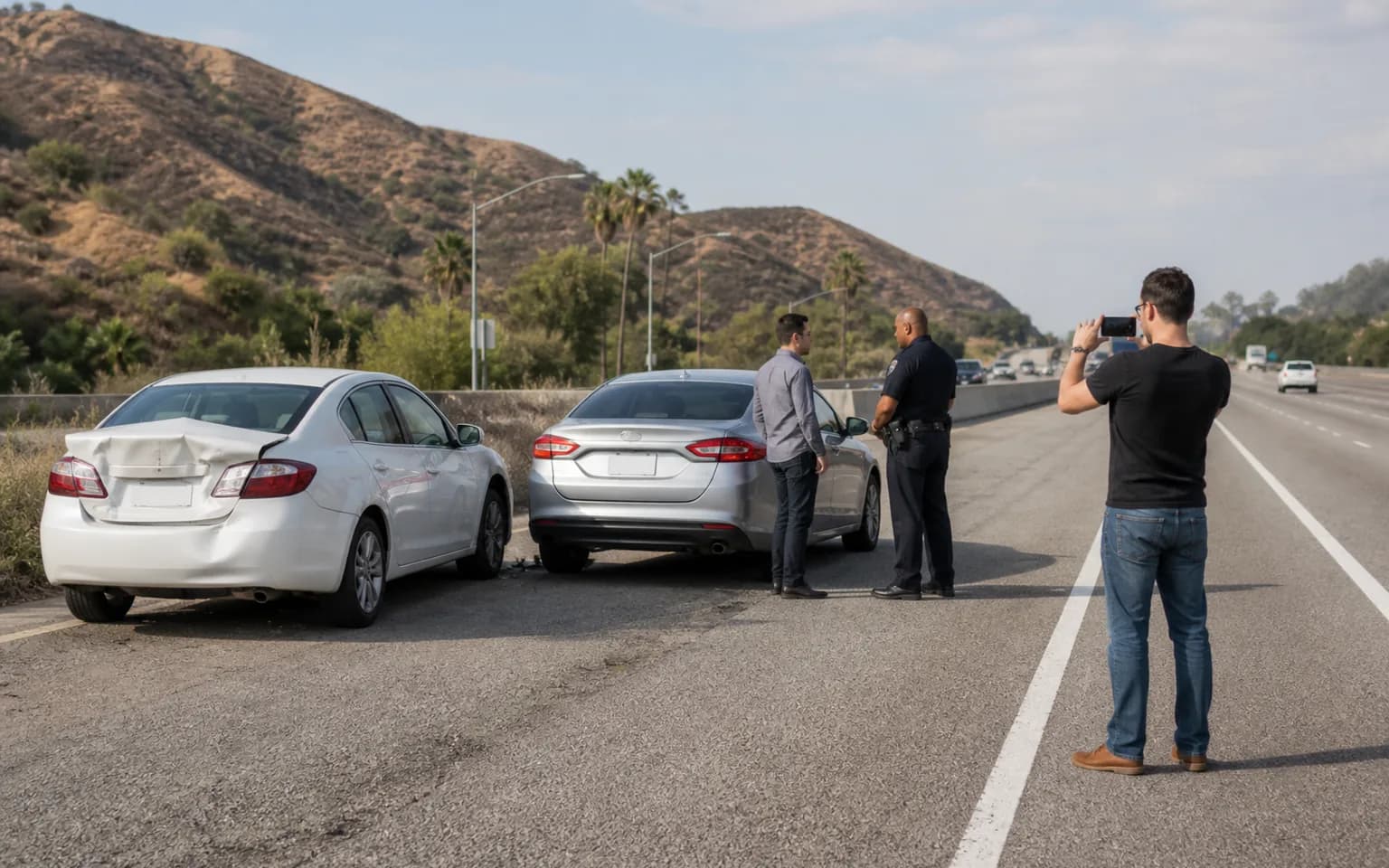
How construction zone accidents claims get evaluated in Long Beach
Claims involving narrowed lanes, poor traffic control, hidden hazards, and severe collisions in active work zones. The page is built to turn a broad construction zone accidents question into a Long Beach checklist: location, treatment, insurance pressure, and next action.
Long Beach recorded 6,780 crashes in the latest dataset, with recurring pressure around Speeding and DUI on corridors like I-405 and I-710. That changes how we frame liability and urgency for construction zone accidents claims.
What usually matters first
- A clear location anchor: CA-1, Lakewood, or the property record that explains where the construction zone accidents facts started.
- Medical records from Long Beach Memorial Medical Center or the first provider that connect symptoms to the event cleanly.
- Any early insurer pressure, company contact, or document request that could reshape fault or damages.
Local support points
- Hospitals: Long Beach Memorial Medical Center, St. Mary Medical Center, Community Hospital Long Beach
- Neighborhoods: Downtown, Belmont Shore, Naples, Bixby Knolls
- Service areas nearby: Lakewood, Cerritos, Signal Hill, Seal Beach
Local proof stack
Why this Long Beach page deserves its own review
The page is most useful when it gives the reader a reason to stay in Long Beach: local proof, provider timing, claim pressure, and one next step tied to construction zone accidents.
Local proof
Long Beach facts that should change the case review
Construction Zone Accidents claims in Long Beach need more than a swapped city name. Start with the corridor or location pattern around I-405, I-710, CA-22, then connect that setting to witnesses, photos, treatment, and timing.
Treatment trail
Tie the first medical record to the local event
A cleaner file connects symptoms, transport, and follow-up care around Long Beach Memorial Medical Center and St. Mary Medical Center or another nearby provider before the insurer can separate treatment from the incident.
Claim distinctness
Separate this page from the broader motor vehicle accidents lane
Use details like Downtown, Belmont Shore, Naples, injury patterns such as Neck injuries, Fractures, Head injuries, and city-specific evidence needs so the page answers a real local question instead of repeating a statewide guide.
Next action
Move from reading to a document checklist
Before requesting a claim review, gather photos, repair or incident reports, provider names, employer notes, and every insurer message tied to Long Beach or Los Angeles County.
Local pathways
Use Long Beach as one node in a stronger local cluster
This page works best when it sits alongside the city hub, county version, and a few nearby city variants of the same construction zone accidents problem.
Stay in this claim lane
Use the exact Long Beach page when the city facts matter, but keep the broader construction zone accidents lane close by when the claim starts crossing into bigger strategy questions.
Main page
Return to the main construction zone accidents page
Use the statewide version when you want the core liability, damages, and evidence framework without the city-specific overlay.
Category
Compare the broader motor vehicle accidents lane
Step back into the larger topic family when more than one service page could fit the facts.
Spanish
View the Spanish service version
Use the bilingual service page when the client or family wants the same guidance in Spanish before intake.
Compare Long Beach against nearby city versions
These links help when the roadway, facility, or treatment path might shift the claim depending on which nearby market owns the strongest evidence story.
Nearby city
San Bernardino Construction Zone Accidents
Review the same claim type through San Bernardino's local roads, providers, and insurer timing instead of guessing whether the city context changes the file.
Nearby city
Ontario Construction Zone Accidents
Review the same claim type through Ontario's local roads, providers, and insurer timing instead of guessing whether the city context changes the file.
Nearby city
Rancho Cucamonga Construction Zone Accidents
Review the same claim type through Rancho Cucamonga's local roads, providers, and insurer timing instead of guessing whether the city context changes the file.
Zoom out into city and county strategy
When the incident, treatment, or defendants stretch beyond Long Beach, compare the city hub with broader county-level review before the insurance story hardens.
City hub
Use the Long Beach city hub
Pair this service page with the Long Beach crash snapshot, hospital network, and broader injury lanes.
County view
Zoom out to Los Angeles County
Use the county version when the claim spans multiple cities, providers, or corridors inside Los Angeles County.
Nearby county
Orange County
Compare how the same construction zone accidents issue is framed in another major county before you decide where the strongest proof will come from.
Nearby county
San Diego County
Compare how the same construction zone accidents issue is framed in another major county before you decide where the strongest proof will come from.
Priority research stack
Connect Long Beach construction zone accidents research to proof, siblings, and action
These links connect this local service page to city data, adjacent claim lanes, resources, attorney proof, and intake.
Anchor the Long Beach proof
Local service pages work harder when they route into city data, city FAQs, and the broader city hub.
City hub
Use the Long Beach injury hub
Review local roads, hospitals, venue signals, and nearby service areas for Long Beach.
Data
Long Beach accident statistics
Use 6,780 tracked crashes, top causes, and dangerous corridors to ground the claim context.
FAQ
Long Beach injury FAQ
Pair the service page with city-specific legal-process, insurance, compensation, and deadline answers.
Compare adjacent claim lanes
Sibling service-city links help readers compare related claim paths inside the same local cluster.
Same city
Long Beach Sideswipe Accidents
Compare another high-intent service lane in Long Beach so the local cluster is not a dead end.
Same city
Long Beach Lane Change Accidents
Compare another high-intent service lane in Long Beach so the local cluster is not a dead end.
Same city
Long Beach Rollover Accidents
Compare another high-intent service lane in Long Beach so the local cluster is not a dead end.
Move from research to proof and action
High-intent pages should always route toward value, attorney fit, and next-step support.
Tool
Estimate settlement factors
Use the calculator when construction zone accidents questions turn into medical bills, wage loss, and value timing.
Insurance
Prepare for insurer pressure
Review claim-process guidance before recorded statements, quick offers, or coverage disputes narrow the story.
Authority
Compare attorney fit
Move from the motor vehicle accidents topic into named attorney profiles and review standards.
Service-specific proof
Make this Long Beach page answer a different question than the statewide guide
This section adds service-specific proof, city data, treatment context, and decision links so the page is useful on its own for someone comparing local claim options.
Service-specific proof
What changes in a construction zone accidents review
Construction-zone crashes can involve drivers, contractors, cities, and traffic-control failures, which means the claim may be broader than a single-driver negligence case.
- Photos of cones, barricades, signage, lane shifts, and lighting conditions.
- Contractor or agency records about traffic-control plans and work-zone setup.
- Witness and dashcam evidence showing speed, flagger conduct, or abrupt merges.
City evidence layer
Long Beach context that makes this page locally useful
Long Beach has 6,780 tracked crashes in the current dataset, so the page should connect I-405, I-710, CA-22 with the exact service issue, not only the statewide overview.
- Name the relevant corridor or setting near I-405, I-710, CA-22.
- Connect first treatment or follow-up care around Long Beach Memorial Medical Center and St. Mary Medical Center.
- Keep the local layer focused on construction zone accidents: which road, provider, neighborhood, or support page helps the reader take the next step.
Injury and urgency layer
Give readers a concrete reason to use this page
Temporary signage, lane closures, and contractor records can change quickly, so preserving work-zone evidence early often matters more than in a standard crash.
- Mention likely injury patterns such as Neck injuries, Fractures, Head injuries, Spinal trauma.
- Point readers toward the link that clarifies the missing issue: crash data near CA-1, treatment timing around St. Mary Medical Center, or local comparison through Lakewood.
- Make the next action specific to Long Beach and Los Angeles County.
Local decision layer
What makes this Long Beach construction zone accidents page useful
The fingerprint below ties one city, one service, local treatment options, nearby comparison points, and the next action into a crawler-visible proof path.
local differentiator
Long Beach claim fingerprint
For Long Beach, the useful question is whether the call-log timestamp, dash-camera export, and specialist intake can be tied to I-405, I-710, CA-22 before the insurer treats the construction zone accidents file as routine.
- Use the liability sequence to connect scene proof with commuter turnover.
- Compare Long Beach Memorial Medical Center, St. Mary Medical Center against the first symptom notes and follow-up timing.
- Keep Queen Mary, Aquarium of the Pacific tied to call-log timestamp when agency, property-control, or maintenance questions may shape the file.
Evidence sequence
What must stay specific on this city page
A stronger Long Beach page explains the coverage map, the freight movement, and the documents that move a reader from research into a useful case review.
- Name the records that can disappear first, especially any call-log timestamp or dash-camera export.
- Use Downtown, Belmont Shore, Naples, Bixby Knolls to test whether dash-camera export, Long Beach Memorial Medical Center, St. Mary Medical Center, or freight movement would shift the witness or provider story.
- Use Long Beach Memorial Medical Center, St. Mary Medical Center to separate early symptoms, treatment duration, and daily limitations tied to Neck injuries, Fractures, Head injuries.
Decision summary
The decision point matters more than the keyword
Make the deadline clock clear: preserve specialist intake, map the local pressure around school-hour congestion, and decide whether the next click should be a city guide, resource page, attorney profile, or intake.
- Use deadline clock headings that explain why specialist intake or dash-camera export belongs in the first evidence review.
- Make I-405, I-710, CA-22 the anchor and Downtown, Belmont Shore, Naples, Bixby Knolls the comparison set, so the next click solves a different proof question.
- Stay useful after keywords are removed by connecting Neck injuries, Fractures, Head injuries, dash-camera export, and Long Beach Memorial Medical Center, St. Mary Medical Center to one concrete follow-up action.
weather and lighting change filter
The weather and lighting change detail matters when it explains why Spinal trauma evidence may change the witness loop and the urgency of preserving records.
tow-yard photo near CA-1
When a construction zone accidents question starts around CA-1, the tow-yard photo matters because visitor surge can blur the medical necessity record before witnesses are contacted.
Community Hospital Long Beach timing
A reader in Long Beach should know whether Community Hospital Long Beach records line up with Fractures, especially if the first insurer note minimizes the symptom chronology.
Aquarium of the Pacific control question
If Aquarium of the Pacific is part of the story, preserve the inspection request before construction detour changes who can explain access, lighting, staffing, or maintenance.
Belmont Shore comparison
Comparing Long Beach with Belmont Shore helps separate a generic construction zone accidents article from a useful repair story supported by a billing ledger.
Neck injuries follow-through
For Neck injuries, the practical next step is to connect St. Mary Medical Center with missed work, follow-up care, and the way freeway merge friction affected the first account.
City evidence brief
Local review notes for Long Beach construction zone accidents claims
These notes vary by service, city, roads, providers, landmarks, neighborhoods, and injury patterns so a visitor can compare this city with nearby options without losing the claim-specific details.
city-level proof route 1
Provider-handoff lens for Long Beach
A helpful city page should make commuter turnover practical by connecting Fractures, maintenance ticket, and checking whether a record can disappear before a routine claim review to a next click or intake decision.
If I-710 matters, tie the route, the proof owner, and St. Mary Medical Center to the same chronology.
When body-shop supplement points toward Port of Long Beach, preserve that record before the reader is sent to a broader city, county, or resource page.
Make the Fractures paragraph answer one local question: whether I-710, St. Mary Medical Center, or maintenance ticket explains the care sequence best.
- Preserve maintenance ticket before the record owner changes access, retention, or availability.
- Tie St. Mary Medical Center to first symptoms, follow-up care, and any work or mobility limits.
- Keep Belmont Shore in the supporting lane: the Long Beach page should still own dispatch note, Fractures, and commuter turnover.
- Send the reader toward the next useful step from St. Mary Medical Center: a city guide, county guide, resource, attorney proof page, or intake.
city-level proof route 2
Record-preservation lens for Long Beach
This city-level block is meant to answer one local problem: whether call-log timestamp, St. Mary Medical Center, and a crash report that does not capture later symptoms should be handled before the claim becomes a broad construction zone accidents summary.
A route note around CA-1 should name the missing document, the person who may hold it, and how it affects the liability sequence.
Compare Aquarium of the Pacific with scene diagram, employer absence note, and a crash report that does not capture later symptoms before linking away from this city path.
For Fractures, the page should explain the coverage map and show why testing whether the local page answers a different question than the hub matters before the insurer narrows the file.
- Preserve scene diagram before the record owner changes access, retention, or availability.
- Tie St. Mary Medical Center to first symptoms, follow-up care, and any work or mobility limits.
- Treat Lakewood as a coverage map cross-check, not as substitute copy for the Long Beach facts.
- Close the section with a testing whether the local page answers a different question than the hub path so Fractures, scene diagram, and a crash report that does not capture later symptoms point to a real next click.
city-level proof route 3
Bilingual-intake lens for Long Beach
This city-level block is meant to answer one local problem: whether claim-number trail, Long Beach Memorial Medical Center, and a claim value estimate without enough proof should be handled before the claim becomes a broad construction zone accidents summary.
A useful first pass asks who can confirm CA-22, whether Long Beach Memorial Medical Center supports the timing, and what claim-number trail can still be preserved.
If Aquarium of the Pacific or Lakewood appears in the story, the coverage letter can become more important than a generic discussion of construction zone accidents.
If symptoms connect to hospital transfer timing, the useful move is to preserve 911 chronology and line it up with Long Beach Memorial Medical Center before claim-value language.
- Preserve 911 chronology before the record owner changes access, retention, or availability.
- Tie Long Beach Memorial Medical Center to first symptoms, follow-up care, and any work or mobility limits.
- Use Lakewood to pressure-test 911 chronology, a claim value estimate without enough proof, and the local care trail before linking away from Long Beach.
- Use the final link choice to separate research, 911 chronology, linking a symptom timeline to a concrete place and provider, and intake for Long Beach.
city-level proof route 4
Claim-value lens for Long Beach
A reader researching construction zone accidents in Long Beach needs help with checking whether a public agency, employer, platform, or property owner may hold records. The useful city question is how triage record, symptom chronology, and rideshare pickup pressure change the next step.
Let I-405 introduce one concrete question: whether the first proof source, the care record, or the symptom chronology needs attention first.
When repair estimate points toward Port of Long Beach, preserve that record before the reader is sent to a broader city, county, or resource page.
For Long Beach, Head injuries should lead to a record task: compare Community Hospital Long Beach, connecting repair, medical, and witness facts before value is estimated, and the first symptom note.
- Preserve scene diagram before the record owner changes access, retention, or availability.
- Tie Community Hospital Long Beach to first symptoms, follow-up care, and any work or mobility limits.
- Let Naples answer one comparison question, then bring the reader back to I-405, Port of Long Beach, and the scene diagram.
- Use the final link choice to separate research, scene diagram, connecting repair, medical, and witness facts before value is estimated, and intake for Long Beach.
city-level proof route 5
Medical-necessity lens for Long Beach
A reader researching construction zone accidents in Long Beach needs help with turning local records into a clean intake summary. The useful city question is how scene diagram, provider chain, and public-entity notice change the next step.
A route note around I-710 should name the missing document, the person who may hold it, and how it affects the provider chain.
Shoreline Village becomes useful when it points to maintenance ticket, while Naples should stay secondary unless it changes mapping the proof owner before the claim gets older.
If the claim involves Head injuries, the next useful paragraph should organize ambulance narrative, mapping the proof owner before the claim gets older, and any care gap before value language appears.
- Preserve ambulance narrative before the record owner changes access, retention, or availability.
- Tie Long Beach Memorial Medical Center to first symptoms, follow-up care, and any work or mobility limits.
- Let Naples answer one comparison question, then bring the reader back to I-710, Shoreline Village, and the ambulance narrative.
- If the file turns on public-entity notice, route the reader to the page type that can answer that issue next instead of another generic article.
city-level proof route 6
Venue-control lens for Long Beach
This city-level block is meant to answer one local problem: whether call-log timestamp, Community Hospital Long Beach, and conflicting witness direction should be handled before the claim becomes a broad construction zone accidents summary.
Use I-710 only when it helps explain the camera lead, witness angle, care handoff, or the camera window.
Compare Shoreline Village with employer absence note, scene diagram, and conflicting witness direction before linking away from this city path.
If the claim involves Spinal trauma, the next useful paragraph should organize employer absence note, linking a symptom timeline to a concrete place and provider, and any care gap before value language appears.
- Preserve employer absence note before the record owner changes access, retention, or availability.
- Tie Community Hospital Long Beach to first symptoms, follow-up care, and any work or mobility limits.
- Keep Cerritos in the supporting lane: the Long Beach page should still own call-log timestamp, Spinal trauma, and construction detour.
- Make the handoff practical by matching employer absence note and Community Hospital Long Beach with the city, county, resource, lawyer-fit, or intake path.
city-level proof route 7
Work-impact lens for Long Beach
This route checks whether Long Beach changes the evidence plan: I-710 shapes the scene, Long Beach Memorial Medical Center shapes the care trail, and a location-specific question that the broad service page cannot answer shapes the insurer response.
Do not let I-710 become a keyword label; use it to explain why adjuster voicemail or Long Beach Memorial Medical Center changes the early review.
Compare Shoreline Village with coverage letter, 911 chronology, and a location-specific question that the broad service page cannot answer before linking away from this city path.
When Neck injuries is part of the file, connect daily limits, Long Beach Memorial Medical Center, and coverage letter before describing settlement factors.
- Preserve coverage letter before the record owner changes access, retention, or availability.
- Tie Long Beach Memorial Medical Center to first symptoms, follow-up care, and any work or mobility limits.
- If Seal Beach helps, make it prove a difference in Long Beach Memorial Medical Center, describing what still needs verification instead of promising an outcome, or roadway access rather than repeating the same page.
- If the file turns on crosswalk signal timing, route the reader to the page type that can answer that issue next instead of another generic article.
city-level proof route 8
Fault-sequence lens for Long Beach
Use Long Beach as the proof anchor, not a keyword swap. CA-22, Queen Mary, and coverage letter should show why using the page to triage urgency rather than repeat statewide basics matters for this reader.
A useful first pass asks who can confirm CA-22, whether St. Mary Medical Center supports the timing, and what billing ledger can still be preserved.
Compare Queen Mary with coverage letter, scene diagram, and multiple possible defendants before linking away from this city path.
For Fractures, the page should explain the coverage map and show why placing high-friction evidence ahead of generic settlement language matters before the insurer narrows the file.
- Preserve coverage letter before the record owner changes access, retention, or availability.
- Tie St. Mary Medical Center to first symptoms, follow-up care, and any work or mobility limits.
- Keep Downtown in the supporting lane: the Long Beach page should still own billing ledger, Fractures, and commuter turnover.
- If the file turns on commuter turnover, route the reader to the page type that can answer that issue next instead of another generic article.
Common injuries in these claims
Frequently asked questions
What makes construction zone accidents claims different in Long Beach?
Long Beach recorded 6,780 crashes in the latest dataset, with recurring pressure around Speeding and DUI on corridors like I-405 and I-710. That changes how we frame liability and urgency for construction zone accidents claims.
What should I preserve after a construction zone accidents incident in Long Beach?
Preserve the local record owner first. That can mean cameras or reports near Queen Mary, roadway details from I-710, provider notes from Long Beach Memorial Medical Center, and insurance correspondence before the story is shortened.
Do I need a lawyer right away for construction zone accidents in Long Beach?
Same-day review is usually worth considering when injuries are serious, fault is disputed, or the insurer is already asking for statements. In Long Beach, early review can also protect proof tied to CA-1, St. Mary Medical Center, or Lakewood.
Which construction zone accidents proof matters most in Long Beach?
Photos of cones, barricades, signage, lane shifts, and lighting conditions. Contractor or agency records about traffic-control plans and work-zone setup. In Long Beach, connect that proof to I-405, I-710, CA-22 and the first medical records from Long Beach Memorial Medical Center or St. Mary Medical Center.
How is this Long Beach page different from the main construction zone accidents guide?
The main guide explains the claim type. This page ties it to Long Beach's 6,780 tracked crashes, local corridors, treatment options, and the evidence checklist that should be preserved before an insurer narrows the story.