Referral intake reviewES
Motor Vehicle AccidentsBakersfield, California

Lane Change Accidents help in Bakersfield

Organize records, local context and questions for an independent review of lane change accidents in Bakersfield.

Local angle

CA-99 · CA-58

Regional context

Kern County

Case timing

Strongest when the first call can compare local fault proof, medical timing, and insurer pressure.

Local claim check

Use this page to connect the issue and the city

Local proof should name the roadway, property, or facility tied to I-5 before the case theory expands.

The strongest lane change accidents review connects the evidence story with records from Mercy Hospital.

Move sooner if coverage questions, disputed liability, or missing records could narrow the claim.

California lane change accidents claim information and participating attorney profile context in the motor vehicle accidents practice area

Secure intake request

Tell us briefly what happened and how to reach you. You do not need every document ready to get started.

Local evidence mapReviewed August 9, 2026

Bakersfield: records, analysis, and relevant profiles for lane change accidents

For lane change accidents in Bakersfield, use the local records to identify custodians and unresolved questions. Confirm the actual location, treating provider, and applicable process; this guide's area references do not describe a particular incident.

How to use this evidence guide

  1. 1. Start with City of Bakersfield and confirm who controls the first missing record.
  2. 2. Confirm the actual location and treating provider. CA-99 and Adventist Health Bakersfield are guide references, not incident facts.
  3. 3. Use the verified profiles for Raffi Naljian and Abraham Chuljyan only to review published license and practice information; no attorney has been assigned.

Official local record brief

Start with the right custodian and record

City of Bakersfield publishes official city route to search for and obtain traffic-accident reports. Check its scope and limits before applying it to the incident records.

Official processOfficial city route to search for and obtain traffic-accident reports
Bakersfield traffic-accident report access

City of Bakersfield

The city services page identifies the official traffic-accident report route and distinguishes it from the city public-record request process and other municipal records.

When to use it

Use this route after confirming the collision was handled through the Bakersfield report system and the requester needs the incident record rather than aggregate city data.

Details used to locate the record

  • Collision date
  • location or intersection
  • report number or involved-party name

Limit: The landing page does not establish that a particular report exists, who may receive it, what agency handled a highway event, or any conclusion about fault, injury, or damages.

Local anchors and boundaries

What can guide the record search, and what it does not prove

Roadway reference

CA-99

Use the direction, lane, crossing, time, and observed conditions to identify reports, cameras, and witnesses connected with CA-99.

Boundary: CA-99 and Buck Owens Crystal Palace are separate area references. Confirm the actual incident address and jurisdiction before selecting a report agency.

Provider reference

Adventist Health Bakersfield

If the person received care at Adventist Health Bakersfield, compare its triage, imaging, referrals, restrictions, and billing with the incident chronology.

Boundary: Naming Adventist Health Bakersfield does not confirm that a person received care there or that its records prove causation.

Official path

Kern County Superior Court

Confirm the entity, legal party names, and published process before using Kern County Superior Court for a filing or venue question.

Boundary: Kern County Superior Court is a research reference and does not establish venue, jurisdiction, or an individual deadline.

Local mobility

Golden Empire Transit (GET) and Amtrak San Joaquins

Identify the actual operator, station or vehicle before requesting agency records that may clarify the incident timeline.

Boundary: Golden Empire Transit (GET) and Amtrak San Joaquins may identify an agency or movement record, but confirm the operator, time window, and record number before using it to describe this incident.

Visual evidence flow

Connect each fact to its record, not an assumption

For this page, start at CA-99, compare the chronology tied to Adventist Health Bakersfield, and confirm whether City of Bakersfield controls official city route to search for and obtain traffic-accident reports; the final step checks Raffi Naljian's published license without assigning representation.

  1. 01 / Scene

    CA-99

    Record the time, direction, lane, and possible camera or witness leads tied to CA-99.

  2. 02 / Care

    Adventist Health Bakersfield

    Compare first symptoms, triage, referrals, and restrictions in records associated with Adventist Health Bakersfield.

  3. 03 / Record

    City of Bakersfield

    Confirm whether City of Bakersfield controls official city route to search for and obtain traffic-accident reports before requesting it.

  4. 04 / Review

    Raffi Naljian

    Check Raffi Naljian's published license and practice information; this path does not assign an attorney.

Decision path

From the scene to a documented review

  1. 01

    Confirm the incident location

    Record the actual address, direction, time and conditions. Use CA-99 or Buck Owens Crystal Palace only if the incident record identifies that location, then confirm who holds the report or video.

  2. 02

    Confirm the treating provider

    Order symptoms, triage, diagnosis, imaging, referrals, and restrictions by date without assuming one note resolves causation.

  3. 03

    Preserve the lane change accidents evidence

    Keep the original recording and a two-vehicle timeline that labels each movement as observed, reported, or unresolved; retain clock differences and gaps; track the Bakersfield traffic-accident report access request to City of Bakersfield as requested, received, disputed, or still awaiting primary-source confirmation.

  4. 04

    Confirm the process connected with Kern County Superior Court

    Verify parties, public-entity involvement, venue, and dates through an official source or qualified attorney before relying on a general deadline.

Investigating agency and camera custodian

Reconstruct the actual approach

Record the actual approach, direction, lane, crossing, time, and lighting. Confirm whether CA-99 or Buck Owens Crystal Palace appears in the incident records. If care began at Adventist Health Bakersfield, compare its intake time with dispatch and video timestamps.

Next request: For this lane change accidents review, obtain the report number and preserve video, dispatch, photographs, and movement data before routine deletion cycles.

Medical provider and records department

Request records from the actual treating provider

For care attributed to Adventist Health Bakersfield, separate triage, diagnosis, imaging, referrals, restrictions, billing, and symptom changes. The Adventist Health Bakersfield chart does not prove causation by itself; it shows which dates and changes still need qualified review.

Next request: Request records from the provider that actually treated the person. If that was Adventist Health Bakersfield, keep its chart together with a dated list of missing, corrected, or later-added records.

Court, city, county, or public entity

Check the court and public-entity process

For a filing or public-entity question linked to Kern County Superior Court, first identify who controlled the scene or key record. Confirm the official path associated with Kern County Superior Court before assuming the ordinary filing period resolves a possible public-claim notice.

Next request: Identify the potential defendant, then use the published court or agency path associated with Kern County Superior Court before waiting.

Lane Change Accidents specialist record holder

Preserve the evidence that makes this incident type different

For lane change accidents in Bakersfield, the focused review should include each vehicle's established lane, first lateral movement, lane-line crossing, signal and visibility evidence, original video timestamps, and first-contact location. Compare that file with the actual treatment chronology and any unresolved venue question; the central unresolved issue is which vehicle crossed a lane line, when the movement began, and what the available footage or witness account actually shows.

Next request: Keep the original recording and a two-vehicle timeline that labels each movement as observed, reported, or unresolved; retain clock differences and gaps.

Evidence priorities

  • Preserve originals of available photographs, reports and communications.
  • Identify the actual record owner and document the request and response.
  • Separate personal observations from estimates or later summaries.
  • each vehicle's established lane, first lateral movement, lane-line crossing, signal and visibility evidence, original video timestamps, and first-contact location
  • Keep the original recording and a two-vehicle timeline that labels each movement as observed, reported, or unresolved; retain clock differences and gaps.

Claim pressure points to verify

  • Confirm the incident date and any applicable deadline.
  • Identify recordings or physical evidence that may change.
  • Record missing information without assuming fault or coverage.
  • which vehicle crossed a lane line, when the movement began, and what the available footage or witness account actually shows

Analysis before conclusions

What should be documented first about the scene?

Start with the actual address, direction, lane, crossing, time, and lighting. Record a landmark only if it identifies the scene. Match report and camera timestamps with the first-care records from the actual provider.

How should the local data be used?

City and county data can identify patterns and public sources, but it does not prove fault, block-level frequency, or the value of an individual claim.

Why is an attorney profile matched here?

For lane change accidents in Bakersfield, this page links Raffi Naljian (published focus includes car accidents, rental car accidents); Abraham Chuljyan (published focus includes car accidents) as comparison paths grounded in public profiles and license records; it does not imply assignment, availability, representation, or an outcome recommendation.

How can the incident and treatment timeline be checked?

Compare the report, dispatch, photograph, or video time with the first treatment note. Preserve each original timestamp and any known clock difference. A timing gap identifies a question for the custodian or witness; it does not decide responsibility.

What must be confirmed before treating Kern County Superior Court as the venue reference?

Confirm the legal name of each potential party, who controlled CA-99, and whether a public entity was involved. Kern County Superior Court is a local reference; it does not establish venue, jurisdiction, or compliance with a notice requirement by itself.

What remains unresolved in the lane change accidents review?

The file should connect each vehicle's established lane, first lateral movement, lane-line crossing, signal and visibility evidence, original video timestamps, and first-contact location with the actual treatment chronology and evidence preserved at the incident location. That comparison helps evaluate which vehicle crossed a lane line, when the movement began, and what the available footage or witness account actually shows without turning local context into a legal conclusion.

Which local legal issue needs review?

For an incident in Bakersfield, identify the actual parties, location and responsible record custodians. Confirm the applicable process before relying on a general deadline.

How should the local medical chronology be organized?

Request records from Adventist Health Bakersfield and Mercy Hospital only if they treated the person. Order symptoms, visits, testing and referrals by date without assuming a diagnosis or causal connection.

What connects the scene to the potential filing venue?

Kern County Superior Court and Bakersfield Metropolitan Justice Center are research references. Confirm the parties, jurisdiction and applicable filing process; proximity does not establish venue.

What are this page's evidence priorities?

Preserve originals of available photographs, reports and communications.; Identify the actual record owner and document the request and response.; Separate personal observations from estimates or later summaries.; each vehicle's established lane, first lateral movement, lane-line crossing, signal and visibility evidence, original video timestamps, and first-contact location

Which local signals should be verified rather than assumed?

Confirm the incident date and any applicable deadline.; Identify recordings or physical evidence that may change.; Record missing information without assuming fault or coverage.
Verified attorney relevance

Raffi Naljian

published focus includes car accidents, rental car accidents

California Bar #238919

Abraham Chuljyan

published focus includes car accidents

California Bar #288713

No match guarantees assignment, representation, or results.

Primary source trail

  • City of Bakersfield: Bakersfield traffic-accident report access

    The city services page identifies the official traffic-accident report route and distinguishes it from the city public-record request process and other municipal records.

    Limit: The landing page does not establish that a particular report exists, who may receive it, what agency handled a highway event, or any conclusion about fault, injury, or damages.

  • California Office of Traffic Safety crash rankings

    Official city and county traffic-safety context, methodology, and limitations.

    Limit: OTS rankings compare incorporated cities or counties and do not prove what happened at a particular scene.

  • California Highway Patrol collision report request

    Official instructions for eligible parties requesting a CHP collision report.

    Limit: This process applies to CHP reports and does not establish that CHP investigated a particular incident.

  • California DMV accident reporting

    Official SR-1 reporting information and required record fields.

    Limit: An SR-1 is a reporting record, not a finding of fault or a substitute for a collision report.

  • Judicial Branch of California court finder

    Official tool for locating the relevant county court and its public contact information.

    Limit: The court finder locates courts; it does not select venue or calculate a filing deadline for an individual matter.

  • California Code of Civil Procedure section 335.1

    Primary statutory text for the general two-year personal-injury action period.

    Limit: Exceptions, accrual rules, contract terms, public-entity claims, and other laws may change the applicable deadline.

  • California Government Code section 911.2

    Primary statutory text for specified claims presented to a public entity.

    Limit: The statute does not identify whether a defendant is a public entity or whether another presentation rule applies.

  • California Driver Handbook lane changes and merging

    Official guidance on lane markings, observation, signaling, available space, and freeway entry.

    Limit: General driving guidance does not establish either vehicle's movement, the point of contact, or responsibility for an individual collision.

  • State Bar of California attorney search

    Official public source for checking a California attorney name, license number, and status.

    Limit: A license record verifies public registration details; it does not establish case fit, availability, or likely outcome.

Browse the statewide local evidence source index

How lane change accidents claims get evaluated in Bakersfield

California lane-change crash guidance focused on lane position, signal use, blind spots, point of impact, video, witnesses, treatment, and disputed fault. For Bakersfield, Hurt Advice organizes the claim questions around scene proof near CA-178, care from San Joaquin Community Hospital, and whether Rosedale changes the evidence path.

For lane change accidents in Bakersfield, identify the actual road, direction of travel, reporting agency and treating provider. Roads such as CA-99 and CA-58 are area references, not proof of the incident location. Citywide traffic totals cannot establish fault or the cause of an individual injury.

What usually matters first

  • Photos, reports, and witness paths that show how the incident moved through CA-178 or Stockdale.
  • Treatment timing from Adventist Health Bakersfield, urgent care, imaging, or follow-up notes before the insurer questions gaps.
  • Insurance, employer, platform, or property-owner communications before the adjuster narrows the story.

Local support points

  • Hospitals: Adventist Health Bakersfield, Mercy Hospital, Kern Medical Center
  • Neighborhoods: Downtown Bakersfield, Oleander, Westchester, Seven Oaks
  • Service areas nearby: Delano, Wasco, Shafter, Tehachapi

Local evidence checklist

Evidence to review first in Bakersfield

Turn the local facts into a working checklist: what happened near CA-178, which medical record from San Joaquin Community Hospital matters, and whether the next step is gathering records or requesting intake review.

Local proof

Bakersfield facts that should change the case review

Lane Change Accidents claims in Bakersfield need more than a swapped city name. Start with the corridor or location pattern around CA-99, CA-58, CA-178, then connect that setting to witnesses, photos, treatment, and timing.

Treatment trail

Tie the first medical record to the local event

A cleaner file connects symptoms, transport, and follow-up care around Adventist Health Bakersfield and Mercy Hospital or another nearby provider before the insurer can separate treatment from the incident.

Claim distinctness

Separate this page from the broader motor vehicle accidents lane

Use details like Downtown Bakersfield, Oleander, Westchester, injury patterns such as Head and neck injuries, Shoulder, arm, and wrist injuries, Back, hip, and knee injuries, and city-specific evidence needs to focus on the local facts that differ from a statewide claim.

Next action

Move from reading to a document checklist

Before requesting a claim review, gather photos, repair or incident reports, provider names, employer notes, and every insurer message tied to Bakersfield or Kern County.

Nearby guidance

Compare Bakersfield with the surrounding area

Use the city overview, county guide, and nearby locations to identify which records and local details matter most for your lane change accidents questions.

Useful pages for your next questions

Connect Bakersfield lane change accidents research to proof, siblings, and action

These links connect this local service page to city data, related claim types, resources, verified attorney information, and intake.

Service-specific proof

Evidence that can make a Bakersfield claim different

Review service-specific proof, city data, treatment context, and practical next steps before comparing local claim options.

Service-specific proof

What changes in a lane change accidents review

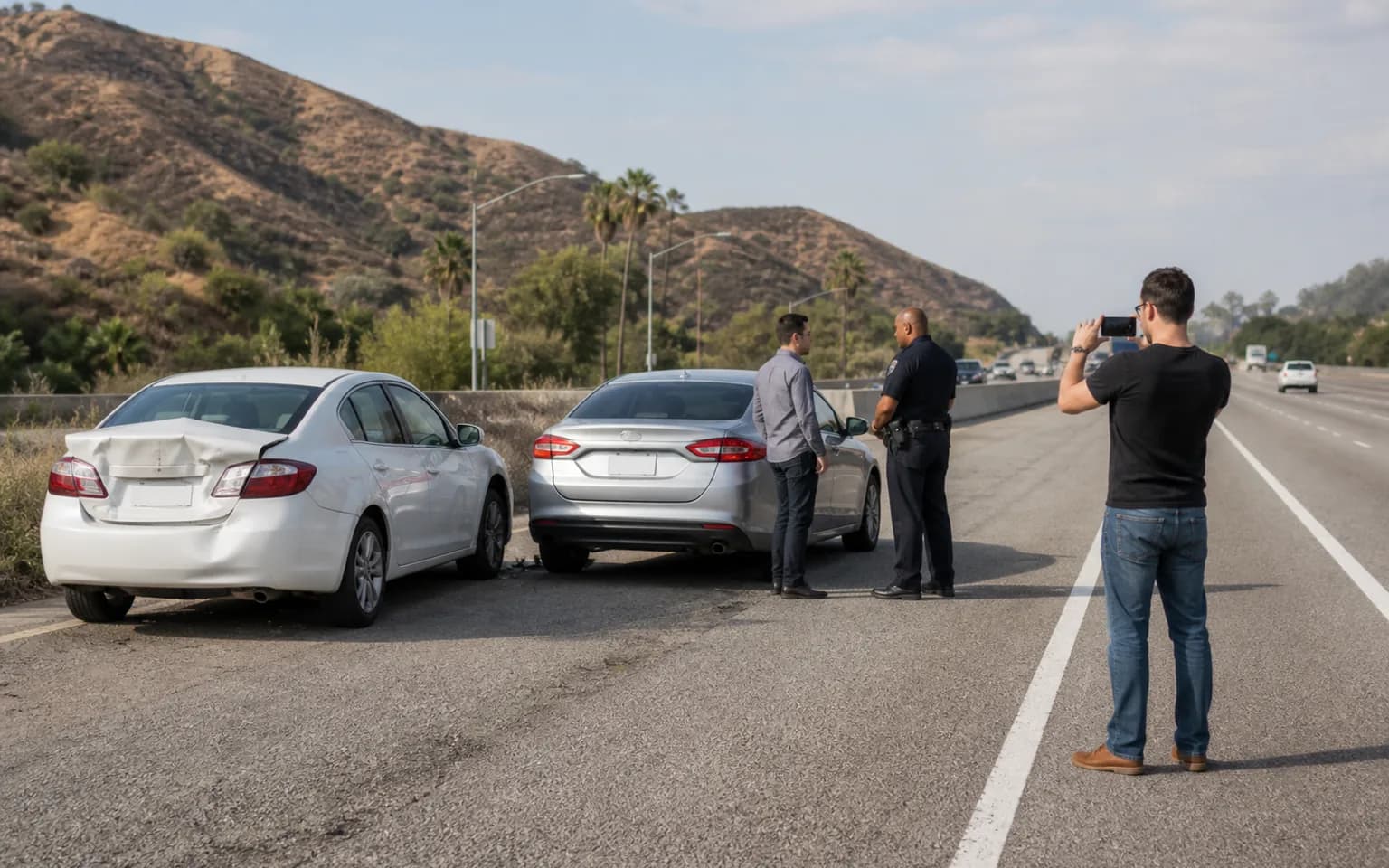
Lane change crashes often look simple until both drivers blame each other, the impact point is small, and the insurer tries to turn a blind-spot dispute into a shared-fault problem.

  • Photos showing damage placement, lane markings, and final vehicle position.
  • Dashcam, Tesla, rideshare, or traffic-camera footage showing the lane movement.
  • Witness statements about signaling, speed, and whether a blind-spot merge happened.

City evidence layer

Bakersfield evidence that may affect the claim

Identify the actual incident location in Bakersfield and connect it with treatment records, witness accounts and the specific service issue. Roads such as CA-99, CA-58, CA-178 are area references; verify the actual setting before requesting records.

  • Record the exact corridor or setting near CA-99, CA-58, CA-178.
  • Match first treatment and follow-up care with records from Adventist Health Bakersfield and Mercy Hospital.
  • Consider Rosedale when it clarifies who saw the incident, where records are held, or which local facts make the claim different.

Injury and urgency layer

Know when the situation may require faster action

These cases usually move faster when vehicle damage, lane markings, dashcam footage, and witness accounts are collected before the adjuster settles on a version of events.

  • List documented symptoms, diagnoses, and changes in function, including patterns such as Shoulder injuries, Neck strain, Low-back pain, Hand and wrist injuries.
  • Choose the next step that resolves a real gap: compare I-5, check a Bakersfield FAQ, or use intake if evidence or insurer pressure is already active.
  • Choose the next action that fits the Bakersfield and Kern County facts: preserve a record, open a local guide, or request individual review.

Evidence priorities

How Bakersfield facts shape the first legal review

Use these signals to organize CA-178, San Joaquin Community Hospital, first symptoms, coverage contact, and support links before the claim is flattened into generic injury copy.

Location

Identify the event and record owner

Start with the actual incident location in Bakersfield. A reference in this guide does not establish where the incident occurred.

  • Record the date, time, address and what you personally observed.
  • Identify who holds each report, recording or photograph.
  • Separate available records from missing ones and date each request.

Care

Organize the treatment chronology

Use records from Adventist Health Bakersfield or Mercy Hospital only if they treated the person.

  • Order symptoms, visits, testing and communications by date.
  • Keep original files and record their source.
  • List questions for the qualified professional; a chronology does not determine diagnosis or causation.

Review

Prepare the unresolved questions

Review depends on verifiable facts and the process that applies to the actual parties and incident.

  • Identify possible parties and insurance correspondence without assuming coverage.
  • Obtain an individual deadline review; a general reference may not apply.
  • Compare licensing, relevant experience and complete written terms before deciding on representation.

Common injuries in these claims

Head and neck injuries
Shoulder, arm, and wrist injuries
Back, hip, and knee injuries
Fractures and secondary-impact trauma

Frequently asked questions

What makes lane change accidents claims different in Bakersfield?

For lane change accidents in Bakersfield, identify the actual road, direction of travel, reporting agency and treating provider. Roads such as CA-99 and CA-58 are area references, not proof of the incident location. Citywide traffic totals cannot establish fault or the cause of an individual injury.

What should I preserve after a lane change accidents incident in Bakersfield?

The first packet should connect the scene and the care trail: proof near CA-58, any business or public-agency record around Bakersfield Speedway, medical notes from San Joaquin Community Hospital, and the earliest claim number or adjuster contact.

Do I need a lawyer right away for lane change accidents in Bakersfield?

You do not need to call before basic medical care, but do not wait if liability, coverage, or treatment gaps are already being questioned. A focused lane change accidents review can sort CA-65, San Joaquin Community Hospital, and insurer contact before the file hardens.

Which lane change accidents proof matters most in Bakersfield?

Photos showing damage placement, lane markings, and final vehicle position. Dashcam, Tesla, rideshare, or traffic-camera footage showing the lane movement. In Bakersfield, connect that proof to CA-99, CA-58, CA-178 and the first medical records from Adventist Health Bakersfield or Mercy Hospital.

How does Bakersfield guidance differ from the main lane change accidents guide?

The main guide explains the claim type. The Bakersfield guide helps identify the actual local setting, record owners, treating providers and evidence to preserve. Nearby roads and facilities are reference points, not a claim that they were involved.