Referral intake reviewES
Motor Vehicle AccidentsLancaster, California

Left-Turn Accident Claims help in Lancaster

Organize records, local context and questions for an independent review of left-turn accident claims in Lancaster.

Local angle

CA-14 · CA-138

Regional context

Los Angeles County

Case timing

Most useful before the insurer separates the documented Lancaster scene from any first treatment record.

Local claim check

Use this page to connect the issue and the city

Local proof should name the roadway, property, or facility that actually controlled the evidence trail; check 10th Street West only if relevant.

A strong left-turn accident claims review connects the evidence story with records from the actual treating provider if care was received; use records from Antelope Valley Hospital only if care occurred there.

Move sooner if coverage questions, disputed liability, or missing records could narrow the claim.

Secure intake request

Send your name and one way to reach you now. Case details are optional.

Local evidence mapReviewed August 9, 2026

Lancaster: records, analysis, and relevant profiles for left-turn accident claims

For left-turn accident claims in Lancaster, use the local records to identify custodians and unresolved questions. Confirm the actual location, treating provider, and applicable process; this guide's area references do not describe a particular incident.

How to use this evidence guide

  1. 1. Start with City of Lancaster and confirm who controls the first missing record.
  2. 2. Confirm the actual location and treating provider. CA-14 and Antelope Valley Hospital are guide references, not incident facts.
  3. 3. Use the verified profiles for Abraham Chuljyan and Armen Akaragian only to review published license and practice information; no attorney has been assigned.

Official local record brief

Start with the right custodian and record

City of Lancaster publishes aggregate crash analysis, high-injury network, and safety-program priorities. Check its scope and limits before applying it to the incident records.

Official dataAggregate crash analysis, high-injury network, and safety-program priorities
Lancaster Local Road Safety Plan and high-injury network

City of Lancaster

The city describes its adopted Local Road Safety Plan, aggregate crash analysis, high-severe-injury and high-fatality networks, emphasis areas, and systemic safety recommendations.

When to use it

Use the plan to identify the city analysis framework and priority network before seeking an incident report, engineering file, maintenance history, signal record, or available video.

Details used to locate the record

  • Plan section or network map
  • source period
  • road segment or intersection

Limit: The plan provides citywide planning context and selected before-and-after summaries. It does not establish the facts, condition, notice, fault, causation, or damages for one event.

Local anchors and boundaries

What can guide the record search, and what it does not prove

Roadway reference

CA-14

Use the direction, lane, crossing, time, and observed conditions to identify reports, cameras, and witnesses connected with CA-14.

Boundary: CA-14 and MOAH (Museum of Art and History) are separate area references. Confirm the actual incident address and jurisdiction before selecting a report agency.

Provider reference

Antelope Valley Hospital

If the person received care at Antelope Valley Hospital, compare its triage, imaging, referrals, restrictions, and billing with the incident chronology.

Boundary: Naming Antelope Valley Hospital does not confirm that a person received care there or that its records prove causation.

Official path

Antelope Valley Courthouse

Confirm the entity, legal party names, and published process before using Antelope Valley Courthouse for a filing or venue question.

Boundary: Antelope Valley Courthouse is a research reference and does not establish venue, jurisdiction, or an individual deadline.

Postal coverage

ZIP codes 93534, 93535, 93536

Use 93534, 93535, 93536 as postal references and confirm the incident and provider addresses before requesting records.

Boundary: ZIP codes 93534, 93535, 93536 describe postal coverage, not the exact scene or a responsible party; compare the address with the report and CA-14 records.

Visual evidence flow

Connect each fact to its record, not an assumption

For this page, start at CA-14, compare the chronology tied to Antelope Valley Hospital, and confirm whether City of Lancaster controls aggregate crash analysis, high-injury network, and safety-program priorities; the final step checks Abraham Chuljyan's published license without assigning representation.

  1. 01 / Scene

    CA-14

    Record the time, direction, lane, and possible camera or witness leads tied to CA-14.

  2. 02 / Care

    Antelope Valley Hospital

    Compare first symptoms, triage, referrals, and restrictions in records associated with Antelope Valley Hospital.

  3. 03 / Record

    City of Lancaster

    Confirm whether City of Lancaster controls aggregate crash analysis, high-injury network, and safety-program priorities before requesting it.

  4. 04 / Review

    Abraham Chuljyan

    Check Abraham Chuljyan's published license and practice information; this path does not assign an attorney.

Decision path

From the scene to a documented review

  1. 01

    Confirm the incident location

    Record the actual address, direction, time and conditions. Use CA-14 or MOAH (Museum of Art and History) only if the incident record identifies that location, then confirm who holds the report or video.

  2. 02

    Confirm the treating provider

    Order symptoms, triage, diagnosis, imaging, referrals, and restrictions by date without assuming one note resolves causation.

  3. 03

    Preserve the left-turn accident claims evidence

    Build one chronology that separates scene proof, medical proof, insurance positions, and unresolved questions; track the Lancaster Local Road Safety Plan and high-injury network request to City of Lancaster as requested, received, disputed, or still awaiting primary-source confirmation.

  4. 04

    Confirm the process connected with Antelope Valley Courthouse

    Verify parties, public-entity involvement, venue, and dates through an official source or qualified attorney before relying on a general deadline.

Investigating agency and camera custodian

Reconstruct the actual approach

Record the actual approach, direction, lane, crossing, time, and lighting. Confirm whether CA-14 or MOAH (Museum of Art and History) appears in the incident records. If care began at Antelope Valley Hospital, compare its intake time with dispatch and video timestamps.

Next request: For this left-turn accident claims review, obtain the report number and preserve video, dispatch, photographs, and movement data before routine deletion cycles.

Medical provider and records department

Request records from the actual treating provider

For care attributed to Antelope Valley Hospital, separate triage, diagnosis, imaging, referrals, restrictions, billing, and symptom changes. The Antelope Valley Hospital chart does not prove causation by itself; it shows which dates and changes still need qualified review.

Next request: Request records from the provider that actually treated the person. If that was Antelope Valley Hospital, keep its chart together with a dated list of missing, corrected, or later-added records.

Court, city, county, or public entity

Check the court and public-entity process

For a filing or public-entity question linked to Antelope Valley Courthouse, first identify who controlled the scene or key record. Confirm the official path associated with Antelope Valley Courthouse before assuming the ordinary filing period resolves a possible public-claim notice.

Next request: Identify the potential defendant, then use the published court or agency path associated with Antelope Valley Courthouse before waiting.

Left-Turn Accident Claims specialist record holder

Preserve the evidence that makes this incident type different

For left-turn accident claims in Lancaster, the focused review should include scene photographs, collision report, witness contacts, vehicle damage, insurance communications, first medical notes, referrals, bills, and work restrictions. Compare that file with the actual treatment chronology and any unresolved venue question; the central unresolved issue is whether the physical record, witness sequence, medical chronology, and available coverage support the same account of what happened.

Next request: Build one chronology that separates scene proof, medical proof, insurance positions, and unresolved questions.

Evidence priorities

  • Preserve originals of available photographs, reports and communications.
  • Identify the actual record owner and document the request and response.
  • Separate personal observations from estimates or later summaries.
  • scene photographs, collision report, witness contacts, vehicle damage, insurance communications, first medical notes, referrals, bills, and work restrictions
  • Build one chronology that separates scene proof, medical proof, insurance positions, and unresolved questions.

Claim pressure points to verify

  • Confirm the incident date and any applicable deadline.
  • Identify recordings or physical evidence that may change.
  • Record missing information without assuming fault or coverage.
  • whether the physical record, witness sequence, medical chronology, and available coverage support the same account of what happened

Analysis before conclusions

What should be documented first about the scene?

Start with the actual address, direction, lane, crossing, time, and lighting. Record a landmark only if it identifies the scene. Match report and camera timestamps with the first-care records from the actual provider.

How should the local data be used?

City and county data can identify patterns and public sources, but it does not prove fault, block-level frequency, or the value of an individual claim.

Why is an attorney profile matched here?

For left-turn accident claims in Lancaster, this page links Abraham Chuljyan (published focus includes personal injury, car accidents); Armen Akaragian (published focus includes personal injury, car accidents) as comparison paths grounded in public profiles and license records; it does not imply assignment, availability, representation, or an outcome recommendation.

How can the incident and treatment timeline be checked?

Compare the report, dispatch, photograph, or video time with the first treatment note. Preserve each original timestamp and any known clock difference. A timing gap identifies a question for the custodian or witness; it does not decide responsibility.

What must be confirmed before treating Antelope Valley Courthouse as the venue reference?

Confirm the legal name of each potential party, who controlled CA-14, and whether a public entity was involved. Antelope Valley Courthouse is a local reference; it does not establish venue, jurisdiction, or compliance with a notice requirement by itself.

What remains unresolved in the left-turn accident claims review?

The file should connect scene photographs, collision report, witness contacts, vehicle damage, insurance communications, first medical notes, referrals, bills, and work restrictions with the actual treatment chronology and evidence preserved at the incident location. That comparison helps evaluate whether the physical record, witness sequence, medical chronology, and available coverage support the same account of what happened without turning local context into a legal conclusion.

Which local legal issue needs review?

For an incident in Lancaster, identify the actual parties, location and responsible record custodians. Confirm the applicable process before relying on a general deadline.

How should the local medical chronology be organized?

Request records from Antelope Valley Hospital and Kaiser Permanente Antelope Valley Medical Center only if they treated the person. Order symptoms, visits, testing and referrals by date without assuming a diagnosis or causal connection.

What connects the scene to the potential filing venue?

Antelope Valley Courthouse and Lancaster Division - Superior Court are research references. Confirm the parties, jurisdiction and applicable filing process; proximity does not establish venue.

What are this page's evidence priorities?

Preserve originals of available photographs, reports and communications.; Identify the actual record owner and document the request and response.; Separate personal observations from estimates or later summaries.; scene photographs, collision report, witness contacts, vehicle damage, insurance communications, first medical notes, referrals, bills, and work restrictions

Which local signals should be verified rather than assumed?

Confirm the incident date and any applicable deadline.; Identify recordings or physical evidence that may change.; Record missing information without assuming fault or coverage.
Verified attorney relevance

Abraham Chuljyan

published focus includes personal injury, car accidents

California Bar #288713

Armen Akaragian

published focus includes personal injury, car accidents

California Bar #242303

No match guarantees assignment, representation, or results.

Primary source trail

  • City of Lancaster: Lancaster Local Road Safety Plan and high-injury network

    The city describes its adopted Local Road Safety Plan, aggregate crash analysis, high-severe-injury and high-fatality networks, emphasis areas, and systemic safety recommendations.

    Limit: The plan provides citywide planning context and selected before-and-after summaries. It does not establish the facts, condition, notice, fault, causation, or damages for one event.

  • California Office of Traffic Safety crash rankings

    Official city and county traffic-safety context, methodology, and limitations.

    Limit: OTS rankings compare incorporated cities or counties and do not prove what happened at a particular scene.

  • California Highway Patrol collision report request

    Official instructions for eligible parties requesting a CHP collision report.

    Limit: This process applies to CHP reports and does not establish that CHP investigated a particular incident.

  • California DMV accident reporting

    Official SR-1 reporting information and required record fields.

    Limit: An SR-1 is a reporting record, not a finding of fault or a substitute for a collision report.

  • Judicial Branch of California court finder

    Official tool for locating the relevant county court and its public contact information.

    Limit: The court finder locates courts; it does not select venue or calculate a filing deadline for an individual matter.

  • California Code of Civil Procedure section 335.1

    Primary statutory text for the general two-year personal-injury action period.

    Limit: Exceptions, accrual rules, contract terms, public-entity claims, and other laws may change the applicable deadline.

  • California Government Code section 911.2

    Primary statutory text for specified claims presented to a public entity.

    Limit: The statute does not identify whether a defendant is a public entity or whether another presentation rule applies.

  • State Bar of California attorney search

    Official public source for checking a California attorney name, license number, and status.

    Limit: A license record verifies public registration details; it does not establish case fit, availability, or likely outcome.

Browse the statewide local evidence source index

How left-turn accident claims claims get evaluated in Lancaster

Intersection crash claims where left-turn timing, signal phases, and right-of-way disputes drive liability. Use this local version when Lancaster Performing Arts Center, CA-138, medical timing, or insurer pressure makes the Lancaster facts more important than the statewide overview.

For left-turn accident claims in Lancaster, identify the actual road, direction of travel, reporting agency and treating provider. Roads such as CA-14 and CA-138 are area references, not proof of the incident location. Citywide traffic totals cannot establish fault or the cause of an individual injury.

What usually matters first

  • Scene proof from the actual incident location; include CA-138, nearby property records, or facility records only if they relate to that scene.
  • Any provider records that help compare the reported symptom timeline, restrictions, referrals, and work disruption with the local event.
  • Coverage letters, recorded-statement requests, and claim numbers before the file turns into a low-detail summary.

Local support points

  • Hospitals: Antelope Valley Hospital, Kaiser Permanente Antelope Valley Medical Center, Palmdale Regional Medical Center
  • Neighborhoods: Downtown Lancaster, West Lancaster, East Lancaster, Del Sur
  • Service areas nearby: Palmdale, Quartz Hill, California City, Tehachapi

Local evidence checklist

Evidence to review first in Lancaster

Turn the facts into a checklist: whether the incident happened near Avenue K, whether records from an actual treating provider exist, and whether to gather records or request intake review.

Local proof

Lancaster facts that should change the case review

Left-Turn Accident Claims claims in Lancaster need more than a swapped city name. Start with the corridor or location pattern around CA-14, CA-138, Avenue K, then connect that setting to witnesses, photos, treatment, and timing.

Treatment trail

Tie the first medical record to the local event

A cleaner file connects symptoms, transport, and follow-up care around Antelope Valley Hospital and Kaiser Permanente Antelope Valley Medical Center or another nearby provider before the insurer can separate treatment from the incident.

Claim distinctness

Separate this page from the broader motor vehicle accidents lane

Use details like Downtown Lancaster, West Lancaster, East Lancaster, injury patterns such as Whiplash, Shoulder injuries, Chest trauma, and city-specific evidence needs to focus on the local facts that differ from a statewide claim.

Next action

Move from reading to a document checklist

Before requesting a claim review, gather photos, repair or incident reports, provider names, employer notes, and every insurer message tied to Lancaster or Los Angeles County.

Nearby guidance

Compare Lancaster with the surrounding area

Use the city overview, county guide, and nearby locations to identify which records and local details matter most for your left-turn accident claims questions.

Useful pages for your next questions

Connect Lancaster left-turn accident claims research to proof, siblings, and action

These links connect this local service page to city data, related claim types, resources, verified attorney information, and intake.

Service-specific proof

Evidence that can make a Lancaster claim different

Review service-specific proof, city data, treatment context, and practical next steps before comparing local claim options.

Service-specific proof

What changes in a left-turn accident claims review

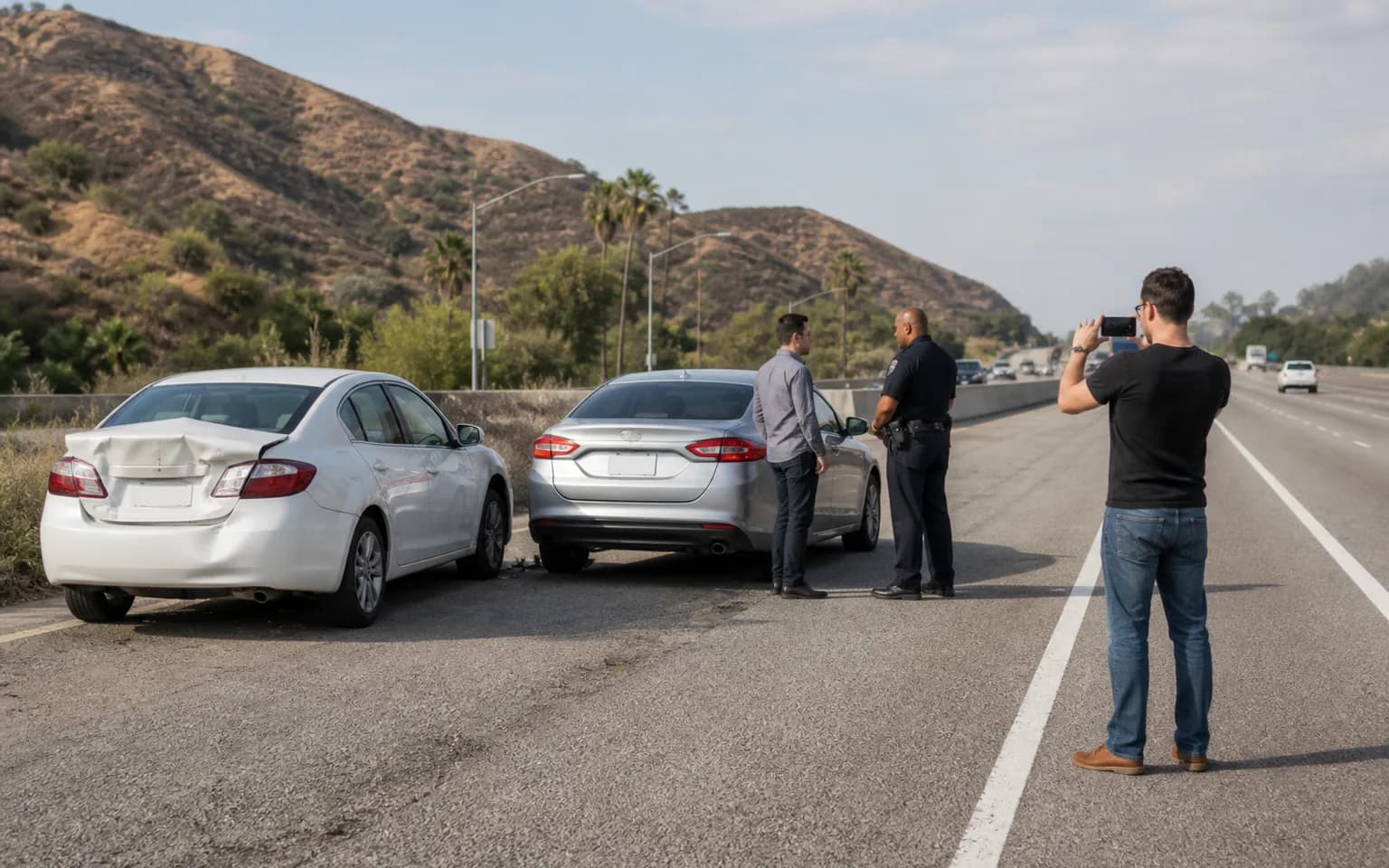
Left-turn crashes often turn into credibility battles because one driver claims they had a protected turn while the other says the turn was rushed or unsafe.

  • Intersection photos showing signal heads, lane markings, and sight lines.
  • Traffic-camera, dashcam, or nearby business footage covering the turn sequence.
  • Witness statements describing speed, signal color, and whether the turn was protected.

City evidence layer

Lancaster evidence that may affect the claim

Identify the actual incident location in Lancaster and connect it with treatment records, witness accounts and the specific service issue. Roads such as CA-14, CA-138, Avenue K are area references; verify the actual setting before requesting records.

  • Record the exact corridor or setting near CA-14, CA-138, Avenue K.
  • Match first treatment and follow-up care with records from Antelope Valley Hospital and Kaiser Permanente Antelope Valley Medical Center.
  • Use nearby-area guidance to answer a specific gap: scene records near 10th Street West, care timing around Palmdale Regional Medical Center, or local comparison inside Los Angeles County.

Injury and urgency layer

Know when the situation may require faster action

Signal timing, witness accounts, scene photos, and any nearby camera footage matter early before the case gets reduced to two conflicting statements.

  • List documented symptoms, diagnoses, and changes in function, including patterns such as Whiplash, Shoulder injuries, Chest trauma, Concussion symptoms.
  • Compare one evidence guide, one local FAQ, and the review process for left-turn accident claims in Lancaster.
  • Choose the next action that fits the Lancaster and Los Angeles County facts: preserve a record, open a local guide, or request individual review.

Local evidence focus

The Lancaster proof path behind this left-turn accident claims page

Connect the actual record trail: whether the incident involved 10th Street West, whether Kaiser Permanente Antelope Valley Medical Center provided care, and whether Downtown Lancaster changes the next useful step.

Location

Identify the event and record owner

Start with the actual incident location in Lancaster. A reference in this guide does not establish where the incident occurred.

  • Record the date, time, address and what you personally observed.
  • Identify who holds each report, recording or photograph.
  • Separate available records from missing ones and date each request.

Care

Organize the treatment chronology

Use records from Antelope Valley Hospital or Kaiser Permanente Antelope Valley Medical Center only if they treated the person.

  • Order symptoms, visits, testing and communications by date.
  • Keep original files and record their source.
  • List questions for the qualified professional; a chronology does not determine diagnosis or causation.

Review

Prepare the unresolved questions

Review depends on verifiable facts and the process that applies to the actual parties and incident.

  • Identify possible parties and insurance correspondence without assuming coverage.
  • Obtain an individual deadline review; a general reference may not apply.
  • Compare licensing, relevant experience and complete written terms before deciding on representation.

Common injuries in these claims

Whiplash
Shoulder injuries
Chest trauma
Concussion symptoms

Frequently asked questions

What makes left-turn accident claims claims different in Lancaster?

For left-turn accident claims in Lancaster, identify the actual road, direction of travel, reporting agency and treating provider. Roads such as CA-14 and CA-138 are area references, not proof of the incident location. Citywide traffic totals cannot establish fault or the cause of an individual injury.

What should I preserve after a left-turn accident claims incident in Lancaster?

The first packet should connect the scene and the care trail: proof near Avenue K, any business or public-agency record around Prime Desert Woodland Preserve, medical notes from Antelope Valley Hospital, and the earliest claim number or adjuster contact.

Do I need a lawyer right away for left-turn accident claims in Lancaster?

You do not need to call before basic medical care, but do not wait if liability, coverage, or treatment gaps are already being questioned. A focused left-turn accident claims review can sort CA-138, Palmdale Regional Medical Center, and insurer contact before the file hardens.

Which left-turn accident claims proof matters most in Lancaster?

Intersection photos showing signal heads, lane markings, and sight lines. Traffic-camera, dashcam, or nearby business footage covering the turn sequence. In Lancaster, connect that proof to CA-14, CA-138, Avenue K and the first medical records from Antelope Valley Hospital or Kaiser Permanente Antelope Valley Medical Center.

How does Lancaster guidance differ from the main left-turn accident claims guide?

The main guide explains the claim type. The Lancaster guide helps identify the actual local setting, record owners, treating providers and evidence to preserve. Nearby roads and facilities are reference points, not a claim that they were involved.