Referral intake reviewES
Motor Vehicle AccidentsSan Bernardino County

Passenger Injury Claims support across San Bernardino County

Use this county page to compare local cities, corridors, and investigation priorities before you decide whether to escalate the claim now.

Major cities

Fontana · San Bernardino · Rancho Cucamonga

Key corridors

I-10 · I-15 · I-215

Claim posture

Useful when records or defendants are spread across multiple cities.

County strategy

Use this page to compare county-wide exposure

Map the city, corridor, and facility before you talk value.

Better for multi-party and multi-location claim review.

Move faster if public entities or commercial defendants are involved.

California passenger injury claims claim information and participating attorney profile context in the motor vehicle accidents practice area for San Bernardino County

Secure intake request

The form loads when you reach this section so the rest of the page stays fast.

Local evidence mapReviewed August 9, 2026

San Bernardino County: records, analysis, and relevant profiles for passenger injury claims

For passenger injury claims in San Bernardino County, this section connects the scene near Glen Helen Amphitheater, the St. Bernardine Medical Center chronology, and official-process questions associated with Victorville Courthouse. It also shows sources and bar-verified attorney profiles, but it does not replace investigation, diagnosis, or individualized legal advice; verify the claimed fact against the verifying document to mark the remaining gap.

How to use this evidence guide

  1. 1. Start with City of San Bernardino Police Department and confirm who controls the first missing record.
  2. 2. Compare CA-60 near Glen Helen Amphitheater with St. Bernardine Medical Center before treating local context as incident proof.
  3. 3. Use the verified profiles for Raffi Naljian and Abraham Chuljyan only to review published license and practice information; no attorney has been assigned.

Official local record brief

Start with the right custodian and record

City of San Bernardino Police Department publishes traffic-collision report timing, identification, and request process; here it is connected with CA-60 near Glen Helen Amphitheater, and the visible limit controls what may be concluded.

Official processTraffic-collision report timing, identification, and request process
San Bernardino Police Records Bureau collision-report process

City of San Bernardino Police Department

The department describes the Records Bureau process for traffic-collision reports, including the ordinary waiting period, identification requirements, fees, and the possibility of additional processing time. On this page, the record helps separate San Bernardino County public context from incident-specific proof and the St. Bernardine Medical Center chronology; cross-check the incident chronology against its supporting source to preserve the original sequence.

When to use it

Use this process after confirming San Bernardino Police took the report and the requester needs the incident record rather than citywide planning context; compare the published profile against the official license to preserve the original sequence.

Details used to locate the record

  • Report number
  • collision date and location
  • requester identification and relationship

Limit: The page describes access to department records; it does not prove that a report is releasable, establish who controlled another record, or determine fault, injury, or damages; for this passenger injury claims page, compare the published scope with CA-60 and the St. Bernardine Medical Center chronology before applying it to the incident.

Official dataHistorical citywide collision analysis and roadway-safety projects
San Bernardino Local Roadway Safety Plan

City of San Bernardino

The city plan documents its collision-analysis period, mapped collision patterns, contributing factors, severity categories, and potential roadway-safety projects. On this page, the record helps separate San Bernardino County public context from incident-specific proof and the St. Bernardine Medical Center chronology; reconcile the evidence gap against the available custodian list to keep the chronology auditable.

When to use it

Use this plan to identify the source period and city safety methodology before seeking incident-level reports, design records, maintenance files, or video from the proper custodian; compare the factual issue against the next available custodian to mark the remaining gap.

Details used to locate the record

  • Plan section or map
  • source years
  • road segment or intersection

Limit: The plan is historical and network-level. It cannot establish conditions on a particular date, notice, the actions of a road user, medical causation, or claim value; for this passenger injury claims page, compare the published scope with CA-60 and the St. Bernardine Medical Center chronology before applying it to the incident.

Local anchors and boundaries

What can guide the record search, and what it does not prove

Scene anchor

CA-60 near Glen Helen Amphitheater

Use the direction, lane, crossing, time, and observed conditions to identify reports, cameras, and witnesses connected with CA-60; reconcile the published profile against the official license to show what needs confirmation.

Boundary: Glen Helen Amphitheater is a geographic reference; it does not establish where an incident occurred or who was at fault; cross-check the filing question against official authority to mark the remaining gap.

First-care record

St. Bernardine Medical Center

Compare triage, imaging, referrals, restrictions, and billing from St. Bernardine Medical Center with the incident chronology; compare the local signal against the source boundary to mark the remaining gap.

Boundary: Naming St. Bernardine Medical Center does not confirm that a person received care there or that its records prove causation; review the record owner against the preservation step to keep the chronology auditable.

Official path

Victorville Courthouse

Confirm the entity, legal party names, and published process before using Victorville Courthouse for a filing or venue question; map the source statement against the supporting record to separate assumptions from documented facts.

Boundary: Victorville Courthouse is a research reference and does not establish venue, jurisdiction, or an individual deadline; reconcile the factual issue against the next available custodian to tie the request to a named source.

Local mobility

Omnitrans and Metrolink

Check whether agency, station, vehicle, or transfer records help place the sequence near CA-60; map the claimed fact against the verifying document to test one unresolved fact.

Boundary: Omnitrans and Metrolink may identify an agency or movement record, but confirm the operator, time window, and record number before using it to describe this incident; compare the record chronology against the chain of custody to distinguish context from proof.

Visual evidence flow

Connect each fact to its record, not an assumption

For this page, start at CA-60 near Glen Helen Amphitheater, compare the chronology tied to St. Bernardine Medical Center, and confirm whether City of San Bernardino Police Department controls traffic-collision report timing, identification, and request process; the final step checks Raffi Naljian's published license without assigning representation.

  1. 01 / Scene

    CA-60 near Glen Helen Amphitheater

    Record the time, direction, lane, and possible camera or witness leads tied to CA-60 near Glen Helen Amphitheater.

  2. 02 / Care

    St. Bernardine Medical Center

    Compare first symptoms, triage, referrals, and restrictions in records associated with St. Bernardine Medical Center.

  3. 03 / Record

    City of San Bernardino Police Department

    Confirm whether City of San Bernardino Police Department controls traffic-collision report timing, identification, and request process before requesting it.

  4. 04 / Review

    Raffi Naljian

    Check Raffi Naljian's published license and practice information; this path does not assign an attorney.

Decision path

From the scene to a documented review

  1. 01

    Place the scene near CA-60

    Record direction, time, conditions, and the Glen Helen Amphitheater reference, then identify who controls the report, video, or physical record; map the statement against the timestamped record to distinguish context from proof.

  2. 02

    Connect care from St. Bernardine Medical Center

    Order symptoms, triage, diagnosis, imaging, referrals, and restrictions by date without assuming one note resolves causation; cross-check the scene fact against the preserved record to test whether independent records agree.

  3. 03

    Preserve the passenger injury claims evidence

    Build one chronology that separates scene proof, medical proof, insurance positions, and unresolved questions; track the San Bernardino Local Roadway Safety Plan request to City of San Bernardino as requested, received, disputed, or still awaiting primary-source confirmation; review the treatment chronology against the provider record to identify the next custodian.

  4. 04

    Confirm the process connected with Victorville Courthouse

    Verify parties, public-entity involvement, venue, and dates through an official source or qualified attorney before relying on a general deadline; reconcile the incident chronology against its supporting source to preserve the original sequence.

Investigating agency and camera custodian

Reconstruct the approach along CA-60

On the CA-60 approach near Glen Helen Amphitheater, record direction, lane, crossing, time, and lighting. If first care began at St. Bernardine Medical Center, compare its intake time with dispatch, video, and movement data to identify who holds each missing record; document the evidence sequence against the retention window to tie the request to a named source.

Next request: For this passenger injury claims review, obtain the report number and preserve video, dispatch, photographs, and movement data before routine deletion cycles; reconcile the source statement against the supporting record to mark the remaining gap.

Medical provider and records department

Connect the first care record from St. Bernardine Medical Center

For care attributed to St. Bernardine Medical Center, separate triage, diagnosis, imaging, referrals, restrictions, billing, and symptom changes. The St. Bernardine Medical Center chart does not prove causation by itself; it shows which dates and changes still need qualified review; verify the source scope against the supported conclusion to check who controlled the evidence.

Next request: Request the complete St. Bernardine Medical Center chart and keep a dated list of missing, corrected, or later-added records; review the unresolved question against the confirming record to test whether independent records agree.

Court, city, county, or public entity

Check control and venue around Victorville Courthouse

For a filing or public-entity question linked to Victorville Courthouse, first identify who controlled the scene or key record. Confirm the official path associated with Victorville Courthouse before assuming the ordinary filing period resolves a possible public-claim notice; verify the filing question against official authority to check who controlled the evidence.

Next request: Identify the potential defendant, then use the published court or agency path associated with Victorville Courthouse before waiting; compare the published profile against the official license to distinguish context from proof.

Passenger Injury Claims specialist record holder

Preserve the evidence that makes this incident type different

For passenger injury claims in San Bernardino County, the focused review should include scene photographs, collision report, witness contacts, vehicle damage, insurance communications, first medical notes, referrals, bills, and work restrictions. Compare that file with the first-care chronology from St. Bernardine Medical Center and any venue question involving Victorville Courthouse; the central unresolved issue is whether the physical record, witness sequence, medical chronology, and available coverage support the same account of what happened; reconcile the scene fact against the preserved record to identify the next custodian.

Next request: Build one chronology that separates scene proof, medical proof, insurance positions, and unresolved questions for the file connecting CA-60, St. Bernardine Medical Center, and Victorville Courthouse; review the local signal against the source boundary to keep the chronology auditable.

Local data classification

Editorial estimate

Hurt Advice's county model lists 22,000+ annual crashes for San Bernardino County.

This figure is a Hurt Advice editorial model, not an official agency extract or proof of fault, block-level frequency, or claim value.

Evidence priorities

  • scene photographs, collision report, witness contacts, vehicle damage, insurance communications, first medical notes, referrals, bills, and work restrictions
  • Build one chronology that separates scene proof, medical proof, insurance positions, and unresolved questions.

Claim pressure points to verify

  • whether the physical record, witness sequence, medical chronology, and available coverage support the same account of what happened
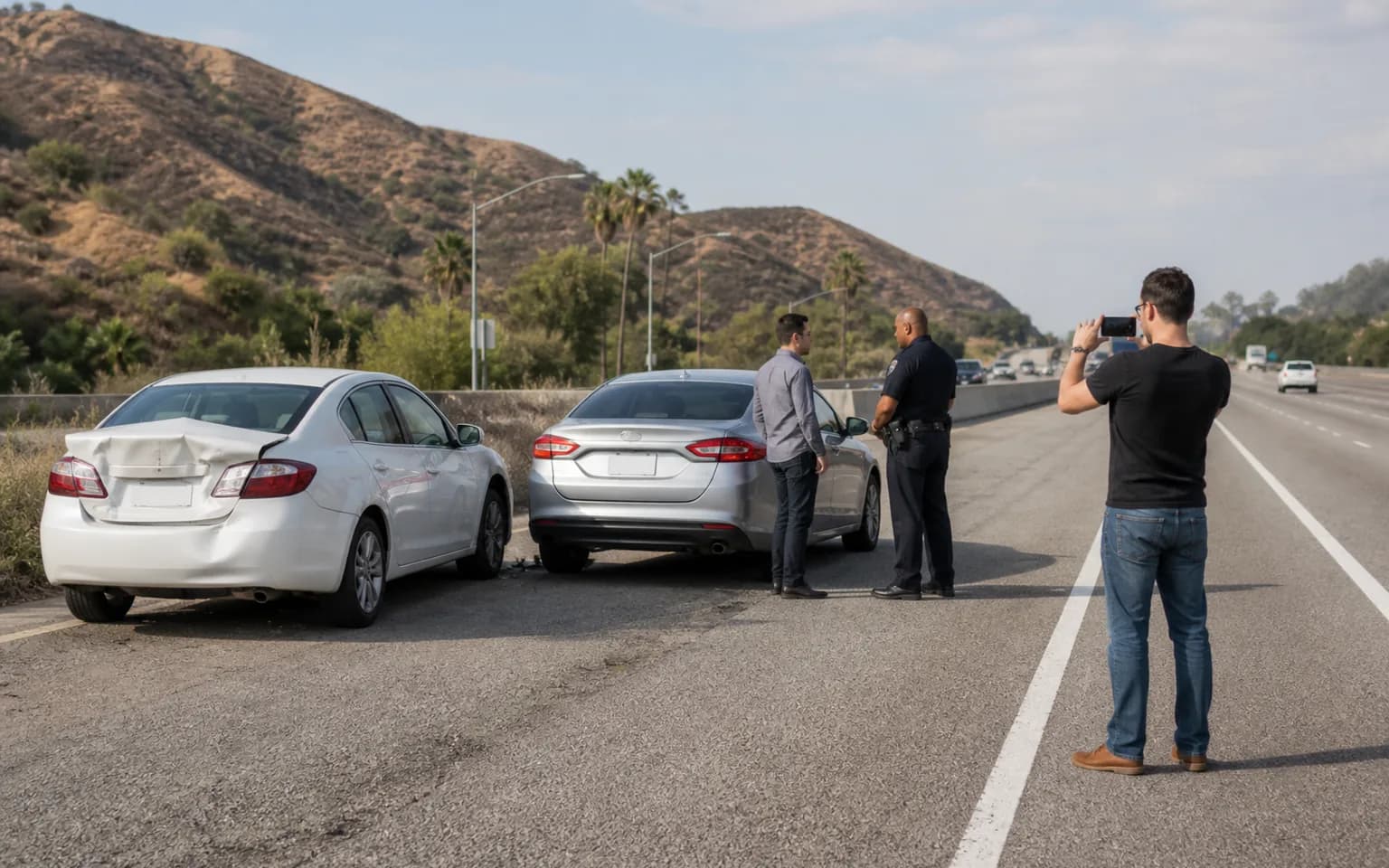
Analysis before conclusions

After reviewing the source statement against the supporting record, what should be documented first for an incident near CA-60?

Start with direction, lane, crossing, time, lighting, and the Glen Helen Amphitheater reference. Then connect those details with first care from St. Bernardine Medical Center and the custodian of each report, video, or record; verify the evidence sequence against the retention window to identify the next custodian.

After reviewing the unresolved question against the confirming record, how should the local data be used?

Hurt Advice's county model lists 22,000+ annual crashes for San Bernardino County. This figure is a Hurt Advice editorial model, not an official agency extract or proof of fault, block-level frequency, or claim value; verify the record chronology against the chain of custody to identify the next custodian.

After reviewing the published profile against the official license, why is an attorney profile matched here?

For passenger injury claims in San Bernardino County, this page links Raffi Naljian (published focus includes car accidents, rear end collision lawyer, head on collisions, t bone accidents, speeding accidents, distracted driving, rental car accidents); Abraham Chuljyan (published focus includes personal injury, car accidents) as comparison paths grounded in public profiles and license records; it does not imply assignment, availability, representation, or an outcome recommendation; trace the incident chronology against its supporting source to limit the conclusion to verified facts.

After reviewing the evidence gap against the available custodian list, how can the sequence between Glen Helen Amphitheater and St. Bernardine Medical Center be checked?

Compare the report, dispatch, photograph, or video time near Glen Helen Amphitheater with the first note from St. Bernardine Medical Center. A timing difference does not decide the matter, but it identifies which custodian or witness should clarify the sequence; document the record owner against the preservation step to keep the chronology auditable.

After reviewing the page claim against primary evidence, what must be confirmed before treating Victorville Courthouse as the venue reference?

Confirm the legal name of each potential party, who controlled CA-60, and whether a public entity was involved. Victorville Courthouse is a local reference; it does not establish venue, jurisdiction, or compliance with a notice requirement by itself; trace the reported fact against the original document to identify the next custodian.

After reviewing local context against incident-level proof, what remains unresolved in the passenger injury claims review?

The file should connect scene photographs, collision report, witness contacts, vehicle damage, insurance communications, first medical notes, referrals, bills, and work restrictions with the St. Bernardine Medical Center chronology and evidence preserved near Glen Helen Amphitheater. That comparison helps evaluate whether the physical record, witness sequence, medical chronology, and available coverage support the same account of what happened without turning local context into a legal conclusion; review the evidence gap against the available custodian list to check who controlled the evidence.

After reviewing the filing question against official authority, which local legal issue needs review?

San Bernardino County shows 15,280 tracked crashes across 5 cities. For passenger injury claims claims, that usually means comparing county-wide travel corridors such as I-215, I-10, SR-210 before the insurer narrows the case too quickly; compare the timeline against independent corroboration to limit the conclusion to verified facts.

After reviewing the record chronology against the chain of custody, what are this page's evidence priorities?

scene photographs, collision report, witness contacts, vehicle damage, insurance communications, first medical notes, referrals, bills, and work restrictions; Build one chronology that separates scene proof, medical proof, insurance positions, and unresolved questions; review the claimed fact against the verifying document to mark the remaining gap.

After reviewing the evidence sequence against the retention window, which local signals should be verified rather than assumed?

whether the physical record, witness sequence, medical chronology, and available coverage support the same account of what happened; cross-check the page claim against primary evidence to test one unresolved fact.

Verified attorney relevance

Raffi Naljian

published focus includes car accidents, rear end collision lawyer, head on collisions, t bone accidents, speeding accidents, distracted driving, rental car accidents

California Bar #238919

Abraham Chuljyan

published focus includes personal injury, car accidents

California Bar #288713

No match guarantees assignment, representation, or results.

Primary source trail

  • City of San Bernardino Police Department: San Bernardino Police Records Bureau collision-report process

    The department describes the Records Bureau process for traffic-collision reports, including the ordinary waiting period, identification requirements, fees, and the possibility of additional processing time; on this page it locates the local record connecting CA-60, St. Bernardine Medical Center, and Victorville Courthouse; reconcile the record chronology against the chain of custody to separate assumptions from documented facts.

    Limit: The page describes access to department records; it does not prove that a report is releasable, establish who controlled another record, or determine fault, injury, or damages; for this passenger injury claims issue in San Bernardino County, verify the custodian, period, and geography before drawing a conclusion.

  • City of San Bernardino: San Bernardino Local Roadway Safety Plan

    The city plan documents its collision-analysis period, mapped collision patterns, contributing factors, severity categories, and potential roadway-safety projects; on this page it locates the local record connecting CA-60, St. Bernardine Medical Center, and Victorville Courthouse; compare the coverage position against the policy document to test one unresolved fact.

    Limit: The plan is historical and network-level. It cannot establish conditions on a particular date, notice, the actions of a road user, medical causation, or claim value; for this passenger injury claims issue in San Bernardino County, verify the custodian, period, and geography before drawing a conclusion.

  • California Office of Traffic Safety crash rankings

    Official city and county traffic-safety context, methodology, and limitations; on this page it frames the investigation connecting CA-60, St. Bernardine Medical Center, and Victorville Courthouse; map the factual issue against the next available custodian to test whether independent records agree.

    Limit: OTS rankings compare incorporated cities or counties and do not prove what happened at a particular scene; for this passenger injury claims issue in San Bernardino County, verify the custodian, period, and geography before drawing a conclusion.

  • Judicial Branch of California court finder

    Official tool for locating the relevant county court and its public contact information; on this page it frames the investigation connecting CA-60, St. Bernardine Medical Center, and Victorville Courthouse; reconcile the page claim against primary evidence to separate assumptions from documented facts.

    Limit: The court finder locates courts; it does not select venue or calculate a filing deadline for an individual matter; for this passenger injury claims issue in San Bernardino County, verify the custodian, period, and geography before drawing a conclusion.

  • California Code of Civil Procedure section 335.1

    Primary statutory text for the general two-year personal-injury action period; on this page it frames the investigation connecting CA-60, St. Bernardine Medical Center, and Victorville Courthouse; map local context against incident-level proof to tie the request to a named source.

    Limit: Exceptions, accrual rules, contract terms, public-entity claims, and other laws may change the applicable deadline; for this passenger injury claims issue in San Bernardino County, verify the custodian, period, and geography before drawing a conclusion.

  • California Government Code section 911.2

    Primary statutory text for specified claims presented to a public entity; on this page it frames the investigation connecting CA-60, St. Bernardine Medical Center, and Victorville Courthouse; document the evidence gap against the available custodian list to distinguish context from proof.

    Limit: The statute does not identify whether a defendant is a public entity or whether another presentation rule applies; for this passenger injury claims issue in San Bernardino County, verify the custodian, period, and geography before drawing a conclusion.

  • Hurt Advice citations and data-methodology disclosure

    Site disclosure identifying editorial estimates, public-source families, and citation boundaries; on this page it frames the investigation connecting CA-60, St. Bernardine Medical Center, and Victorville Courthouse; review the incident chronology against its supporting source to keep the chronology auditable.

    Limit: An editorial estimate is not an official agency extract and cannot prove incident-level frequency, fault, or claim value; for this passenger injury claims issue in San Bernardino County, verify the custodian, period, and geography before drawing a conclusion.

  • State Bar of California attorney search

    Official public source for checking a California attorney name, license number, and status; on this page it frames the investigation connecting CA-60, St. Bernardine Medical Center, and Victorville Courthouse; cross-check the treatment chronology against the provider record to preserve the original sequence.

    Limit: A license record verifies public registration details; it does not establish case fit, availability, or likely outcome; for this passenger injury claims issue in San Bernardino County, verify the custodian, period, and geography before drawing a conclusion.

Browse the statewide local evidence source index

How passenger injury claims claims change across San Bernardino County

Passenger claims where multiple policies may apply and fault disputes between drivers should not delay your compensation path. County-level claims often move differently because treatment, witnesses, public entities, and insurance carriers can span several cities at once.

San Bernardino County shows 15,280 tracked crashes across 5 cities. For passenger injury claims claims, that usually means comparing county-wide travel corridors such as I-215, I-10, SR-210 before the insurer narrows the case too quickly.

County planning points

  • Identify the exact city, property, worksite, or corridor first.
  • Preserve records from every provider or agency touched by the event.
  • Track deadlines carefully if government, transit, or institutional defendants are involved.

Coverage context

  • Courthouses: San Bernardino Justice Center, Fontana Courthouse, Rancho Cucamonga Courthouse
  • Major cities: Fontana, San Bernardino, Rancho Cucamonga, Ontario, Victorville
  • Population served: 2.2 million

Regional evidence checklist

Why this San Bernardino County page guides a county-wide review

Differences among cities, corridors, venues, and medical providers can change which records matter. Compare the regional evidence below, then continue to focused city guidance, a practical resource, or case review.

Regional proof

Use the county page when the facts cross city lines

Passenger Injury Claims claims across San Bernardino County often turn on which city, corridor, provider, or defendant controls the best evidence. Start with Fontana, San Bernardino, Rancho Cucamonga, Ontario, then narrow to the strongest city page.

Venue context

Keep venue and public-entity timing visible

County-wide review should preserve details tied to San Bernardino Justice Center and Fontana Courthouse, government notices, commercial defendants, and multi-city records before the case is pushed into a generic settlement lane.

Corridor detail

Anchor the county overview in real movement patterns

Mentioning I-10, I-15, I-215 helps distinguish this regional page from a city page, especially when witnesses, facilities, or treatment span more than one location.

Claim triage

Decide whether the next click should be city, resource, or intake

For Whiplash, Back injuries, Facial injuries or severe losses across a population base of 2.2 million, compare exact city pages first unless deadlines or insurer pressure make intake the safer next step.

Regional pathways

Use San Bernardino County as the regional layer, not the only layer

Move toward the exact city view, the broader service category, or a nearby county comparison according to where the incident, records, treatment, and responsible parties are located.

Useful pages for your next questions

Route San Bernardino County passenger injury claims research into exact city and authority pages

These links move visitors from the county overview into city-level service pages, sibling county pages, resources, and intake when they need a more exact next step.

County differentiation

Make this San Bernardino County page useful even when city pages already exist

County pages earn their place when they explain regional corridors, venue context, city handoffs, and service-specific proof that a single city page cannot cover.

County evidence guide

Which San Bernardino County location controls the next step?

San Bernardino County includes 15,280 tracked crashes across 5 cities. Identify which city, corridor, or venue is connected to the incident.

  • Compare the city closest to the incident: Fontana, San Bernardino, Rancho Cucamonga, Ontario, Victorville.
  • Record the corridor, travel direction, and nearby landmarks around I-10, I-15, I-215, CA-60.
  • Note whether a courthouse, agency, public entity, or record owner around San Bernardino Justice Center and Fontana Courthouse may be relevant.

Service proof

What makes passenger injury claims county-wide

Passenger claims are usually simpler on liability but more complex on insurance because more than one policy, driver, or vehicle owner may be responsible for paying.

  • All driver, vehicle owner, and household policy information.
  • Seat position, restraint use, and injury timeline documentation.
  • Statements and reports showing how the impact happened without shifting blame to the passenger.

Choosing local guidance

When county context adds more than a city guide

These cases improve when coverage is mapped early and the passenger avoids getting trapped between dueling insurers.

  • Compare the city where the incident happened with nearby county context.
  • Check a source-linked resource and the published review process.
  • Choose the next step that fits: city guidance, a practical resource, or intake.

Regional evidence priorities

The regional proof question this San Bernardino County page answers

Compare record owners, transportation corridors, venue questions, and the most useful city-level follow-up across the region.

regional evidence

Evidence to connect in San Bernardino County

For San Bernardino County, the useful question is whether the witness callback, billing ledger, and therapy schedule can be tied to I-10, I-15, I-215 before the insurer treats the passenger injury claims file as routine.

  • Use the coverage map to connect scene proof with freight movement.
  • Compare San Bernardino Justice Center, Fontana Courthouse against the first symptom notes and follow-up timing.
  • Keep San Bernardino Justice Center, Fontana Courthouse tied to witness callback when agency, property-control, or maintenance questions may shape the file.

Evidence sequence

What to organize for a county review

A focused San Bernardino County review connects the work-loss proof, the weather and lighting change, and the documents an attorney may need first.

  • Name the records that can disappear first, especially any witness callback or billing ledger.
  • Connect Fontana, San Bernardino, Rancho Cucamonga, Ontario with San Bernardino Justice Center, Fontana Courthouse, roadway proof, and the weather and lighting change pressure point.
  • Tie the symptom timeline for Whiplash, Back injuries, Facial injuries to therapy schedule, San Bernardino Justice Center, Fontana Courthouse, and the records an attorney may request next.

Decision summary

Turn the evidence into one clear next decision

Preserve therapy schedule, document the local pressure around parking-lot visibility, and decide whether you need a city guide, evidence checklist, verified attorney profile, or intake.

  • Explain why therapy schedule or billing ledger belongs in the first evidence review.
  • Use Fontana, San Bernardino, Rancho Cucamonga, Ontario to separate a narrow evidence issue from broader county context.
  • Avoid relying on promises; focus next on San Bernardino Justice Center, Fontana Courthouse, Whiplash, Back injuries, Facial injuries, and the proof gap created by parking-lot visibility.

visitor surge filter

The visitor surge detail matters when it explains why Facial injuries evidence may change the damages ledger and the urgency of preserving records.

witness callback near CA-18

When a passenger injury claims question starts around CA-18, the witness callback matters because construction detour can blur the liability sequence before witnesses are contacted.

Victorville Courthouse timing

A reader in San Bernardino County should know whether Victorville Courthouse records line up with Whiplash, especially if the first insurer note minimizes the liability sequence.

Victorville Courthouse control question

If Victorville Courthouse is part of the story, preserve the scene diagram before rideshare pickup pressure changes who can explain access, lighting, staffing, or maintenance.

San Bernardino comparison

Compare San Bernardino County with San Bernardino only when the location changes the witness loop, available witnesses, record holders, or access to a ambulance narrative.

Whiplash follow-through

For Whiplash, the practical next step is to connect Rancho Cucamonga Courthouse with missed work, follow-up care, and the way freight movement affected the first account.

County evidence brief

Regional review notes for San Bernardino County passenger injury claims claims

These notes vary by service, county, corridors, court or venue signals, major cities, and injury patterns so readers can compare county-level context with city-specific next steps.

regional evidence step 1

Damages-documentation lens for San Bernardino County

A helpful county review makes campus shuttle activity practical by connecting Facial injuries, weather snapshot, and separating first-hand proof from later insurer summaries to a next action or intake decision.

If CA-138 matters, tie the route, the proof owner, and Victorville Courthouse to the same chronology.

Rancho Cucamonga Courthouse becomes useful when it points to witness callback, while Fontana should stay secondary unless it changes separating first-hand proof from later insurer summaries.

Use Facial injuries to explain a care-sequence gap, not to inflate severity; the next proof task is separating first-hand proof from later insurer summaries.

  • Preserve weather snapshot before the record owner changes access, retention, or availability.
  • Tie Victorville Courthouse to first symptoms, follow-up care, and any work or mobility limits.
  • Use Fontana to compare weather snapshot, a nearby facility that may hold intake, security, or billing records, and the local care trail.
  • If the file turns on campus shuttle activity, choose the guide or resource that can answer that issue instead of another general overview.

regional evidence step 2

Property-control lens for San Bernardino County

Check whether San Bernardino County changes the evidence plan: CA-18 shapes the scene, San Bernardino Justice Center shapes the care trail, and conflicting witness direction shapes the insurer response.

Use CA-18 only when it helps explain the camera lead, witness angle, care handoff, or the venue question.

San Bernardino Justice Center becomes useful when it points to coverage letter, while Chino should stay secondary unless it changes turning local records into a clean intake summary.

Use Back injuries to explain a care-sequence gap, not to inflate severity; the next proof task is turning local records into a clean intake summary.

  • Preserve dash-camera export before the record owner changes access, retention, or availability.
  • Tie San Bernardino Justice Center to first symptoms, follow-up care, and any work or mobility limits.
  • Keep Chino in a supporting role while dispatch note, Back injuries, and visitor surge anchor the San Bernardino County review.
  • Use turning local records into a clean intake summary so Back injuries, dash-camera export, and conflicting witness direction point to a concrete next action.

regional evidence step 3

Adjuster-pressure lens for San Bernardino County

Handle security desk entry, Rancho Cucamonga Courthouse, and a recorded-statement request before reducing the incident to a broad passenger injury claims summary.

If I-215 matters, tie the route, the proof owner, and Rancho Cucamonga Courthouse to the same chronology.

Victorville Courthouse becomes useful when it points to witness callback, while Rialto should stay secondary unless it changes stating the narrow question the available evidence needs to answer.

If the claim involves Whiplash, organize security desk entry, stating the narrow question the available evidence needs to answer, and any care gap before discussing value.

  • Preserve security desk entry before the record owner changes access, retention, or availability.
  • Tie Rancho Cucamonga Courthouse to first symptoms, follow-up care, and any work or mobility limits.
  • Use Rialto to compare security desk entry, a recorded-statement request, and the local care trail.
  • Match security desk entry and Rancho Cucamonga Courthouse with the city, county, evidence, attorney, or intake option that fits the question.

regional evidence step 4

Fault-sequence lens for San Bernardino County

The local value comes from separating the scene record from the claim narrative. camera-retention request, medical necessity record, and Fontana Courthouse tell the reader what to preserve first.

If CA-18 matters, tie the route, the proof owner, and Fontana Courthouse to the same chronology.

Compare San Bernardino Justice Center with body-shop supplement, employer absence note, and delayed symptom escalation before moving to broader guidance.

For Whiplash, define the notice trail, identify who controls body-shop supplement, and avoid relying on promised outcomes.

  • Preserve body-shop supplement before the record owner changes access, retention, or availability.
  • Tie Fontana Courthouse to first symptoms, follow-up care, and any work or mobility limits.
  • Use Victorville only when it changes Fontana Courthouse, turning a broad injury question into a document-specific checklist, or roadway access.
  • Choose between more information, body-shop supplement, turning a broad injury question into a document-specific checklist, and intake based on what is still missing in San Bernardino County.

regional evidence step 5

Property-control lens for San Bernardino County

The local value comes from separating the scene record from the claim narrative. inspection request, witness loop, and San Bernardino Justice Center tell the reader what to preserve first.

A useful first pass asks who can confirm I-15, whether San Bernardino Justice Center supports the timing, and what inspection request can still be preserved.

When weather snapshot points toward Rancho Cucamonga Courthouse, preserve that record before moving to a broader city, county, or resource guide.

Use Facial injuries to explain a care-sequence gap, not to inflate severity; the next proof task is comparing the route into care with the route into the insurance file.

  • Preserve maintenance ticket before the record owner changes access, retention, or availability.
  • Tie San Bernardino Justice Center to first symptoms, follow-up care, and any work or mobility limits.
  • Let Fontana answer one comparison question, then return to I-15, Rancho Cucamonga Courthouse, and the maintenance ticket.
  • Use comparing the route into care with the route into the insurance file so Facial injuries, maintenance ticket, and a fast property-damage estimate point to a concrete next action.

regional evidence step 6

Camera-window lens for San Bernardino County

Use San Bernardino County as the evidence anchor. Connect I-15, Fontana Courthouse, and employer absence note to linking a symptom timeline to a concrete place and provider.

The scene should not float away from the medical record: connect I-15, claim-number trail, and San Bernardino Justice Center before damages are estimated.

Fontana Courthouse becomes useful when it points to dash-camera export, while Chino should stay secondary unless it changes matching scene facts to the earliest treatment note.

Ask whether I-15, San Bernardino Justice Center, or employer absence note best explains the care sequence for Seatbelt bruising.

  • Preserve employer absence note before the record owner changes access, retention, or availability.
  • Tie San Bernardino Justice Center to first symptoms, follow-up care, and any work or mobility limits.
  • Use Chino to compare employer absence note, a serious injury hidden behind normal-looking photos, and the local care trail.
  • Use matching scene facts to the earliest treatment note so Seatbelt bruising, employer absence note, and a serious injury hidden behind normal-looking photos point to a concrete next action.

regional evidence step 7

Transportation-corridor lens for San Bernardino County

The local value comes from separating the scene record from the claim narrative. dispatch note, medical necessity record, and Rancho Cucamonga Courthouse tell the reader what to preserve first.

If I-10 matters, tie the route, the proof owner, and Rancho Cucamonga Courthouse to the same chronology.

Compare San Bernardino Justice Center with radiology order, security desk entry, and a high-volume corridor where witness memory fades quickly before moving to broader guidance.

If the claim involves Whiplash, organize radiology order, using local facts to triage urgency rather than repeat statewide basics, and any care gap before discussing value.

  • Preserve radiology order before the record owner changes access, retention, or availability.
  • Tie Rancho Cucamonga Courthouse to first symptoms, follow-up care, and any work or mobility limits.
  • Use Upland to compare radiology order, a high-volume corridor where witness memory fades quickly, and the local care trail.
  • Choose between more information, radiology order, using local facts to triage urgency rather than repeat statewide basics, and intake based on what is still missing in San Bernardino County.

regional evidence step 8

Work-impact lens for San Bernardino County

The local value comes from separating the scene record from the claim narrative. security desk entry, insurance posture, and Victorville Courthouse tell the reader what to preserve first.

A useful first pass asks who can confirm CA-18, whether Victorville Courthouse supports the timing, and what security desk entry can still be preserved.

Compare San Bernardino Justice Center with coverage letter, body-shop supplement, and multiple possible defendants before moving to broader guidance.

Keep Back injuries grounded in Victorville Courthouse, then use coverage letter to show what still needs verification before value is discussed.

  • Preserve coverage letter before the record owner changes access, retention, or availability.
  • Tie Victorville Courthouse to first symptoms, follow-up care, and any work or mobility limits.
  • Let Victorville answer one comparison question, then return to CA-18, San Bernardino Justice Center, and the coverage letter.
  • Choose between more information, coverage letter, using local facts to triage urgency rather than repeat statewide basics, and intake based on what is still missing in San Bernardino County.

Common injuries in these claims

Whiplash
Back injuries
Facial injuries
Seatbelt bruising

Frequently asked questions

Why does county-wide context matter for passenger injury claims claims in San Bernardino County?

San Bernardino County shows 15,280 tracked crashes across 5 cities. For passenger injury claims claims, that usually means comparing county-wide travel corridors such as I-215, I-10, SR-210 before the insurer narrows the case too quickly.

Which parts of San Bernardino County usually matter most in these claims?

The strongest first packet identifies the city, corridor, record owner, treatment trail, and insurer pressure before the claim is reduced to a broad San Bernardino County summary.

How quickly should I act after a passenger injury claims incident in San Bernardino County?

Early review is safest when treatment is active, a public entity may be involved, or records could sit in more than one city. In San Bernardino County, start by separating proof from Chino, CA-138, and Fontana Courthouse.

What proof should be preserved first in a San Bernardino County passenger injury claims claim?

All driver, vehicle owner, and household policy information. Seat position, restraint use, and injury timeline documentation. County-wide cases should also identify the exact city, corridor, provider, or venue before the file gets treated as a generic regional claim.

When should I use city-specific guidance instead of the San Bernardino County overview?

Use the county overview when facts cross several cities or corridors such as I-10, I-15, I-215. Use city-specific guidance when the claim is anchored in one place, especially one of Fontana, San Bernardino, Rancho Cucamonga, Ontario, because local records, witnesses, and treatment can be more specific.