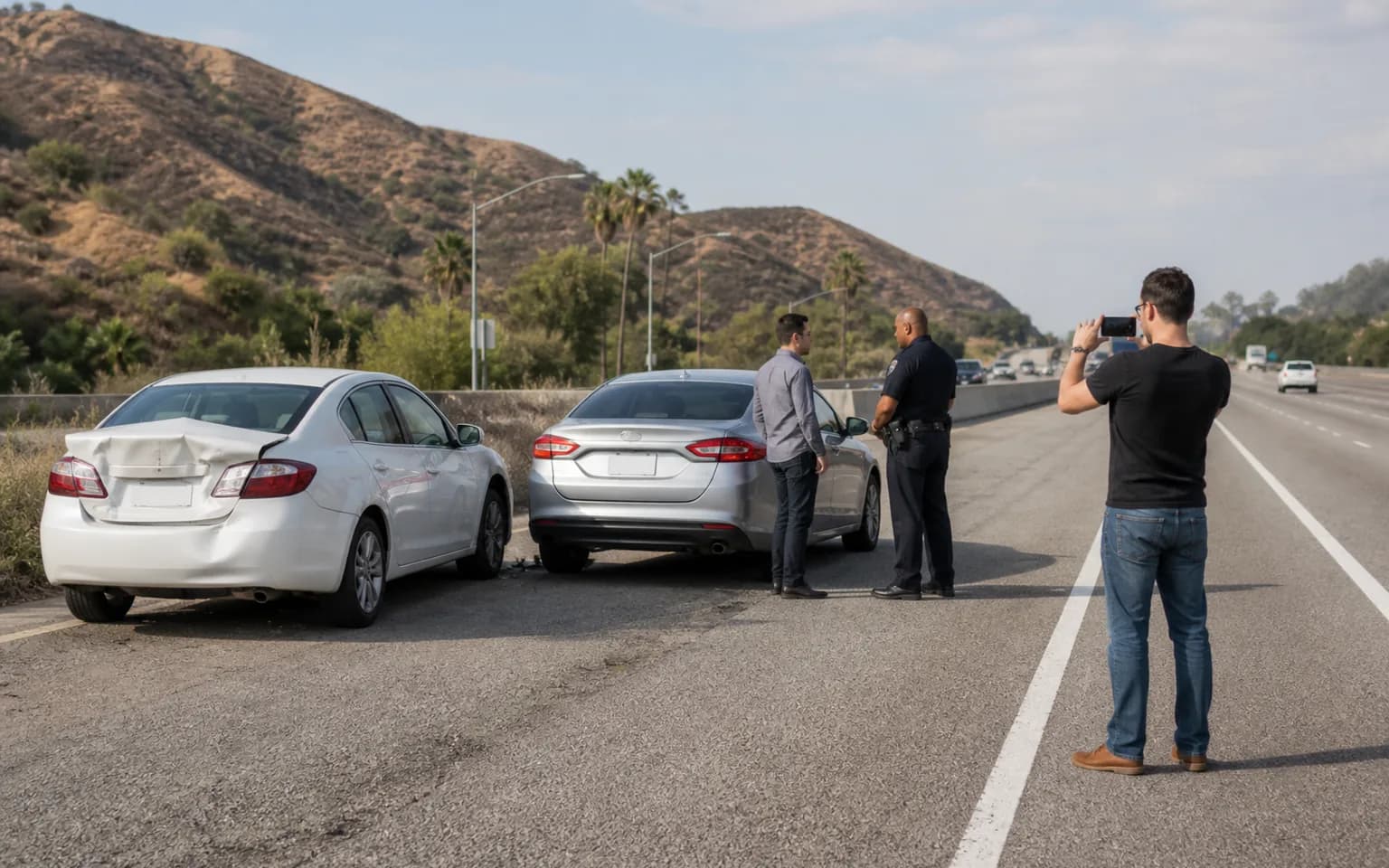
Motor Vehicle AccidentsSanta Clara, California

Passenger Injury Claims help in Santa Clara

Use this Santa Clara page to compare local claim context, evidence priorities, and the fastest path into consultation.

Santa Clara passenger injury claimspassenger injury claims Santa ClaraSanta Clara motor vehicle accidentsSanta Clara injury attorney review

Local angle

US-101 · I-880

Regional context

Santa Clara County

Case timing

Best when I-880 evidence and Santa Clara Valley Medical Center (San Jose) treatment notes are organized before the claim story hardens.

Local claim check

Use this page to connect the issue and the city

Value context

$20,000 - $500,000+

Start with CA-237, Old Quad, and the closest scene record instead of a generic Santa Clara summary.

Good case review ties O'Connor Hospital (San Jose), provider follow-up, and the local incident sequence into one timeline.

Early review helps when video, public records, employer notes, or adjuster calls could reshape the file.

California passenger injury claims claim guidance from Hurt Advice attorneys in the motor vehicle accidents practice area

How passenger injury claims claims get evaluated in Santa Clara

Passenger claims where multiple policies may apply and fault disputes between drivers should not delay your compensation path. In Santa Clara, the first useful review connects Lawrence Expressway, Kaiser Permanente Santa Clara Medical Center, insurer contact, and the local proof question behind a passenger injury claims claim.

Claims in Santa Clara often depend on preserving local scene proof, treatment records, and insurer communications before the story hardens.

What usually matters first

  • Photos, reports, and witness paths that show how the incident moved through Lawrence Expressway or Rivermark.
  • Treatment timing from Regional Medical Center of San Jose, urgent care, imaging, or follow-up notes before the insurer questions gaps.
  • Insurance, employer, platform, or property-owner communications before the adjuster narrows the story.

Local support points

  • Hospitals: Kaiser Permanente Santa Clara Medical Center, El Camino Health (Mountain View), Santa Clara Valley Medical Center (San Jose)
  • Neighborhoods: Downtown Santa Clara, Rivermark, Old Quad, Great America
  • Service areas nearby: San Jose, Sunnyvale, Fremont

Local proof stack

Why this Santa Clara page deserves its own review

The Santa Clara page should answer one practical question: whether I-880, Stanford Health Care (Palo Alto), or Downtown Santa Clara gives the reader a clearer proof step than the statewide overview.

Local proof

Santa Clara facts that should change the case review

Passenger Injury Claims claims in Santa Clara need more than a swapped city name. Start with the corridor or location pattern around US-101, I-880, CA-237, then connect that setting to witnesses, photos, treatment, and timing.

Treatment trail

Tie the first medical record to the local event

A cleaner file connects symptoms, transport, and follow-up care around Kaiser Permanente Santa Clara Medical Center and El Camino Health (Mountain View) or another nearby provider before the insurer can separate treatment from the incident.

Claim distinctness

Separate this page from the broader motor vehicle accidents lane

Use details like Downtown Santa Clara, Rivermark, Old Quad, injury patterns such as Whiplash, Back injuries, Facial injuries, and city-specific evidence needs so the page answers a real local question instead of repeating a statewide guide.

Next action

Move from reading to a document checklist

Before requesting a claim review, gather photos, repair or incident reports, provider names, employer notes, and every insurer message tied to Santa Clara or Santa Clara County.

Local pathways

Use Santa Clara as one node in a stronger local cluster

This page works best when it sits alongside the city hub, county version, and a few nearby city variants of the same passenger injury claims problem.

Priority research stack

Connect Santa Clara passenger injury claims research to proof, siblings, and action

These links connect this local service page to city data, adjacent claim lanes, resources, attorney proof, and intake.

Service-specific proof

Make this Santa Clara page answer a different question than the statewide guide

This section adds service-specific proof, city data, treatment context, and decision links so the page is useful on its own for someone comparing local claim options.

Service-specific proof

What changes in a passenger injury claims review

Passenger claims are usually simpler on liability but more complex on insurance because more than one policy, driver, or vehicle owner may be responsible for paying.

  • All driver, vehicle owner, and household policy information.
  • Seat position, restraint use, and injury timeline documentation.
  • Statements and reports showing how the impact happened without shifting blame to the passenger.

City evidence layer

Santa Clara context that makes this page locally useful

Santa Clara pages should connect US-101, I-880, CA-237, nearby treatment, witnesses, and insurer timing to the exact service issue.

  • Name the relevant corridor or setting near US-101, I-880, CA-237.
  • Connect first treatment or follow-up care around Kaiser Permanente Santa Clara Medical Center and El Camino Health (Mountain View).
  • Let nearby-area links answer a specific gap: scene records near Lawrence Expressway, care timing around Stanford Health Care (Palo Alto), or local comparison inside Santa Clara County.

Injury and urgency layer

Give readers a concrete reason to use this page

These cases improve when coverage is mapped early and the passenger avoids getting trapped between dueling insurers.

  • Mention likely injury patterns such as Whiplash, Back injuries, Facial injuries, Seatbelt bruising.
  • Point readers toward the link that clarifies the missing issue: crash data near US-101, treatment timing around Kaiser Permanente Santa Clara Medical Center, or local comparison through Rivermark.
  • Make the next action specific to Santa Clara and Santa Clara County.

Local decision layer

What makes this Santa Clara passenger injury claims page useful

The fingerprint below ties one city, one service, local treatment options, nearby comparison points, and the next action into a crawler-visible proof path.

local differentiator

Santa Clara claim fingerprint

For Santa Clara, the useful question is whether the dispatch note, coverage letter, and preservation email can be tied to US-101, I-880, CA-237 before the insurer treats the passenger injury claims file as routine.

  • Use the fault rebuttal to connect scene proof with parking-lot visibility.
  • Compare Kaiser Permanente Santa Clara Medical Center, El Camino Health (Mountain View) against the first symptom notes and follow-up timing.
  • Name why Levi's Stadium, California's Great America changes the local review: coverage letter, ownership records, and parking-lot visibility should point to the right next document.

Evidence sequence

What must stay specific on this city page

A stronger Santa Clara page explains the repair story, the freeway merge friction, and the documents that move a reader from research into a useful case review.

  • Name the records that can disappear first, especially any dispatch note or coverage letter.
  • Let Downtown Santa Clara, Rivermark, Old Quad, Great America narrow the local record hunt: dispatch note, provider timing, and freeway merge friction should not read like statewide advice.
  • Make Whiplash, Back injuries, Facial injuries practical by tying the symptom timeline to preservation email, Kaiser Permanente Santa Clara Medical Center, El Camino Health (Mountain View), and the records a reviewer would request next.

Decision summary

The decision point matters more than the keyword

Make the medical necessity record clear: preserve preservation email, map the local pressure around crosswalk signal timing, and decide whether the next click should be a city guide, resource page, attorney profile, or intake.

  • Use medical necessity record headings that explain why preservation email or coverage letter belongs in the first evidence review.
  • Point readers from US-101, I-880, CA-237 toward the comparison page that clarifies records, treatment, or fault instead of repeating this page.
  • Do not overstate outcomes; explain how Kaiser Permanente Santa Clara Medical Center, El Camino Health (Mountain View), medical necessity record, and crosswalk signal timing shape the next document request.

freeway merge friction filter

The freeway merge friction detail matters when it explains why Facial injuries evidence may change the work-loss proof and the urgency of preserving records.

scene diagram near Lawrence Expressway

When a passenger injury claims question starts around Lawrence Expressway, the scene diagram matters because campus shuttle activity can blur the insurance posture before witnesses are contacted.

Santa Clara Valley Medical Center (San Jose) timing

A reader in Santa Clara should know whether Santa Clara Valley Medical Center (San Jose) records line up with Back injuries, especially if the first insurer note minimizes the treatment bridge.

Mission Santa Clara de Asis control question

If Mission Santa Clara de Asis is part of the story, preserve the triage record before weather and lighting change changes who can explain access, lighting, staffing, or maintenance.

Downtown Santa Clara comparison

Comparing Santa Clara with Downtown Santa Clara helps separate a generic passenger injury claims article from a useful deadline clock supported by a therapy schedule.

Facial injuries follow-through

For Facial injuries, the practical next step is to connect Regional Medical Center of San Jose with missed work, follow-up care, and the way public-entity notice affected the first account.

City evidence brief

Local review notes for Santa Clara passenger injury claims claims

These notes vary by service, city, roads, providers, landmarks, neighborhoods, and injury patterns so a visitor can compare this city with nearby options without losing the claim-specific details.

city-level proof route 1

Work-impact lens for Santa Clara

Use Santa Clara as the proof anchor, not a keyword swap. I-880, Santa Clara Convention Center, and dash-camera export should show why showing why a nearby page is a comparison path rather than a duplicate matters for this reader.

Let I-880 introduce one concrete question: whether the first proof source, the care record, or the notice trail needs attention first.

Compare Santa Clara Convention Center with dash-camera export, ambulance narrative, and a nearby facility that may hold intake, security, or billing records before linking away from this city path.

Use Whiplash to explain a care-sequence gap, not to inflate severity; the next proof task is checking whether a record can disappear before a routine claim review.

  • Preserve dash-camera export before the record owner changes access, retention, or availability.
  • Tie Santa Clara Valley Medical Center (San Jose) to first symptoms, follow-up care, and any work or mobility limits.
  • Use Rivermark to pressure-test dash-camera export, a nearby facility that may hold intake, security, or billing records, and the local care trail before linking away from Santa Clara.
  • Close the section with a checking whether a record can disappear before a routine claim review path so Whiplash, dash-camera export, and a nearby facility that may hold intake, security, or billing records point to a real next click.

city-level proof route 2

Witness-location lens for Santa Clara

Use Santa Clara as the proof anchor, not a keyword swap. I-880, California's Great America, and orthopedic referral should show why making the local route readable without depending on a map widget matters for this reader.

A useful first pass asks who can confirm I-880, whether Stanford Health Care (Palo Alto) supports the timing, and what tow-yard photo can still be preserved.

California's Great America becomes useful when it points to triage record, while Downtown Santa Clara should stay secondary unless it changes sorting fault evidence before the carrier writes the first narrative.

Keep the Whiplash section grounded in a task: define the coverage map, name who controls orthopedic referral, and avoid outcome promises.

  • Preserve orthopedic referral before the record owner changes access, retention, or availability.
  • Tie Stanford Health Care (Palo Alto) to first symptoms, follow-up care, and any work or mobility limits.
  • Use Downtown Santa Clara to pressure-test orthopedic referral, an employer or dispatch-record question, and the local care trail before linking away from Santa Clara.
  • Use the final link choice to separate research, orthopedic referral, sorting fault evidence before the carrier writes the first narrative, and intake for Santa Clara.

city-level proof route 3

Adjuster-pressure lens for Santa Clara

A reader researching passenger injury claims in Santa Clara needs help with mapping the proof owner before the claim gets older. The useful city question is how specialist intake, symptom chronology, and freight movement change the next step.

If US-101 matters, tie the route, the proof owner, and Kaiser Permanente Santa Clara Medical Center to the same chronology.

When camera-retention request points toward Santa Clara University, preserve that record before the reader is sent to a broader city, county, or resource page.

Keep Seatbelt bruising grounded in Kaiser Permanente Santa Clara Medical Center, then use triage record to show what still needs verification before value is discussed.

  • Preserve triage record before the record owner changes access, retention, or availability.
  • Tie Kaiser Permanente Santa Clara Medical Center to first symptoms, follow-up care, and any work or mobility limits.
  • Let Downtown Santa Clara answer one comparison question, then bring the reader back to US-101, Santa Clara University, and the triage record.
  • If the file turns on freight movement, route the reader to the page type that can answer that issue next instead of another generic article.

city-level proof route 4

Deadline-management lens for Santa Clara

The local value comes from separating the scene record from the claim narrative. witness callback, coverage map, and Kaiser Permanente Santa Clara Medical Center tell the reader what to preserve first.

The scene should not float away from the medical record: connect CA-237, witness callback, and Kaiser Permanente Santa Clara Medical Center before damages are estimated.

If Mission Santa Clara de Asis or Great America appears in the story, the inspection request can become more important than a generic discussion of passenger injury claims.

Use Facial injuries to explain a care-sequence gap, not to inflate severity; the next proof task is turning local records into a clean intake summary.

  • Preserve body-shop supplement before the record owner changes access, retention, or availability.
  • Tie Kaiser Permanente Santa Clara Medical Center to first symptoms, follow-up care, and any work or mobility limits.
  • Keep Great America in the supporting lane: the Santa Clara page should still own witness callback, Facial injuries, and industrial gate movement.
  • Send the reader toward the next useful step from Kaiser Permanente Santa Clara Medical Center: a city guide, county guide, resource, attorney proof page, or intake.

city-level proof route 5

Work-impact lens for Santa Clara

The local value comes from separating the scene record from the claim narrative. rideshare trip screen, insurance posture, and El Camino Health (Mountain View) tell the reader what to preserve first.

Let US-101 introduce one concrete question: whether the first proof source, the care record, or the insurance posture needs attention first.

Levi's Stadium becomes useful when it points to dash-camera export, while Old Quad should stay secondary unless it changes making the local route readable without depending on a map widget.

For Whiplash, the page should explain the venue question and show why making the local route readable without depending on a map widget matters before the insurer narrows the file.

  • Preserve parking receipt before the record owner changes access, retention, or availability.
  • Tie El Camino Health (Mountain View) to first symptoms, follow-up care, and any work or mobility limits.
  • Treat Old Quad as a venue question cross-check, not as substitute copy for the Santa Clara facts.
  • Make the handoff practical by matching parking receipt and El Camino Health (Mountain View) with the city, county, resource, lawyer-fit, or intake path.

city-level proof route 6

Deadline-management lens for Santa Clara

A helpful city page should make commuter turnover practical by connecting Seatbelt bruising, claim-number trail, and describing what still needs verification instead of promising an outcome to a next click or intake decision.

Use CA-237 only when it helps explain the camera lead, witness angle, care handoff, or the repair story.

If Levi's Stadium or Downtown Santa Clara appears in the story, the orthopedic referral can become more important than a generic discussion of passenger injury claims.

A reader with Seatbelt bruising needs the page to separate symptoms, provider timing, claim-number trail, and the insurer issue without overclaiming.

  • Preserve claim-number trail before the record owner changes access, retention, or availability.
  • Tie Santa Clara Valley Medical Center (San Jose) to first symptoms, follow-up care, and any work or mobility limits.
  • If Downtown Santa Clara helps, make it prove a difference in Santa Clara Valley Medical Center (San Jose), describing what still needs verification instead of promising an outcome, or roadway access rather than repeating the same page.
  • Close the section with a describing what still needs verification instead of promising an outcome path so Seatbelt bruising, claim-number trail, and a location-specific question that the broad service page cannot answer point to a real next click.

city-level proof route 7

Treatment-timeline lens for Santa Clara

The local value comes from separating the scene record from the claim narrative. dispatch note, liability sequence, and Santa Clara Valley Medical Center (San Jose) tell the reader what to preserve first.

Let US-101 introduce one concrete question: whether the first proof source, the care record, or the liability sequence needs attention first.

If California's Great America or Great America appears in the story, the triage record can become more important than a generic discussion of passenger injury claims.

Keep the Facial injuries section grounded in a task: define the provider chain, name who controls property incident note, and avoid outcome promises.

  • Preserve property incident note before the record owner changes access, retention, or availability.
  • Tie Santa Clara Valley Medical Center (San Jose) to first symptoms, follow-up care, and any work or mobility limits.
  • Use Great America to pressure-test property incident note, late medical documentation, and the local care trail before linking away from Santa Clara.
  • Use the final link choice to separate research, property incident note, using the page to triage urgency rather than repeat statewide basics, and intake for Santa Clara.

city-level proof route 8

Proof-gap lens for Santa Clara

A reader researching passenger injury claims in Santa Clara needs help with separating first-hand proof from later insurer summaries. The useful city question is how employer absence note, repair story, and rideshare pickup pressure change the next step.

Let CA-237 introduce one concrete question: whether the first proof source, the care record, or the repair story needs attention first.

When body-shop supplement points toward Santa Clara University, preserve that record before the reader is sent to a broader city, county, or resource page.

Keep Whiplash grounded in Stanford Health Care (Palo Alto), then use dash-camera export to show what still needs verification before value is discussed.

  • Preserve dash-camera export before the record owner changes access, retention, or availability.
  • Tie Stanford Health Care (Palo Alto) to first symptoms, follow-up care, and any work or mobility limits.
  • Let Old Quad answer one comparison question, then bring the reader back to CA-237, Santa Clara University, and the dash-camera export.
  • Use the final link choice to separate research, dash-camera export, using the nearest visible landmark to anchor witness and camera requests, and intake for Santa Clara.

Common injuries in these claims

Whiplash
Back injuries
Facial injuries
Seatbelt bruising

Frequently asked questions

What makes passenger injury claims claims different in Santa Clara?

Claims in Santa Clara often depend on preserving local scene proof, treatment records, and insurer communications before the story hardens.

What should I preserve after a passenger injury claims incident in Santa Clara?

Preserve the local record owner first. That can mean cameras or reports near Mission Santa Clara de Asis, roadway details from I-880, provider notes from Santa Clara Valley Medical Center (San Jose), and insurance correspondence before the story is shortened.

Do I need a lawyer right away for passenger injury claims in Santa Clara?

Same-day review is usually worth considering when injuries are serious, fault is disputed, or the insurer is already asking for statements. In Santa Clara, early review can also protect proof tied to CA-82 (El Camino Real), Santa Clara Valley Medical Center (San Jose), or Rivermark.

Which passenger injury claims proof matters most in Santa Clara?

All driver, vehicle owner, and household policy information. Seat position, restraint use, and injury timeline documentation. In Santa Clara, connect that proof to US-101, I-880, CA-237 and the first medical records from Kaiser Permanente Santa Clara Medical Center or El Camino Health (Mountain View).

How is this Santa Clara page different from the main passenger injury claims guide?

The main guide explains the claim type. This page ties it to Santa Clara roads, nearby treatment, local witnesses, and the evidence checklist that should be preserved before an insurer narrows the story.