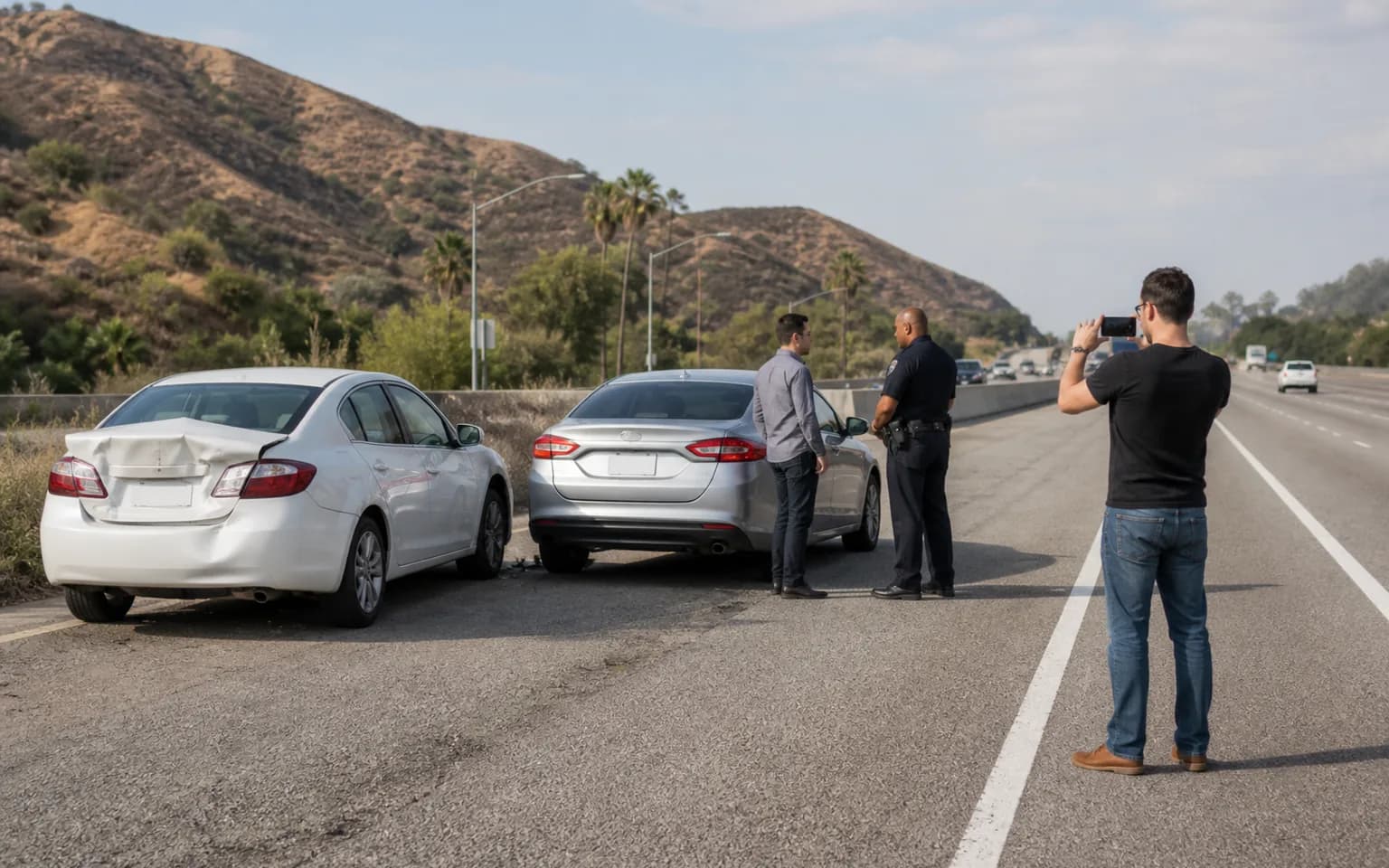
How teen driver accidents claims change across San Diego County
Claims involving inexperienced drivers, family insurance policies, and supervision issues after California teen-driver crashes. County-level claims often move differently because treatment, witnesses, public entities, and insurance carriers can span several cities at once.
San Diego County shows 24,070 tracked crashes across 4 cities. For teen driver accidents claims, that usually means comparing county-wide travel corridors such as I-5, I-15, I-8 before the insurer narrows the case too quickly.
County planning points
- Identify the exact city, property, worksite, or corridor first.
- Preserve records from every provider or agency touched by the event.
- Track deadlines carefully if government, transit, or institutional defendants are involved.
Coverage context
- Courthouses: San Diego Superior Court Downtown, South County Division, North County Division
- Major cities: San Diego, Chula Vista, Oceanside, Escondido, Carlsbad
- Population served: 3.3 million
Regional proof stack
Why this San Diego County page guides a county-wide review
County pages work best when they explain what changes across cities, corridors, venues, and providers. Use this stack to decide whether the next best step is a city page, a resource, or intake.
Regional proof
Use the county page when the facts cross city lines
Teen Driver Accidents claims across San Diego County often turn on which city, corridor, provider, or defendant controls the best evidence. Start with San Diego, Chula Vista, Oceanside, Escondido, then narrow to the strongest city page.
Venue context
Keep venue and public-entity timing visible
County-wide review should preserve details tied to San Diego Superior Court Downtown and South County Division, government notices, commercial defendants, and multi-city records before the case is pushed into a generic settlement lane.
Corridor detail
Anchor the county overview in real movement patterns
Mentioning I-5, I-8, I-15 helps distinguish this regional page from a city page, especially when witnesses, facilities, or treatment span more than one location.
Claim triage
Decide whether the next click should be city, resource, or intake
For Whiplash, Facial injuries, Arm fractures or severe losses across a population base of 3.3 million, compare exact city pages first unless deadlines or insurer pressure make intake the safer next step.
Regional pathways
Use San Diego County as the regional layer, not the only layer
The strongest county page should route you toward the exact city view, the broader service lane, and nearby county comparisons when the facts are still being sorted.
Stay in this claim lane
Use the county version when the facts cross city lines, but keep the exact teen driver accidents lane nearby when you want a tighter liability and damages read.
Main page
Return to the main teen driver accidents page
Use the main service page for the core case framework before you layer county-specific strategy on top of it.
Category
Compare the broader motor vehicle accidents lane
Step back into the broader category when multiple service pages could fit the same county-wide claim.
Spanish
View the Spanish service version
Use the Spanish version when the same service guidance needs to stay available in bilingual intake and family review.
Move from San Diego County into city-level review
County pages are strongest when they hand you into the exact city where the roadway, facility, treatment, or venue details will start to matter most.
City view
San Diego Teen Driver Accidents
Use the city version when San Diego's local roads, providers, and venue details are likely to shape the claim more than the county overview alone.
City view
Chula Vista Teen Driver Accidents
Use the city version when Chula Vista's local roads, providers, and venue details are likely to shape the claim more than the county overview alone.
City view
Oceanside Teen Driver Accidents
Use the city version when Oceanside's local roads, providers, and venue details are likely to shape the claim more than the county overview alone.
Compare nearby county versions
These links help when the same type of case may be evaluated differently across neighboring counties with different corridors, venues, or public-entity pressure.
Nearby county
Los Angeles County
Compare the same teen driver accidents issue in another county before you decide which regional view gives the cleanest next step.
Nearby county
Orange County
Compare the same teen driver accidents issue in another county before you decide which regional view gives the cleanest next step.
Nearby county
Riverside County
Compare the same teen driver accidents issue in another county before you decide which regional view gives the cleanest next step.
Priority research stack
Route San Diego County teen driver accidents research into exact city and authority pages
These links move visitors from the county overview into city-level service pages, sibling county pages, resources, and intake when they need a more exact next step.
Hand county pages into exact cities
County pages are most useful when they help people choose the next city-level page.
City layer
San Diego Teen Driver Accidents
Use the city page when the San Diego County claim turns on local roads, providers, or witnesses in San Diego.
City layer
Chula Vista Teen Driver Accidents
Use the city page when the San Diego County claim turns on local roads, providers, or witnesses in Chula Vista.
City layer
Oceanside Teen Driver Accidents
Use the city page when the San Diego County claim turns on local roads, providers, or witnesses in Oceanside.
Compare sibling county service lanes
These links prevent county pages from becoming one-off regional templates with no topical neighborhood.
Same county
San Diego County Sideswipe Accidents
Compare another high-priority service lane inside San Diego County before choosing the best claim pathway.
Same county
San Diego County Lane Change Accidents
Compare another high-priority service lane inside San Diego County before choosing the best claim pathway.
Same county
San Diego County Rollover Accidents
Compare another high-priority service lane inside San Diego County before choosing the best claim pathway.
Support county review with authority pages
County-wide claims need strong resource, attorney, and action pathways because multiple venues may be involved.
Locations
Browse California city hubs
Move from county-wide strategy into exact local markets, roads, hospitals, and courts.
Insurance
Review insurance claim guidance
County claims often involve more than one insurer, entity, or coverage problem.
Action
Start a case-routing review
Use intake when the facts span multiple cities or the insurer is already pushing the claim narrative.
County differentiation
Make this San Diego County page useful even when city pages already exist
County pages earn their place when they explain regional corridors, venue context, city handoffs, and service-specific proof that a single city page cannot cover.
County proof map
San Diego County should answer a regional question
San Diego County includes 24,070 tracked crashes across 4 cities, so the page should explain which city, corridor, or venue controls the next step.
- Route broad research into San Diego, Chula Vista, Oceanside, Escondido, Carlsbad.
- Anchor the regional story in I-5, I-8, I-15, I-805.
- Keep venue or public-entity context visible around San Diego Superior Court Downtown and South County Division.
Service proof
What makes teen driver accidents county-wide
Teen-driver cases often involve family insurance questions, multiple vehicle owners, and facts about supervision or restricted-license violations.
- Policy documents showing all vehicles, household drivers, and umbrella coverage.
- License status and any learner-permit or restricted-license issues.
- Phone use, passenger count, and witness evidence around distraction or inexperience.
Selection signal
Make the county guide useful even when city pages already exist
Insurance notice, household coverage analysis, and early witness preservation can make a major difference before the family insurer narrows the claim.
- Use county-specific city handoffs and sibling county comparisons.
- Add one well-sourced resource link and one trust page link.
- Make the decision point clear: city page, resource page, or intake.
Regional claim fingerprint
The regional proof question this San Diego County page answers
This block shows how the county page complements city pages by comparing records, corridors, venues, and next clicks across the whole region.
regional differentiator
San Diego County claim fingerprint
For San Diego County, the useful question is whether the maintenance ticket, camera-retention request, and adjuster voicemail can be tied to I-5, I-8, I-15 before the insurer treats the teen driver accidents file as routine.
- Use the damages ledger to connect scene proof with retail driveway conflict.
- Compare San Diego Superior Court Downtown, South County Division against the first symptom notes and follow-up timing.
- Keep San Diego Superior Court Downtown, South County Division tied to maintenance ticket when agency, property-control, or maintenance questions may shape the file.
Evidence sequence
What must stay specific on this county page
A stronger San Diego County page explains the fault rebuttal, the parking-lot visibility, and the documents that move a reader from research into a useful case review.
- Name the records that can disappear first, especially any maintenance ticket or camera-retention request.
- Let San Diego, Chula Vista, Oceanside, Escondido narrow the local record hunt: maintenance ticket, provider timing, and parking-lot visibility should not read like statewide advice.
- Keep the damages discussion grounded in Whiplash, Facial injuries, Arm fractures, the first care record, and whether visitor surge could distort the treatment timeline.
Decision summary
The decision point matters more than the keyword
Make the treatment bridge clear: preserve adjuster voicemail, map the local pressure around visitor surge, and decide whether the next click should be a city guide, resource page, attorney profile, or intake.
- Use treatment bridge headings that explain why adjuster voicemail or camera-retention request belongs in the first evidence review.
- Point readers from I-5, I-8, I-15 toward the comparison page that clarifies records, treatment, or fault instead of repeating this page.
- Avoid unsupported promises; make the next step about San Diego Superior Court Downtown, South County Division, Whiplash, Facial injuries, Arm fractures, and the proof gap created by visitor surge.
South County Division timing
A reader in San Diego County should know whether South County Division records line up with Arm fractures, especially if the first insurer note minimizes the fault rebuttal.
North County Division control question
If North County Division is part of the story, preserve the coverage letter before freight movement changes who can explain access, lighting, staffing, or maintenance.
Vista comparison
Comparing San Diego County with Vista helps separate a generic teen driver accidents article from a useful deadline clock supported by a orthopedic referral.
Facial injuries follow-through
For Facial injuries, the practical next step is to connect East County Division with missed work, follow-up care, and the way visitor surge affected the first account.
I-8 to South County Division
The strongest county pages explain how I-8, South County Division, and the insurance posture fit together before asking a visitor to request a case review.
adjuster voicemail handoff
A adjuster voicemail becomes more useful when it is matched with South County Division, a Carlsbad comparison, and a clear explanation of what still needs verification.
County evidence brief
Regional review notes for San Diego County teen driver accidents claims
These notes vary by service, county, corridors, court or venue signals, major cities, and injury patterns so readers can compare county-level context with city-specific next steps.
regional proof route 1
Work-impact lens for San Diego County
The local value comes from separating the scene record from the claim narrative. camera-retention request, treatment bridge, and San Diego Superior Court Downtown tell the reader what to preserve first.
Do not let CA-56 become a keyword label; use it to explain why camera-retention request or San Diego Superior Court Downtown changes the early review.
South County Division becomes useful when it points to security desk entry, while Vista should stay secondary unless it changes describing what still needs verification instead of promising an outcome.
Knee injuries guidance works better when the page ties symptoms to medical necessity record, claim-number trail, and the earliest care sequence.
- Preserve claim-number trail before the record owner changes access, retention, or availability.
- Tie San Diego Superior Court Downtown to first symptoms, follow-up care, and any work or mobility limits.
- Let Vista answer one comparison question, then bring the reader back to CA-56, South County Division, and the claim-number trail.
- Close the section with a describing what still needs verification instead of promising an outcome path so Knee injuries, claim-number trail, and an employer or dispatch-record question point to a real next click.
regional proof route 2
Camera-window lens for San Diego County
Use San Diego County as the proof anchor, not a keyword swap. CA-54, North County Division, and property incident note should show why mapping the proof owner before the claim gets older matters for this reader.
Use CA-54 only when it helps explain the camera lead, witness angle, care handoff, or the deadline clock.
North County Division becomes useful when it points to rideshare trip screen, while Escondido should stay secondary unless it changes sorting fault evidence before the carrier writes the first narrative.
When Arm fractures is part of the file, connect daily limits, North County Division, and property incident note before describing settlement factors.
- Preserve property incident note before the record owner changes access, retention, or availability.
- Tie North County Division to first symptoms, follow-up care, and any work or mobility limits.
- Use Escondido to pressure-test property incident note, a high-volume corridor where witness memory fades quickly, and the local care trail before linking away from San Diego County.
- If the file turns on hospital transfer timing, route the reader to the page type that can answer that issue next instead of another generic article.
regional proof route 3
Deadline-management lens for San Diego County
The local value comes from separating the scene record from the claim narrative. parking receipt, symptom chronology, and East County Division tell the reader what to preserve first.
Use CA-56 only when it helps explain the camera lead, witness angle, care handoff, or the symptom chronology.
Compare San Diego Superior Court Downtown with inspection request, witness callback, and multiple possible defendants before linking away from this county path.
Treat Arm fractures as a documentation problem first: what care note, restriction, or inspection request can confirm the timeline?
- Preserve inspection request before the record owner changes access, retention, or availability.
- Tie East County Division to first symptoms, follow-up care, and any work or mobility limits.
- Keep Oceanside in the supporting lane: the San Diego County page should still own parking receipt, Arm fractures, and late-night traffic.
- Send the reader toward the next useful step from East County Division: a city guide, county guide, resource, attorney proof page, or intake.
regional proof route 4
Mobility-impact lens for San Diego County
This regional block is meant to answer one local problem: whether witness callback, North County Division, and a recorded-statement request should be handled before the claim becomes a broad teen driver accidents summary.
A useful first pass asks who can confirm I-5, whether North County Division supports the timing, and what witness callback can still be preserved.
When repair estimate points toward North County Division, preserve that record before the reader is sent to a broader city, county, or resource page.
For Arm fractures, the page should explain the coverage map and show why checking whether a public agency, employer, platform, or property owner may hold records matters before the insurer narrows the file.
- Preserve claim-number trail before the record owner changes access, retention, or availability.
- Tie North County Division to first symptoms, follow-up care, and any work or mobility limits.
- Treat Vista as a coverage map cross-check, not as substitute copy for the San Diego County facts.
- Use the final link choice to separate research, claim-number trail, checking whether a public agency, employer, platform, or property owner may hold records, and intake for San Diego County.
regional proof route 5
Public-entity lens for San Diego County
A helpful county page should make crosswalk signal timing practical by connecting Whiplash, employer absence note, and turning local records into a clean intake summary to a next click or intake decision.
The scene should not float away from the medical record: connect CA-56, witness callback, and North County Division before damages are estimated.
If East County Division or Oceanside appears in the story, the claim-number trail can become more important than a generic discussion of teen driver accidents.
For San Diego County, Whiplash should lead to a record task: compare North County Division, turning local records into a clean intake summary, and the first symptom note.
- Preserve employer absence note before the record owner changes access, retention, or availability.
- Tie North County Division to first symptoms, follow-up care, and any work or mobility limits.
- Let Oceanside answer one comparison question, then bring the reader back to CA-56, East County Division, and the employer absence note.
- Use the final link choice to separate research, employer absence note, turning local records into a clean intake summary, and intake for San Diego County.
regional proof route 6
Property-control lens for San Diego County
This route checks whether San Diego County changes the evidence plan: I-805 shapes the scene, North County Division shapes the care trail, and a high-volume corridor where witness memory fades quickly shapes the insurer response.
Let I-805 introduce one concrete question: whether the first proof source, the care record, or the medical necessity record needs attention first.
North County Division becomes useful when it points to property incident note, while San Diego should stay secondary unless it changes keeping city or county context connected to the actual decision point.
Make the Arm fractures paragraph answer one local question: whether I-805, North County Division, or repair estimate explains the care sequence best.
- Preserve repair estimate before the record owner changes access, retention, or availability.
- Tie North County Division to first symptoms, follow-up care, and any work or mobility limits.
- Let San Diego answer one comparison question, then bring the reader back to I-805, North County Division, and the repair estimate.
- Make the handoff practical by matching repair estimate and North County Division with the city, county, resource, lawyer-fit, or intake path.
regional proof route 7
Work-impact lens for San Diego County
A reader researching teen driver accidents in San Diego County needs help with prioritizing the records that change liability, treatment, or damages. The useful county question is how pharmacy pickup, repair story, and crosswalk signal timing change the next step.
If I-15 matters, tie the route, the proof owner, and San Diego Superior Court Downtown to the same chronology.
Compare North County Division with 911 chronology, inspection request, and missing repair photos before linking away from this county path.
Make the Knee injuries paragraph answer one local question: whether I-15, San Diego Superior Court Downtown, or 911 chronology explains the care sequence best.
- Preserve 911 chronology before the record owner changes access, retention, or availability.
- Tie San Diego Superior Court Downtown to first symptoms, follow-up care, and any work or mobility limits.
- If Oceanside helps, make it prove a difference in San Diego Superior Court Downtown, matching scene facts to the earliest treatment note, or roadway access rather than repeating the same page.
- If the file turns on crosswalk signal timing, route the reader to the page type that can answer that issue next instead of another generic article.
regional proof route 8
Mobility-impact lens for San Diego County
This route checks whether San Diego County changes the evidence plan: CA-56 shapes the scene, North County Division shapes the care trail, and unclear camera ownership shapes the insurer response.
A useful first pass asks who can confirm CA-56, whether North County Division supports the timing, and what weather snapshot can still be preserved.
Compare North County Division with billing ledger, claim-number trail, and unclear camera ownership before linking away from this county path.
When Arm fractures is part of the file, connect daily limits, North County Division, and billing ledger before describing settlement factors.
- Preserve billing ledger before the record owner changes access, retention, or availability.
- Tie North County Division to first symptoms, follow-up care, and any work or mobility limits.
- Keep San Marcos in the supporting lane: the San Diego County page should still own weather snapshot, Arm fractures, and commuter turnover.
- Make the handoff practical by matching billing ledger and North County Division with the city, county, resource, lawyer-fit, or intake path.
Common injuries in these claims
Frequently asked questions
Why does county-wide context matter for teen driver accidents claims in San Diego County?
San Diego County shows 24,070 tracked crashes across 4 cities. For teen driver accidents claims, that usually means comparing county-wide travel corridors such as I-5, I-15, I-8 before the insurer narrows the case too quickly.
Which parts of San Diego County usually matter most in these claims?
Start with the exact city or facility, then expand to county routes such as CA-78, treatment records, insurer messages, and any public or private record owner near Oceanside.
How quickly should I act after a teen driver accidents incident in San Diego County?
If the insurer is already shaping the story, do not wait for the county record trail to scatter. A first review should identify the city, corridor, treatment source, and venue issue before settlement talk.
What proof should be preserved first in a San Diego County teen driver accidents claim?
Policy documents showing all vehicles, household drivers, and umbrella coverage. License status and any learner-permit or restricted-license issues. County-wide cases should also identify the exact city, corridor, provider, or venue before the file gets treated as a generic regional claim.
When should I use a city page instead of this San Diego County page?
Use the county page when facts cross several cities or corridors such as I-5, I-8, I-15. Use a city page when the claim is anchored in one place, especially one of San Diego, Chula Vista, Oceanside, Escondido, because the city page can be more specific about records, witnesses, and treatment.