
Legal ExplainerBlogInformational

How Long Trucking Companies Keep Records After a California Crash

Federal rules do not give every trucking record the same retention period. After a California crash, required driver-vehicle inspection reports generally have a three-month minimum, driver logs six months, covered maintenance records one year where the vehicle is housed or maintained plus six months after it leaves carrier control, and qualifying accident-register entries three years. Applicability rules and preservation duties may change what is available, so identify each record and custodian early.

Published

July 13, 2026

Updated

July 13, 2026

Reading time

10 min read

Jurisdiction

California

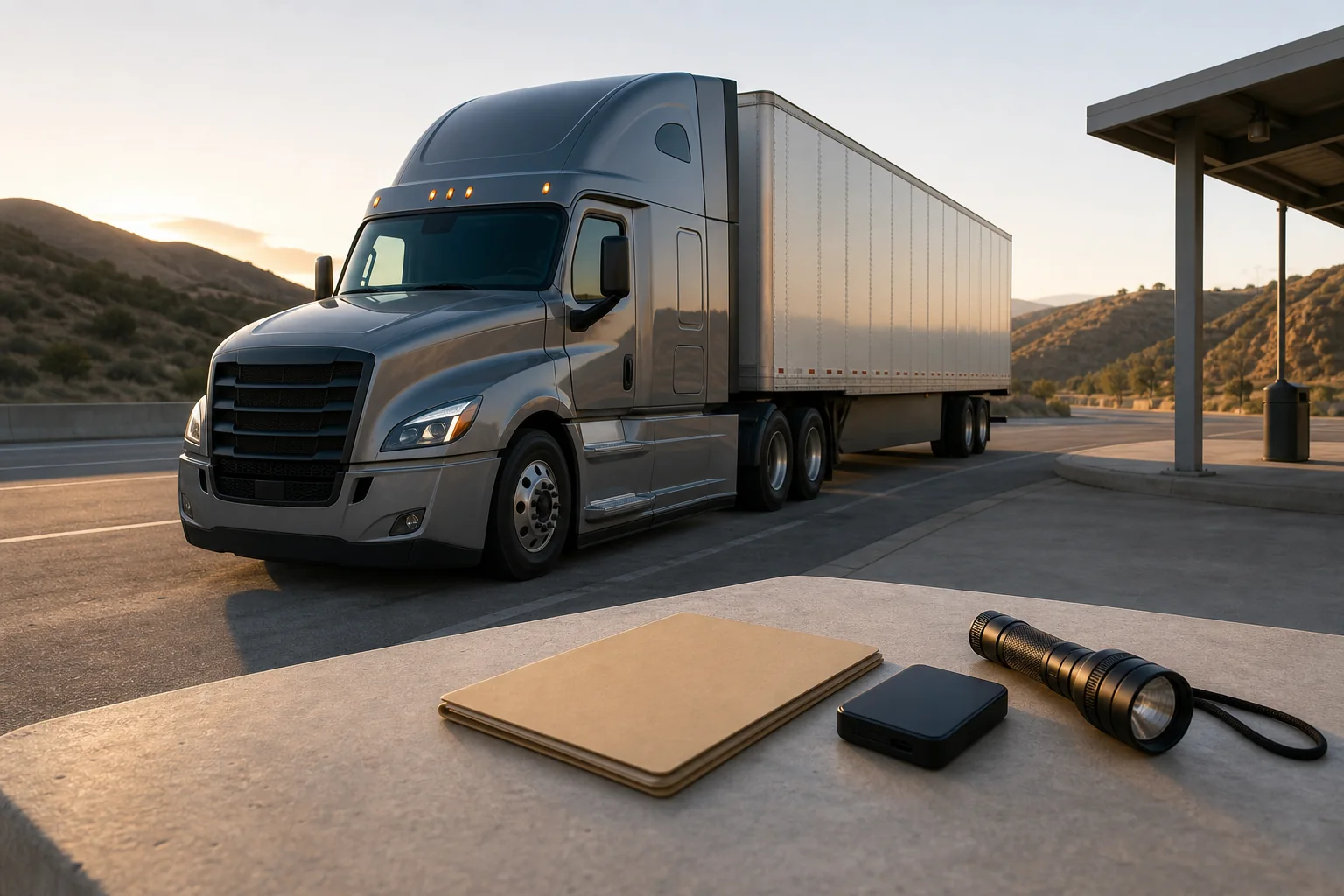
Unbranded semi-truck at a California inspection pullout beside blank record folders and preservation tools
Different trucking records follow different retention rules; identifying the right record and custodian is more useful than assuming one universal deadline.

Quick answer

Federal rules use different retention periods for driver logs, inspection reports, maintenance files, and accident registers. Identify each record and custodian early instead of relying on one blanket deadline.

Key takeaways

  • Electronic driver logs and their supporting documents generally have a six-month federal retention minimum, but other records have different clocks.
  • A carrier's accident register generally has a three-year minimum, while certain driver-vehicle inspection reports may have a three-month minimum.
  • Maintenance files, dispatch data, onboard-device data, video, and vendor-held records should be identified separately instead of grouped under one label.
  • A preservation request can identify material to retain, but it does not by itself prove that a record exists, create automatic access, or establish fault.
Hurt Advice Editorial Team

Prepared by

Hurt Advice Editorial Team

Editorial Research and Publishing Team

Source-checked editorial publishing

Why trust this article

Prepared by the Hurt Advice Editorial Team from current FMCSA, eCFR, and California Legislature primary sources. The displayed version has no attorney reviewer, and the article separates federal recordkeeping minimums from case-specific preservation and filing-deadline questions.

Recent update: Corrected the California electronic-evidence citation, replaced summary guidance with the controlling federal accident-register and DVIR rules, and clarified DVIR scope and exceptions.

At a glance

What this guide helps you decide

Start with the question that brought you here, identify the records that can verify the facts, and use the related guidance only where it helps. This article addresses blog questions in California.

Main question

Decide how this topic may apply to your situation

Use "How Long Trucking Companies Keep Records After a California Crash" to sort the facts you know, the questions still open, and whether a blog resource or consultation may be useful in California.

Guide map

Start with the sections most relevant to you: Who this guide helps and what to remember, Why do record-retention periods matter after a truck crash?, What are the main federal retention minimums?

Move through the article by issue, not by guesswork, so liability, medical proof, insurance pressure, deadlines, and next steps stay connected.

Records to gather

Connect these subjects to your records: truck crash records, ELD retention, vehicle maintenance records, evidence preservation

Compare the topic with records, photos, medical visits, police reports, insurer letters, and local claim details before relying on a general answer.

Trust check

Use the source trail before acting

This page includes 6 source references plus internal next-step paths so readers can verify where the guidance comes from.

Before you rely on this guide

This article is written for people dealing with injury-law questions in California. It is meant to help you understand the issue, not replace legal advice about your specific case.

What to do after this article

Start with the quick answer, skim the table of contents, and then use the links below to move into the practice area, author archive, or resource page that turns general guidance into a clearer next step for your situation.

Who this guide helps and what to remember

This guide is for someone injured in a California collision involving a tractor-trailer, delivery truck, commercial van, or another motor carrier vehicle who wants to understand what records may exist and how long some of them must be kept. It can also help a family member organize questions before speaking with counsel. Start with the broader California truck accident guide if you need an overview of the claim process rather than a records-focused explanation.

The central point is simple: there is no single federal “truck evidence lasts six months” rule. The applicable minimum depends on the record, who possesses it, and sometimes whether the carrier still controls the vehicle. A regulatory retention period is also different from a California lawsuit deadline and different again from a case-specific duty to preserve information.

  • Electronic driver logs and their supporting documents generally have a six-month federal retention minimum, but other records have different clocks.
  • A carrier's accident register generally has a three-year minimum, while certain driver-vehicle inspection reports may have a three-month minimum.
  • Maintenance files, dispatch data, onboard-device data, video, and vendor-held records should be identified separately instead of grouped under one label.
  • A preservation request can identify material to retain, but it does not by itself prove that a record exists, create automatic access, or establish fault.

Why do record-retention periods matter after a truck crash?

A truck collision can generate records in several systems: an electronic logging device, a dispatch platform, inspection and repair files, a carrier accident register, an onboard camera, a telematics portal, and records held by a shipper, broker, maintenance vendor, or leasing company. Those systems may have different owners, identifiers, overwrite settings, and legal retention rules.

That matters because a broad request for “all evidence” may not tell the recipient which vehicle, driver, device, date range, or vendor account is involved. It also makes it harder to spot what is missing. The practical goal is not to demand every imaginable file. It is to build a focused map connecting each disputed fact—hours driven, vehicle condition, route, braking, visibility, loading, or post-crash response—to the records most likely to address it.

For a broader collection plan, use the accident evidence checklist. The sections below focus on carrier and commercial-vehicle records that may sit outside an injured person's immediate control.

What are the main federal retention minimums?

The following tool is a starting map, not a promise that every listed record exists or applies to every carrier. Federal motor-carrier rules contain important definitions, exemptions, and scope limits. A lawyer can assess which rules fit the vehicle, carrier, trip, and disputed issue.

  • Driver records of duty status and supporting documents: Motor carriers generally must retain them for six months from receipt under 49 C.F.R. § 395.8(k)(1). Electronic logging device data is one way a record of duty status may be recorded.
  • Carrier accident register: For a crash that meets the federal definition of an “accident,” the motor carrier must maintain an accident-register entry for three years after the crash under 49 C.F.R. § 390.15. Supporting documents and other crash records can follow different rules.
  • Inspection, repair, and maintenance records: For vehicles a carrier controls for 30 consecutive days or more, specified records must generally be kept for one year where the vehicle is housed or maintained and for six months after it leaves the carrier's control under 49 C.F.R. § 396.3(c).
  • Required driver-vehicle inspection reports (DVIRs): Under current 49 C.F.R. § 396.11, a property-carrying driver generally prepares a DVIR when a defect or deficiency is discovered by or reported to the driver. The carrier must keep the required report, repair certification, and driver-review certification for three months. The section lists exceptions, including carriers operating only one commercial motor vehicle; intermodal equipment has a separate process.

Why is “six months” not a universal evidence deadline?

The six-month rule is commonly repeated because it applies to records of duty status and supporting documents. It should not be copied onto every record connected with a truck. The carrier accident register has a longer federal minimum. Some inspection reports have a shorter one. Maintenance records use a clock tied in part to vehicle control.

Other useful material may not have a single, crash-specific federal retention period at all. Examples can include dash-camera video, dispatch messages, GPS history, raw telematics, event-data-recorder downloads, load photographs, gate records, fuel transactions, or a vendor's service tickets. Whether a record exists, how it is stored, and when it is overwritten can depend on equipment, settings, contracts, ordinary business practices, and a particular preservation obligation.

This is why a person should avoid assuming that “black box data” exists in a standardized form or that a company must hand it over on request. The digital evidence preservation guide explains a parallel workflow for video, phone data, and other electronically stored information without promising access.

How do you build an evidence-owner map?

Use one row for each record family. This prevents a request from treating the driver, motor carrier, vehicle owner, broker, shipper, maintenance shop, camera provider, and telematics vendor as if they were the same entity. A simple working table can use six columns: disputed fact, record family, likely custodian, vehicle or account identifier, relevant time window, and reason to preserve.

Example: If the disputed fact is whether the truck had an unresolved brake problem, the record family could include inspection reports, repair orders, maintenance schedules, driver defect reports, and vendor invoices. The likely custodians might be the carrier and an outside maintenance shop. Useful identifiers could include the tractor's VIN, unit number, license plate, driver, and the date range surrounding the collision.

For hours and fatigue questions, consider records of duty status, supporting documents, dispatch records, fuel transactions, toll records, and communications only to the extent they are relevant. The truck driver fatigue and hours-of-service guide explains why logs are one part of the analysis rather than a complete answer.

What should a focused preservation request identify?

A useful request is specific enough that the recipient can identify the incident and the systems involved. It can list the collision date, approximate time and location, carrier name, driver name if known, tractor and trailer unit numbers, license plates, VINs, shipment or dispatch number, and a reasonable time window. It can then identify record families tied to actual issues rather than using an unlimited demand for everything.

Plain-language example: “Please preserve records in your possession, custody, or control concerning the collision on [date] at approximately [time] near [location], involving tractor [unit/VIN/plate] and trailer [unit/VIN/plate]. The requested preservation includes records of duty status and supporting documents, dispatch and route communications, vehicle inspection and maintenance records, photographs or video, and available onboard-device or telematics data for the period reasonably connected to the collision.”

The wording should be adjusted to known facts. Do not invent a unit number, device, defect, or company relationship. Do not impersonate an attorney or say litigation has been filed when it has not. Keep a copy of what was sent, the delivery method, the date, and any response. The broader what to do after a truck accident guide can help organize the rest of the immediate record.

What does a preservation request do—and not do?

A preservation request gives notice of specifically identified information that may be relevant. It can help define the systems and time ranges at issue, and it creates a record of the request. It is not a subpoena, a court order, or a finding that a preservation duty exists. It does not create an automatic right to inspect private company systems, prove that the recipient controls a third party's data, or guarantee that any requested material will eventually be admissible.

California Code of Civil Procedure § 2017.020(c) says that, absent exceptional circumstances, a court generally will not impose sanctions for electronically stored information lost through the routine, good-faith operation of an electronic information system. The statute expressly states that this protection does not alter any obligation to preserve discoverable information. Read the official California Legislature text. Whether and when a preservation duty applies remains fact-specific; this article does not decide that issue for a particular crash.

If the carrier or an insurer sends you a broad release, recorded-statement request, device inspection request, or document to sign, read it carefully. A request for your material is not the same as preservation of carrier-held material. Consider getting individualized advice before authorizing access beyond what you understand.

What timing and process should you follow?

Start by preserving what you already control: photographs, videos, the vehicle's condition, medical discharge papers, witness contact information, messages, receipts, and insurance correspondence. Keep original files when possible and avoid editing or repeatedly forwarding the only copy. A symptom or treatment record may also help connect the event to later care; the California symptom journal guide explains how to keep one without exaggeration.

Next, identify the commercial parties and vehicles from reliable materials such as the collision report, photographs, registration information, insurance communications, shipment paperwork, or vehicle markings. Separate facts you know from items you still need to verify. Then build the evidence-owner map and prioritize records with a known short regulatory minimum or plausible overwrite cycle.

Finally, choose a lawful delivery method and retain proof of delivery. Counsel may use a different form or send requests to multiple custodians. If litigation begins, formal discovery rules and court procedures can control access. Avoid contacting a represented party in a way that could interfere with counsel, and never attempt to access a device, account, or vehicle without permission.

What evidence should be on the checklist?

The right checklist follows the issues in the crash. Not every case needs every item, and collecting irrelevant personal data can create privacy and proportionality problems. Use the following categories to ask better questions rather than to assume the answers.

  • Identity and control: carrier, driver, tractor, trailer, owner, lessee, shipper, broker, maintenance provider, and relevant vendor relationships.
  • Driver time and route: records of duty status, supporting documents, dispatch instructions, route data, toll or fuel records, and communications relevant to the trip.
  • Vehicle condition: inspection reports, reported defects, repair certifications, maintenance schedules, work orders, invoices, recalls, and post-crash inspections.
  • Crash event: accident-register entry, internal crash report, scene images, available video, telematics or onboard-device data, cargo information, and insurer communications.
  • Authenticity and continuity: original format, custodian, account or device identifier, date range, export method, and a record of who received or copied the file.

Which mistakes and red flags can weaken the process?

The first mistake is relying on a blanket six-month statement. It can cause someone to overlook a shorter record category or stop asking about records that may be kept longer. A second mistake is naming a specific device or data field as though its existence were confirmed. Trucks use different equipment, and vendors use different formats.

Other red flags include an unexplained request to sign a broad release, a demand for passwords, a request to surrender the only copy of a device, or a claim that contacting a referral service automatically creates representation. Do not alter, reset, discard, or publicly post potentially relevant material to make it look more favorable. Preservation should protect the original record, including facts that may be neutral or unfavorable.

Avoid mass-emailing accusations to unrelated companies. A focused request tied to verified parties, vehicles, issues, and dates is easier to understand and defend. Also avoid treating a regulatory retention minimum as proof of negligence. Retention rules describe recordkeeping; fault still depends on evidence and applicable law.

Are retention periods the same as California filing deadlines?

No. A record-retention rule describes how long a regulated party must keep a category of record. A statute of limitations governs how long a claimant generally has to start a lawsuit. California Code of Civil Procedure § 335.1 generally provides two years for an action involving injury or death caused by another's wrongful act or neglect. Read the current text on the California Legislature's official site.

That two-year rule is not a universal deadline for every defendant or claim. Different notice requirements, defendants, exceptions, or legal theories can change the analysis, sometimes substantially. The California statute-of-limitations resource provides general orientation, but only individualized legal advice can calculate a deadline for a particular matter. Do not wait for a retention period to expire before asking about a filing deadline.

What are careful next steps?

Write down the collision identifiers you can verify, make a list of disputed facts, and connect each fact to a narrow record family and likely custodian. Preserve your originals and keep a dated log of requests and responses. If you want counsel to assess the record map, compare the facts with a verified profile such as Raffi Naljian's Hurt Advice profile; that link does not mean he authored or reviewed this article, is available, or will accept a matter.

Hurt Advice is a California lawyer referral and legal information service, not a law firm. Reading this article or submitting information does not create an attorney-client relationship or promise representation, a particular lawyer, free legal services, or an outcome. Review the editorial standards and referral and legal-information disclosure for how the service works.

If you want to share the basic facts for an intake review, use the case-review form. Keep the first submission focused and avoid sending irreplaceable originals. A participating attorney, if one is available and chooses to evaluate the matter, can explain what preservation and access steps fit the specific crash.

Frequently Asked Questions

How long must a trucking company keep electronic driver logs?
A motor carrier generally must retain a driver's records of duty status and supporting documents for six months from receipt under 49 C.F.R. § 395.8(k)(1). Applicability and exemptions can be fact-specific, and six months is not a universal period for every trucking record.
How long must a carrier keep its accident register?
For crashes that meet the federal rule's definition, the carrier must retain the accident-register entry for three years after the crash date. Supporting materials and other crash records may follow different rules or company practices.
How long are truck maintenance records kept?
For a vehicle a motor carrier controls for 30 consecutive days or more, the records specified by 49 C.F.R. § 396.3 generally must be retained for one year where the vehicle is housed or maintained and for six months after it leaves the carrier's control.
Does a preservation letter guarantee access to trucking records?
No. A focused request can identify material and give notice, but it is not a subpoena or court order. It does not prove that a record exists, establish who controls it, guarantee access, or decide whether a legal preservation duty applies.
Can I ask a trucking company to preserve records myself?
You can communicate truthfully and keep proof of delivery, but the wording, recipients, and scope can matter. Do not impersonate counsel, invent identifiers, access private systems, or claim litigation exists when it does not. Individualized legal advice can help with a case-specific request.
Is a record-retention period the same as the deadline to file a California injury lawsuit?
No. California Code of Civil Procedure § 335.1 generally provides two years for injury or death caused by another's wrongful act or neglect, but exceptions and different requirements may apply. A regulatory retention minimum does not extend or calculate a filing deadline.

Sources and references

Official California Legislature text addressing routine good-faith electronic-system operation and expressly preserving existing obligations to preserve discoverable information.

Need help after an accident?

Hurt Advice intake team can review your situation, explain your options, and help you move forward with a plan that fits your case.