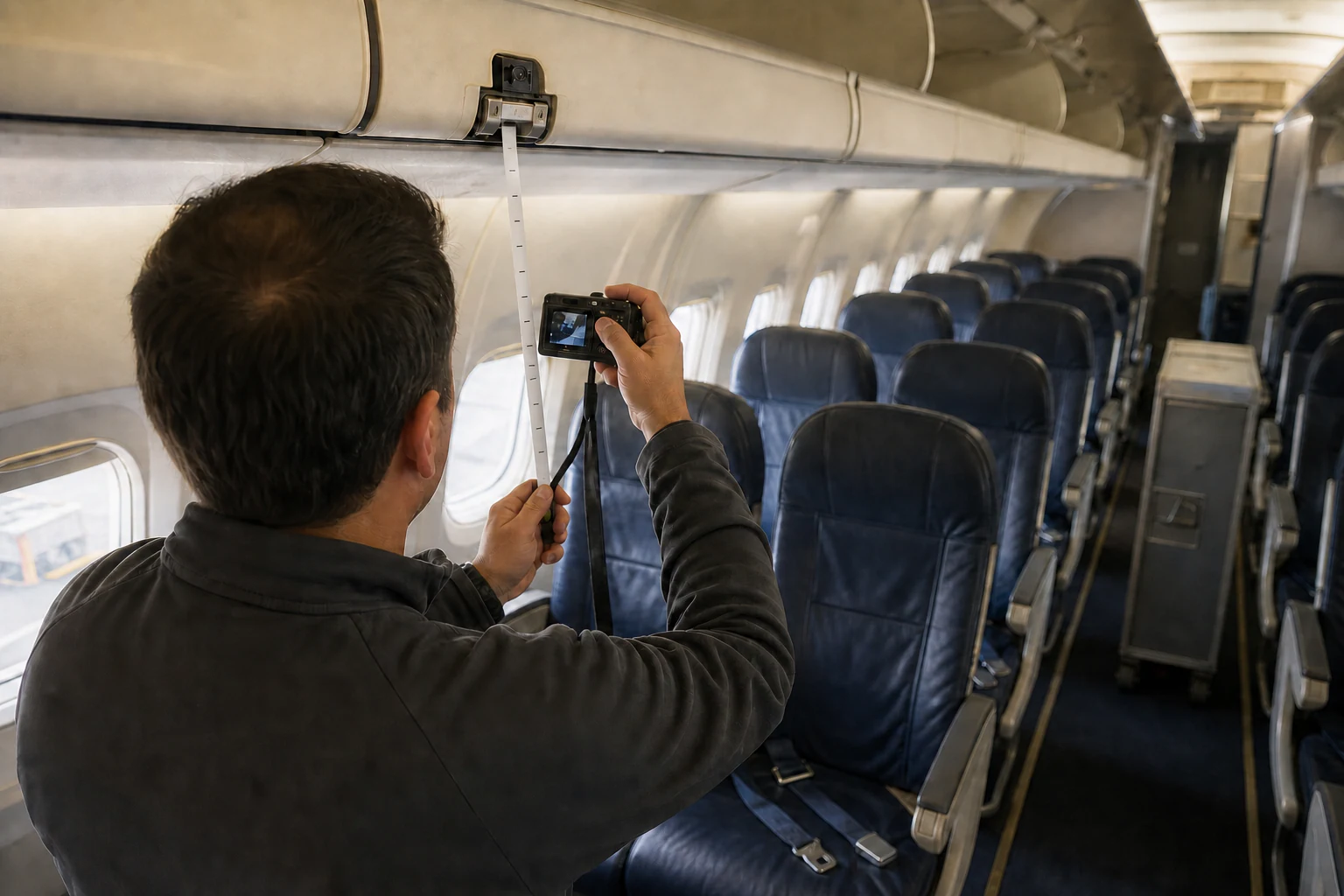
Archive evidence map
What this public transit collection can answer
This archive is built from the actual questions, entities, and named contributors in the articles below. Use it to compare published explanations; verify time-sensitive details in each article's source trail; and move to the practice hub, a verified attorney profile, or intake only when that next step matches your facts.
Boundary: an archive groups educational content. It does not establish fault, diagnose an injury, predict value, create representation, or prove that a named contributor reviewed every article version.
Primary question
Airline Cabin-Incident Records After a California Flight Injury
After an in-flight injury involving a California departure or arrival, build separate tracks for the flight, cabin observations, weather or turbulence, medical response, and any federal investigation. Preserve what you already have, identify each record’s actual custodian, and treat missing or conflicting entries as follow-up questions—not proof of fault.
Contributor: Hurt Advice Editorial Team | Topics: airline cabin incident records, in-flight passenger injuries, turbulence PIREPs
Review article and sourcesEvidence follow-up
California School Bus Danger Zone Is Now 12 Feet
California’s school-bus driver curriculum now defines the danger zone as 12 feet from the bus on the sides, front, and rear, replacing 10 feet. The August 25, 2026 CDE bulletin changes training guidance; it does not by itself prove fault in an incident. Document bus position, walking path, vehicle signals, witnesses, and existing records promptly.
Contributor: Hurt Advice Editorial Team | Topics: California school bus danger zone, school bus loading zones, pupil transportation safety
Review article and sourcesDecision follow-up
California Public Transit Injury Claims: Deadlines and Evidence
Start by identifying the legal operator, because a city bus, rail vehicle, school shuttle, contractor, or private carrier may follow different claim procedures. Preserve vehicle, route, camera, dispatch, and incident records, then determine whether California’s Government Claims Act applies. An ordinary incident or insurance report may not satisfy a required government-claim presentation step.
Contributor: Hurt Advice Editorial Team | Topics: public transit injury claims, Government Claims Act, government claim deadlines
Review article and sourcesA source-aware route through this archive
Begin with “Airline Cabin-Incident Records After a California Flight Injury” because it is the current lead article for this collection, then compare its stated question, publication date, contributor, and source trail with the other entries rather than treating the archive title as the answer. The next article, “California School Bus Danger Zone Is Now 12 Feet,” adds a separate evidence or decision angle that should be read on its own terms.
The declared topics for the lead article include airline cabin incident records, in-flight passenger injuries, turbulence PIREPs, airport emergency response. Those labels help with navigation, but the article's visible citations and facts control. If a rule, statistic, credential, result, or agency instruction is time-sensitive, follow the original source and check the article's modified date before relying on the summary.
After reading, move to the public transit practice hub for claim-specific evidence, the resource center for checklists and timing, the location directory for California context, or a verified attorney profile for public license and firm information. That sequence keeps educational research separate from diagnosis, case valuation, assignment, and representation.