Reader intent
Distinguish a parking-lot vehicle impact from a premises fall and prepare the appropriate incident and reporting information for intake.
Open related pageA parking-lot injury can involve a reversing car, a pedestrian struck between parked vehicles, an opening door, or a fall on a surface hazard. Start by describing the event you actually experienced. Call Hurt Advice to organize the location, your role, report information, and next question for possible attorney review. You do not need to decide whether a driver, property operator, or someone else was responsible before asking how to begin.

Published by Hurt Advice Editorial Team
No individual content review is recorded for this guide.
Resource at a glance
Injured in a California parking-lot collision? Separate vehicle-impact and fall questions, organize the location and reports, and call Hurt Advice for intake. This resource is educational and should be used to organize facts before requesting independent attorney review when appropriate.
Reader intent
Distinguish a parking-lot vehicle impact from a premises fall and prepare the appropriate incident and reporting information for intake.
Open related pageKey takeaway 1
Identify whether this was a vehicle impact, a fall, or both.
Source: Visible resource pageKey takeaway 2
Record the precise lot, entrance, aisle, stall, or walking route when known.
Source: Visible resource pageKey takeaway 3
A private-property location does not by itself eliminate DMV collision reporting requirements.
Source: Visible resource pageRelated routes
8 related pages connect this guide to services, resources, and intake paths.
Source: Visible resource pagePlatform disclosure
Hurt Advice is not a law firm and does not provide legal advice.
Source: Hurt Advice source policy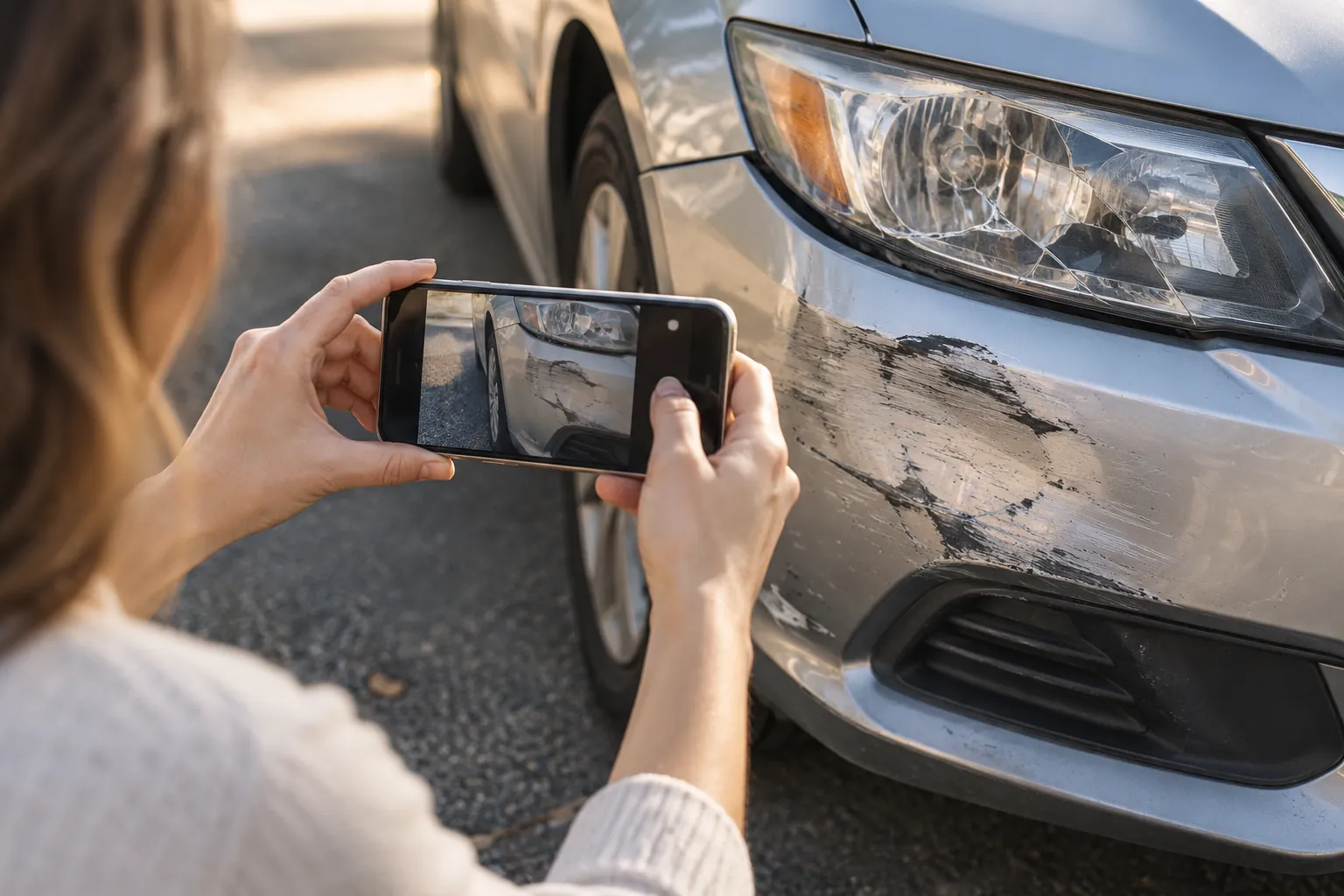
Sources and review links
Review the cited sources and the page's local details before relying on general information for a specific claim.
Quick answer
Injured in a California parking-lot collision? Separate vehicle-impact and fall questions, organize the location and reports, and call Hurt Advice for intake. Hurt Advice is not a law firm and does not provide legal advice. Use this page to organize facts, records, and next questions before deciding whether to request review by an independent participating attorney or law firm.
Identify whether this was a vehicle impact, a fall, or both.
Record the precise lot, entrance, aisle, stall, or walking route when known.
A private-property location does not by itself eliminate DMV collision reporting requirements.
A business incident report, police report, insurer claim, and DMV SR-1 are separate records.
Do not assume low speed, visible vehicle damage, or a store’s initial response decides your injury or claim.
Step-by-step
These steps are ordered for usefulness: safety and records first, then insurance, medical, and review decisions.
Avoid moving traffic and ask for appropriate medical help. Do not return to a dangerous aisle just to take photographs.
Write whether you were driving, walking, entering or leaving a vehicle, or fell. Describe any vehicle movement and surface condition you observed.
Record the property address, business name, entrance, aisle, and nearby landmarks. Note whether the area was a public facility or privately operated.
Keep business and police incident references separately. Drivers should promptly check official DMV SR-1 requirements, including those for private-property collisions.
Call Hurt Advice or use intake with the event type, location, care status, and documents available. An independent attorney can assess responsibility and timing.
Choose the correct path
“Parking-lot accident” identifies a place, not the whole event. A backing car hitting someone differs from a person tripping over a broken surface. If both happened, record the sequence. A clear description helps someone identify which additional driver, property, or medical records may matter without assuming that owning the property makes a business responsible.
Location details
Use an address and landmarks rather than only the store name. Note an entrance, parking aisle, marked crossing, ramp, or loading area. Save photographs you already have in their original form. Make a note of which business or agency received an incident report. Ask about the proper process for available records; a request does not guarantee video exists or will be released.
Private property and reporting
California DMV explains that each driver must submit an SR-1 within 10 days when a collision causes injury or death, or more than $1,000 in property damage. Its handbook says the requirement also applies on private property, and a law-enforcement report does not replace it. Check the official instructions promptly. A passenger or pedestrian should identify their role rather than assume every driver reporting step applies to them.
Your first conversation
Start with your role and the event: “I was walking toward my car when a reversing vehicle hit me,” or “I fell near an entrance and do not know whether a vehicle was involved.” Then give the date, location, and records you have. Mention an agency-owned lot, ongoing care, or an insurer asking for a signature so the timing questions can be identified.
Primary-source trail
These links support the general rules and public processes discussed above. They do not calculate a reader's deadline or replace advice about a specific claim.
Common mistakes
Search results can make a complicated injury issue feel simple. These are the mistakes that most often create confusion later.
Assuming a parking-lot crash never needs DMV reporting.
Treating a store’s incident form as a police or insurance decision.
Guessing fault from the location or vehicle speed.
Re-entering traffic or restricted property to collect records.
Related reading path
These links connect the answer to service pages, evidence pages, insurance pages, medical-care resources, and attorney profile discovery.
FAQ
Yes. Describe whether a vehicle hit you, you fell, or both occurred. Share the date, location, your role, and known records so the intake question can be organized.
No. DMV says its qualifying collision-report requirements apply on private property too. Drivers should check current SR-1 instructions promptly; a police or business report is a separate record.
Note the request, date, and response. Do not assume a camera recorded the event or that you have permission to access it. Use the linked records guide and ask an attorney about appropriate preservation or records options.
Describe the fall and the condition you observed. Use the existing slip-and-fall guide for that event, while preserving the precise location and any business incident information.
Free intake review
If this resource raised a deadline, treatment, insurance, or evidence question, use the form to summarize what happened. Submitting information does not create an attorney-client relationship.
Secure intake request
Send your name and one way to reach you now. Case details are optional.