
Legal ExplainerPersonal InjuryChecklist / Process

Power Tool Kickback and Blade-Guard Evidence in California

After a power-tool kickback, guard concern, or unexpected movement in California, address safety and medical needs first. Then preserve the powered-off tool, guard, blade or wheel, battery or cord, workpiece, setup, original media, and purchase, rental, repair, training, and recall records. Keep observed condition separate from later testing and conclusions.

Published

July 31, 2026

Updated

July 31, 2026

Reading time

10 min read

Jurisdiction

California

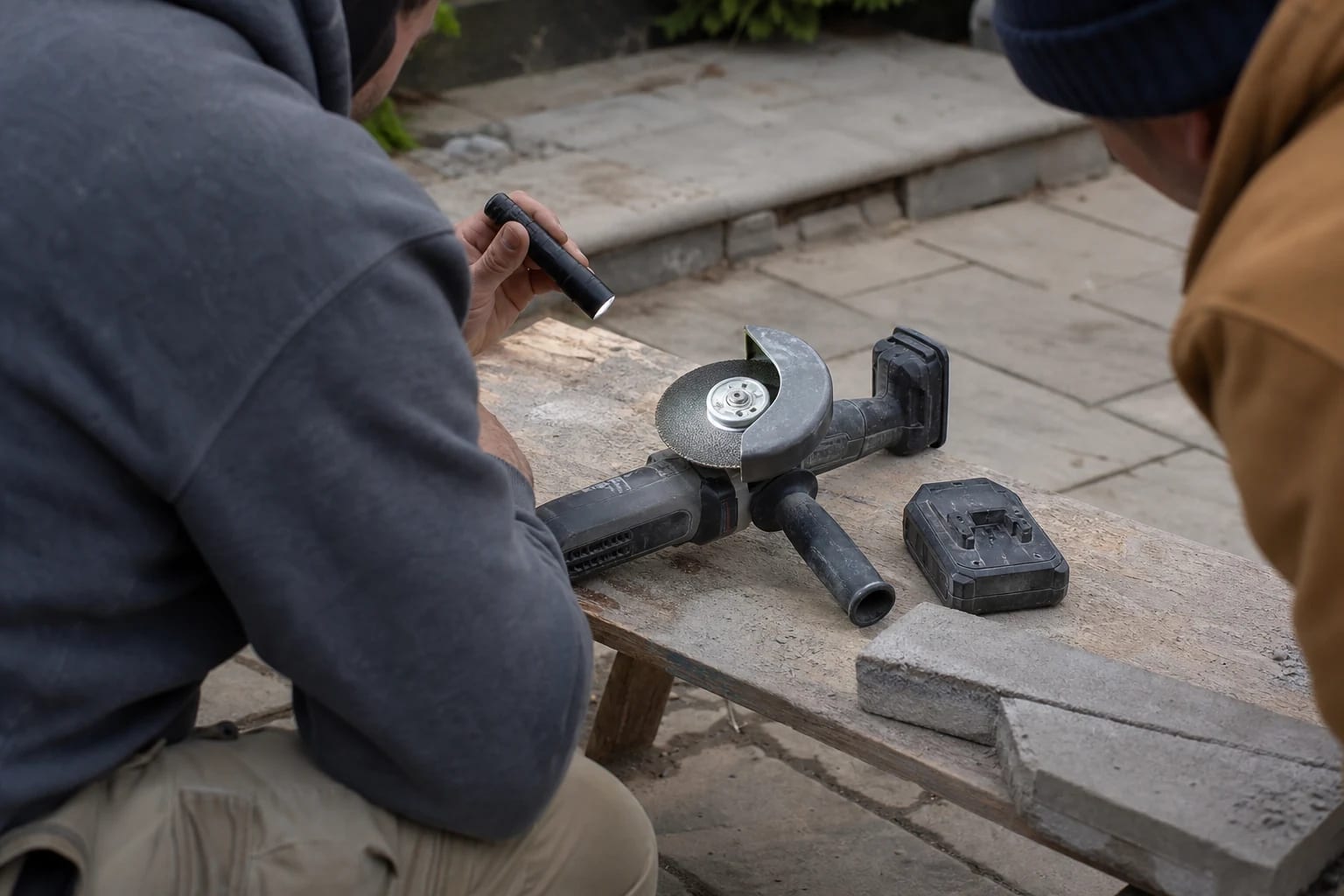
Two adults inspect an unbranded cordless angle grinder wheel and metal guard beside its removed battery and cut masonry on an outdoor workbench
Tool identity, guard state, power source, workpiece condition, and later handling should remain separate evidence fields.

Quick answer

After a power-tool kickback, guard concern, or unexpected movement in California, address safety and medical needs first. Then preserve the powered-off tool, guard, blade or wheel, battery or cord, workpiece, setup, original media, and purchase, rental, repair, training, and recall records. Keep observed condition separate from later testing and conclusions.

Key takeaways

  • Safety and medical needs come first; do not reenergize, operate, dismantle, reset, or stage a tool merely to create evidence.
  • Preserve the tool, guard, blade or wheel, battery or cord, attachments, workpiece, offcut, setup, and removed parts as an identified set when it is safe and lawful.
  • Record planned setup, as-found configuration, firsthand observations, and post-event condition as separate states rather than one reconstructed story.
  • Recall and workplace-safety sources help define record fields, but they do not automatically prove what happened in a particular incident.
Hurt Advice Editorial Team

Prepared by

Hurt Advice Editorial Team

Editorial Research and Publishing Team

Source-checked editorial publishing

Why trust this article

Prepared by the Hurt Advice Editorial Team from current U.S. Consumer Product Safety Commission, OSHA, and California Legislature sources. No attorney reviewed this displayed version.

Recent update: Original publication with a tool-and-component identity sheet, four-state guard and task matrix, workpiece and energy timeline, condition-and-custody ledger, custodian map, recall method, request scripts, evidence checklist, mistakes, and FAQs.

At a glance

What this guide helps you decide

Start with the question that brought you here, identify the records that can verify the facts, and use the related guidance only where it helps. This article addresses personal injury questions in California.

Main question

Decide how this topic may apply to your situation

Use "Power Tool Kickback and Blade-Guard Evidence in California" to sort the facts you know, the questions still open, and whether a personal injury resource or consultation may be useful in California.

Guide map

Start with the sections most relevant to you: Who this guide is for—and the narrow task it solves, Quick takeaways, Contents and the seven evidence lanes

Move through the article by issue, not by guesswork, so liability, medical proof, insurance pressure, deadlines, and next steps stay connected.

Records to gather

Connect these subjects to your records: California Power Tool Kickback Evidence, Blade Guard Evidence, Circular Saw Evidence, Angle Grinder Guard Evidence

Compare the topic with records, photos, medical visits, police reports, insurer letters, and local claim details before relying on a general answer.

Trust check

Use the source trail before acting

This page includes 6 source references plus internal next-step paths so readers can verify where the guidance comes from.

Before you rely on this guide

This article is written for people dealing with injury-law questions in California. It is meant to help you understand the issue, not replace legal advice about your specific case.

What to do after this article

Start with the quick answer, skim the table of contents, and then use the links below to move into the practice area, author archive, or resource page that turns general guidance into a clearer next step for your situation.

Who this guide is for—and the narrow task it solves

This guide is for a California worker, homeowner, renter, contractor, customer, or household member organizing evidence after a circular saw, table saw, miter saw, grinder, or similar powered tool kicked back, bound, moved unexpectedly, contacted material, or raised a question about a guard or other safety component. It is also useful when an employer, rental company, retailer, repair shop, manufacturer, insurer, or public agency may hold a different part of the record.

The task is source control: identify the exact tool and cutting or grinding component; preserve its as-found condition without creating a new hazard; record the workpiece and setup; separate what a person observed from what someone concluded later; and keep purchase, rental, maintenance, training, recall, inspection, and custody records in distinct lanes. The broader defective power-tools page describes the service topic. This article focuses on the narrower evidence-preservation job.

Hurt Advice is a lawyer referral and legal information service, not a law firm. This is general information, not legal, medical, engineering, workplace-safety, or tool-use advice. It does not establish a defect, regulatory violation, recall match, causation, damages, admissibility, or responsibility. No attorney reviewed this displayed version.

Quick takeaways

  • Safety and medical needs come first; do not reenergize, operate, dismantle, reset, or stage a tool merely to create evidence.
  • Preserve the tool, guard, blade or wheel, battery or cord, attachments, workpiece, offcut, setup, and removed parts as an identified set when it is safe and lawful.
  • Record planned setup, as-found configuration, firsthand observations, and post-event condition as separate states rather than one reconstructed story.
  • Recall and workplace-safety sources help define record fields, but they do not automatically prove what happened in a particular incident.
  • Document every movement, inspection, repair, return, transfer, test, and disposal decision, including missing intervals and disputed facts.

Contents and the seven evidence lanes

The workflow has seven lanes: (1) immediate safety and scene control, (2) tool identity, (3) guard and component configuration, (4) workpiece and task setup, (5) energy state and event timeline, (6) condition and custody, and (7) purchase, rental, employer, repair, manufacturer, insurer, and agency records. Do not merge them before identifying what each source actually supports.

Use one tool-and-cut identity sheet, one state matrix, one condition-and-custody ledger, and one file manifest. The accident evidence checklist supplies a general framework. The information gain here is the tool-specific connection among guard state, blade or wheel, workpiece, setup, energy, movement, and later alteration.

Safety comes before preservation

Address active hazards, emergency directions, and medical needs first. Keep people away from an energized, unstable, damaged, hot, rotating, pressurized, or contaminated tool. Do not squeeze a trigger, reconnect a battery, plug in a cord, reset a breaker, recreate the cut, move a bound workpiece, defeat a switch, rotate a blade by hand, or ask an unqualified person to demonstrate a suspected problem.

If a supervisor, emergency responder, safety professional, property owner, insurer, manufacturer, or qualified investigator controls the scene, record who directed movement or shutdown rather than interfering. When it is safe, make wide images before close images: tool position, operator area, support surfaces, workpiece, fence or guide, clamp, cord route or battery state, lighting, floor condition, debris, nearby materials, and objects moved during the response.

A safety instruction can require immediate isolation, lockout, or removal. Evidence preservation does not require keeping a dangerous tool in an occupied or insecure place. Record the safety reason, person directing the action, time, condition before movement when safely observable, new location, and parts that traveled with the tool.

Build an exact tool-and-component identity sheet

Start with the tool as found. Record tool type, brand, product name, model, serial number, date code, lot or batch, voltage or power type, capacity, switch type, guard type, base or shoe, fence, riving knife, anti-kickback device, side handle, blade or wheel type and size, arbor or spindle hardware, battery model, charger, attachments, and identifying marks. Photograph each label in context before transcribing it. Do not clean, peel, trace, or guess a damaged identifier.

The CPSC’s official required report information is directed to subject firms, but its product-description fields show why identity detail matters: brand, series or model, date code, identifying marks, pictures, distribution, complaints, tests, repairs, and design changes can be different sources. A consumer or worker using those fields as an organization checklist is not assuming a company’s federal reporting duty.

Link every value to its source: tool plate, blade or wheel, battery, carton, receipt, retailer order, rental agreement, asset tag, manual, registration, inspection log, repair ticket, or manufacturer response. If values conflict, retain each value and identify the source. Do not silently select the identifier that produces a recall match or supports one theory.

Create the planned-configured-observed-post-event matrix

Use one row for each important component or condition and four state columns:

  1. Planned: the intended tool, material, cut or grinding task, blade or wheel, guard, guide, support, power source, and sequence.
  2. Configured before the event: what a firsthand source or contemporaneous record shows about installation, adjustment, depth, alignment, clamping, fence or guide, battery or cord, and workpiece condition.
  3. Observed during the event: sound, movement, binding, vibration, material shift, guard movement, loss of power, trigger release, contact, debris, or other directly perceived facts.
  4. Post-event: tool position, guard position, blade or wheel condition, workpiece and kerf, battery or plug state, debris, removed parts, damage, cleaning, movement, and later inspection.

Example: “Planned: crosscut a dry board on two supports with a portable circular saw. Configured: blade and depth appear in a 9:12 a.m. photo; lower-guard movement was not recorded. Observed: witness heard the motor pitch change and saw the board shift; witness did not see the guard. Post-event: battery was removed by a supervisor; saw and board were photographed separately after movement.” That row preserves limits instead of turning them into a cause statement.

Use official guard and kickback sources carefully

OSHA’s current 29 C.F.R. 1910.243 page states workplace requirements for guarding portable powered tools, including upper and lower guards on covered portable circular saws and automatic return of the lower guard. Its legal scope and application depend on the work setting and facts. It does not prove a particular tool’s condition or decide a private California injury claim.

OSHA’s official woodworking kickback guidance describes kickback as stock seized and thrown by a saw and identifies possible contributors and controls such as workpiece condition, blade condition, spreaders, anti-kickback devices, guards, inspection, and maintenance. Use those items as record fields, not as a shortcut to causation. A different tool or task may involve a different mechanism.

For grinders and other guarded tools, photograph the guard, wheel or accessory, side handle, spindle hardware, power-source state, workpiece, and settled debris without manipulating the assembly. Preserve the manual version and accessory specifications actually associated with the tool. Do not assume a component was required, compatible, installed, adjusted, functional, or causally involved without source-supported review.

Preserve the workpiece, setup, and energy timeline

The workpiece can preserve facts the tool alone cannot. When safe, record material type, dimensions, moisture or contamination if known, knots, cracks, embedded fasteners, prior cuts, support points, clamps, fence or guide, marked line, kerf, offcut, pinch point, fracture, debris direction, and changes made during rescue or cleanup. Preserve matching offcuts and broken pieces as an identified set when practical and lawful.

Build the event timeline from reliable clock sources. Record setup, inspection, start, first contact, motor or speed change, binding or movement, trigger release, power loss, battery removal or unplugging, emergency response, first photographs, supervisor or property-owner notice, and every later movement. “Battery was found removed” is different from “battery was removed before movement.” “Guard was open in a later photograph” is different from “guard failed during the task.”

California Evidence Code section 250 defines a writing broadly to include photographs, sounds, and electronically stored records. Section 1401 states an authentication requirement for writings and secondary evidence of their content. Those statutes do not guarantee admissibility. Preserve originals, source, capture method, metadata, and ordinary handling rather than relying only on crops, forwarded clips, or annotated screenshots.

Use a condition-and-custody ledger

Create one entry per event with: date and time; location; object; person or organization; as-found condition; action; safety or business reason; original photo, video, receipt, tracking, signature, or report; and limitation or missing interval. Track the tool body, guard, blade or wheel, battery, cord, charger, fence, guide, handle, fasteners, workpiece, offcut, debris sample, packaging, and every removed part separately.

Example: “10:06 a.m., driveway: homeowner photographed grinder, wheel guard, side handle, paver, and removed battery after emergency care began; no image shows the battery-removal moment. 11:32 a.m.: property manager placed the tool and battery in separate rigid containers; no wheel removal authorized. Next day: insurer requested inspection scope; tool remained unopened.”

Do not write “unchanged” when the record only shows no known change. Use “no change observed by [source] between [times]” or “condition not recorded.” If a component is cleaned, adjusted, opened, tested, repaired, returned, shipped, lost, or discarded, keep the reason, actor, authority, before-and-after documentation, and destination.

Map records by custodian

User or household: original photos and video, purchase or rental record, packaging, manual, registration, maintenance, accessory history, task notes, messages, and contemporaneous observations. Preserve relevant material without copying unrelated private content into working files.

Employer or contractor: tool inventory, assignment, inspection, maintenance, training, job-hazard or task records, supervisor communications, incident report, witness information, photographs, work schedule, and corrective action. Record requests and responses; do not assume every record exists or is available to every requester.

Retailer, marketplace, or rental company: listing version, seller identity, invoice, fulfillment, delivery, rental checkout and return condition, included guard and accessories, inspection, repair, replacement, safety alert, complaint, refund, and disposition. A current web listing does not prove what appeared on the purchase or rental date.

Manufacturer, repair shop, insurer, or agency: registration, support ticket, warranty, troubleshooting, recall notice, repair, removed-parts list, testing scope, laboratory or inspection photographs, received-product condition, storage, return, and disposition. The product-liability resource and product-liability glossary provide broader context; keep each custodian’s source independent.

Search recalls without turning a result into a conclusion

Use the CPSC’s current recalls and product-safety warnings search. Save the exact query, search date, result or export, recall notice, included brand and identifiers, manufacturing or sales window, hazard description, remedy, and contact route. The CPSC page states that its displayed recall data updates weekly and remedy data may change more frequently, so record the version you actually relied on.

Use “exact match,” “possible match—identifier missing,” “excluded by notice,” or “no result located on this search date.” Similar color, housing, guard, blade, battery platform, reported hazard, or product name is not an exact match. A product can also be involved in an incident without appearing in recall results.

A recall, warning, complaint, refund, repair, replacement, or report can add evidence, but none automatically proves a defect, cause, injury, or responsibility. Keep the recall lane separate from the physical tool, task setup, medical records, witness observations, employer records, and later expert or agency work.

Neutral preservation and inspection scripts

Employer, rental company, retailer, or manufacturer: “Please preserve the existing records associated with [exact tool, asset, order, rental, or support identifier] for [focused date range], including identity, included components, inspection, maintenance, repair, training, checkout or assignment, complaint, safety notice, recall, return, replacement, shipment, and disposition records. Please preserve original timestamps, attachments, versions, photographs, and identifier fields and identify the custodian for records you do not maintain. This request does not ask you to create a new cause analysis.”

Proposed inspection or transfer: “Before voluntary transfer when circumstances allow, please identify the recipient, facility, scope, persons involved, whether any step may alter or destroy the tool or component, documentation method, removed-parts handling, storage, access, and return or disposition plan. Please keep the tool, guard, blade or wheel, power source, attachments, workpiece, offcut, and removed parts individually identified.”

Use verified current contact channels and share only what is reasonably needed. Save the request, delivery proof, acknowledgment, response, objection, transfer receipt, tracking, and follow-up. These scripts are organization aids, not subpoenas, commands, guarantees of retention, or substitutes for case-specific advice.

Timing and process checkpoints

Immediately: address hazards and care, follow emergency directions, isolate power if directed by a qualified person, and record who moved or controlled the tool. Make safe wide and close images before voluntary changes when possible.

First organized pass: build the identity sheet, state matrix, timeline, file manifest, and custody ledger. Preserve original media and the tool, guard, blade or wheel, power source, workpiece, offcut, packaging, and removed parts as linked items.

Before return, repair, testing, or disposal: verify recipient and authority, document condition and inventory, identify destructive steps, clarify removed-parts handling, and create a transfer record. Safety and lawful public processes remain controlling.

When records arrive: keep productions unchanged, log source and date, compare identifiers, preserve conflicts, and update the ledger without overwriting prior entries. If a deadline or disputed claim may be involved, the California deadline resource is only general background; seek individual advice promptly.

Evidence checklist

  • Tool body, guard, blade or wheel, battery or cord, charger, side handle, fence, guide, attachments, fasteners, workpiece, offcut, packaging, and every removed part.
  • Full identity labels in context plus model, serial, date code, lot, voltage or power type, capacity, component identifiers, and source for every transcription.
  • Wide and close scene images showing tool position, operator area, supports, clamps, workpiece, kerf, debris, cord route or battery state, floor, lighting, and moved objects.
  • Planned-configured-observed-post-event matrix with firsthand source, time, proof, unknowns, and later changes.
  • Original photos, video, audio, messages, downloads, exports, and metadata preserved separately from crops, annotations, conversions, and redactions.
  • Purchase, seller, rental, assignment, inspection, maintenance, repair, training, warranty, complaint, recall, return, replacement, shipping, and disposition records.
  • Exact CPSC query and saved notice with inclusion criteria, remedy, search date, and cautious match status.
  • Condition-and-custody entries for shutdown, battery removal or unplugging, movement, opening, cleaning, inspection, testing, repair, shipment, storage, and disposal.
  • Medical, wage, property, and insurer records kept in their own lanes with unnecessary private material excluded from tool files.

Mistakes and red flags

  • Reenergizing the tool, recreating the cut, moving a bound workpiece, resetting a switch, or staging video to demonstrate the event.
  • Cleaning dust, adjusting a guard, removing a blade or wheel, separating the workpiece, or accepting repair before condition and custody are documented.
  • Calling a visually similar tool recalled without matching exact model, serial or date code, production window, and other notice criteria.
  • Treating an OSHA rule or guidance page as automatic proof of violation, defect, causation, or private liability.
  • Combining operator recollection, witness observation, incident report, repair opinion, manufacturer response, and later inspection into one unqualified conclusion.
  • Using only screenshots when an original media file, export, receipt, message, listing version, or report is available.
  • Shipping or surrendering the tool without verified recipient, inventory, condition proof, scope, alteration terms, removed-parts plan, storage, and disposition.
  • Keeping an unsafe tool in an occupied or insecure place solely for evidence, or obstructing a lawful safety investigation.

Careful next steps

Complete the identity sheet, four-state matrix, timeline, manifest, recall-search record, and custody ledger. Keep “planned,” “configured,” “observed,” “found,” “reported,” “matched,” “excluded,” “changed later,” and “unknown” as different labels.

If another person or organization requests the tool, clarify authority, safety, scope, alteration, removed parts, documentation, storage, access, and disposition before a voluntary transfer when circumstances allow. If emergency personnel, an employer safety process, or a public agency already controls the item, document the custodian and follow the lawful process.

Hurt Advice can connect people with independent California lawyers through the contact page, but it does not promise representation or an outcome. This article was prepared by the Hurt Advice Editorial Team from the official sources listed below. No attorney reviewed this displayed version. See the editorial standards for sourcing, corrections, and autonomous-article disclosure.

Frequently Asked Questions

What should I preserve after a power-tool kickback or guard incident?
When it is safe, preserve the powered-off tool, guard, blade or wheel, battery or cord, charger, handles, guides, workpiece, offcut, packaging, manual, and removed parts as an identified set. Keep original photos and video plus purchase, rental, inspection, maintenance, training, repair, recall, and transfer records. Do not operate the tool to create evidence.
Should I remove the blade, wheel, battery, or guard?
Follow immediate safety directions, but avoid unnecessary alteration. Record who removed power or a component, when, why, and the condition before and after when safely observable. Do not dismantle or manipulate a guard, blade, or wheel merely to inspect it. If transfer or testing is proposed, clarify scope, destructive steps, removed-parts handling, storage, and disposition.
Does a missing or open guard prove what caused the incident?
No. A guard’s later condition can be relevant, but it does not by itself prove its earlier state, why it changed, whether a requirement applied, or what caused an incident or injury. Preserve planned setup, firsthand observations, as-found condition, photographs, workpiece evidence, maintenance and inspection records, and every later movement or adjustment.
How do I check whether the tool was recalled?
Compare the exact brand, model, serial or date code, lot, manufacturing or sales window, and other notice criteria with the official CPSC recall record. Save the query, date, notice, inclusion criteria, and remedy. Similar appearance, battery platform, guard, blade, hazard, or product name is not an exact recall match.
What belongs in the planned-configured-observed-post-event matrix?
For each component or condition, record the intended setup, what a firsthand source or contemporaneous record shows was configured, what was directly observed during the event, and what was found afterward. Add the source, time, proof, unknowns, and later changes. Do not fill missing states with assumptions.
Can an employer, rental company, or manufacturer inspect the tool?
An inspection may add useful records, but it can also move, open, adjust, test, repair, or consume components. Before a voluntary transfer when circumstances allow, verify the recipient and clarify scope, documentation, alteration, removed-parts handling, storage, access, and return or disposition. Do not interfere with emergency, workplace-safety, or lawful agency directions.

Sources and references

U.S. Consumer Product Safety CommissionRequired Report Information

Official product-identity, distribution, complaint, testing, repair, and design-change fields used in firm reporting.

Need help after an accident?

Hurt Advice intake team can review your situation, explain your options, and help you move forward with a plan that fits your case.