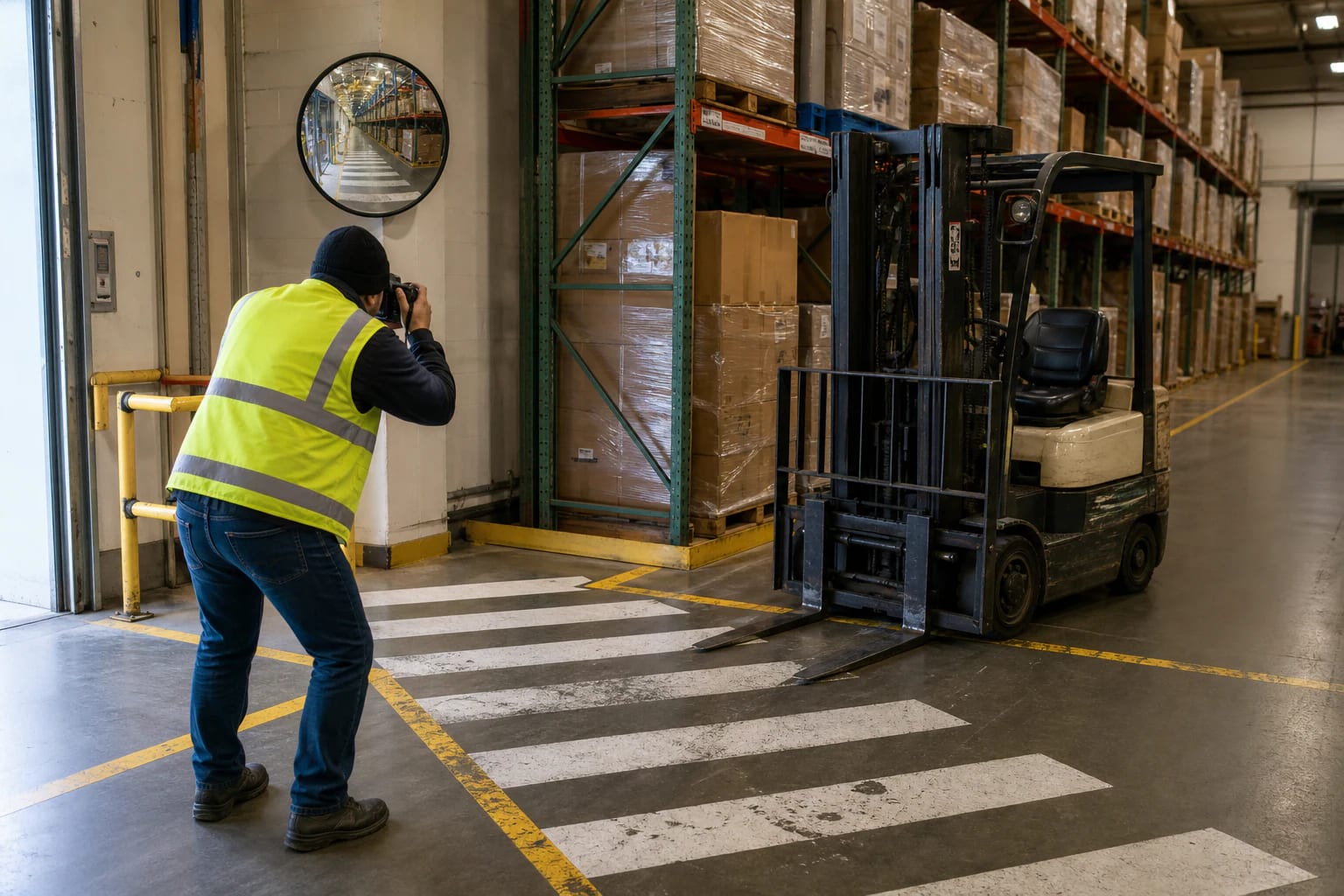
1. The shift check belongs to the truck and shift
California section 3650 calls for drivers to check the vehicle at the beginning of each shift and identifies systems such as tires, horn, lights, battery, controls, brakes, steering, cooling, forks, chains, cables, and limit switches. Ask for the form or electronic record tied to the specific truck and shift, along with any defect report and return-to-service record. A generic blank checklist does not show that a particular check occurred.
2. Training and evaluation belong to the operator and workplace
California's powered-industrial-truck training rule covers formal instruction, practical training, workplace evaluation, pedestrian traffic, narrow aisles, workplace-specific hazards, refresher triggers, and certification fields. It also identifies an accident or near miss and a changed workplace condition as possible refresher triggers. See California Code of Regulations, title 8, section 3668.
Request the operator's relevant certification fields and workplace-specific evaluation without assuming every personnel or disciplinary record is available to every requester. Keep the original training date, evaluation date, evaluator identity, truck type, workplace conditions, and any later refresher event separate.
3. The IIPP addresses the workplace system
California section 3203 requires a written Injury and Illness Prevention Program with hazard-identification procedures, periodic inspections, injury or illness investigation, timely correction, and training. Employees and properly designated representatives have specified access to the written Program, but the rule states that the supplied Program need not include every implementation record. See California Code of Regulations, title 8, section 3203.
That distinction matters. The written IIPP, inspection logs, work orders, event investigation, and corrective-action records may be related, but they are not interchangeable.
4. The event file belongs to the specific occurrence
An incident report, witness statement, scene photograph, emergency record, video export, or post-event equipment hold answers an event-specific question. The California workplace incident and Cal/OSHA records guide provides a broader organizing framework. The shift, payroll, and training records guide explains how assignment records differ from safety conclusions, while the machine lockout and maintenance guide covers a separate hazardous-energy task.