
Legal ExplainerBack Neck InjuriesChecklist / Process

Spinal Fusion Procedure Records: A California Organization Guide

A spinal-fusion file can become a pile of portal downloads, imaging, implant labels, changing restrictions, and bills. A useful California record does not blend those sources together. It preserves originals, indexes the procedure and device information, separates medical instructions from personal observations, requests missing material precisely, and leaves diagnosis, causation, and legal conclusions to qualified professionals.

Published

July 20, 2026

Updated

July 20, 2026

Reading time

10 min read

Jurisdiction

California

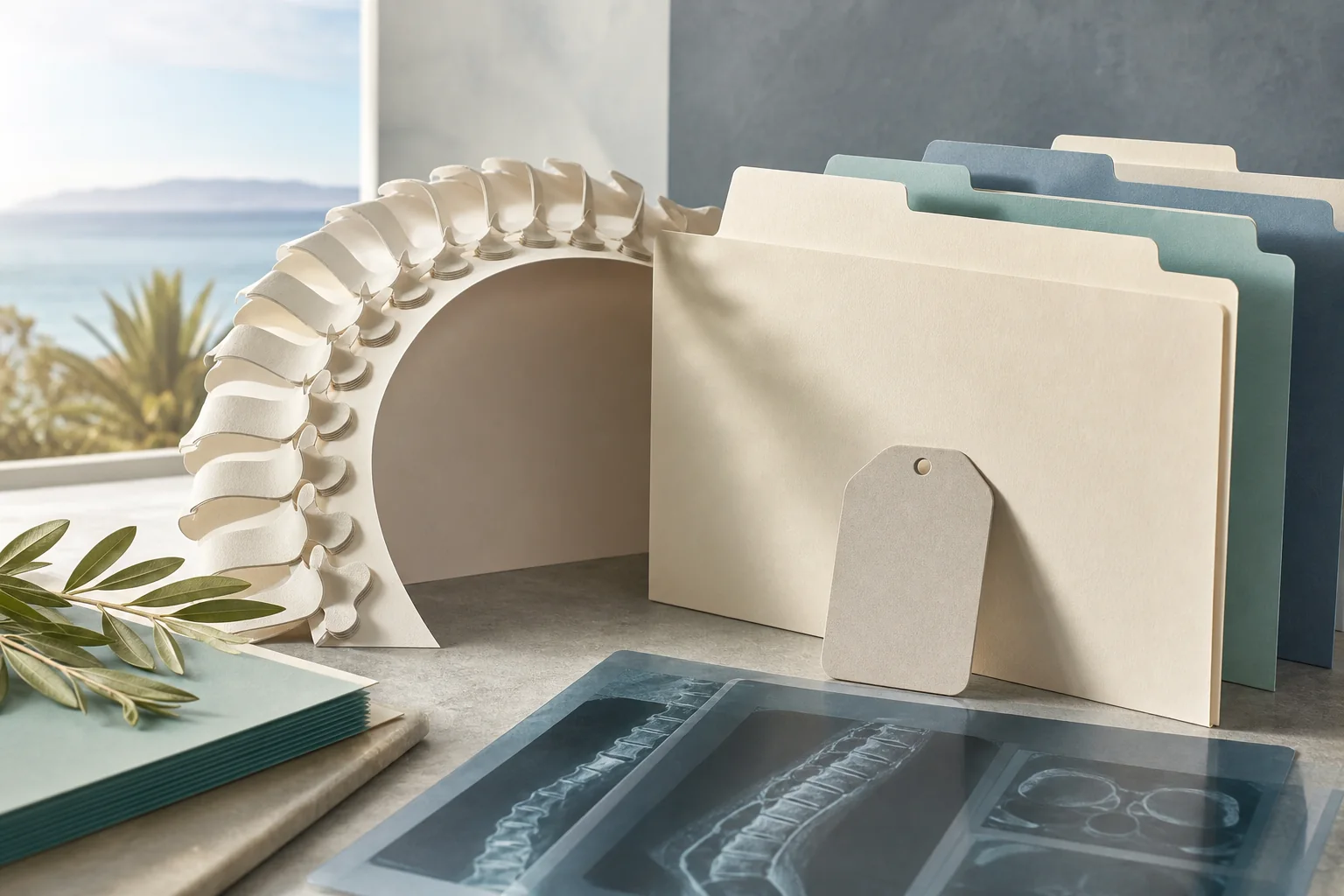
Abstract layered spine arc, blank procedure folders, a neutral identifier tag, and ordered imaging-film shapes in calm California daylight
A traceable spinal-fusion file keeps procedure, device, imaging, restriction, billing, and personal-function sources in distinct lanes.

Quick answer

After spinal fusion, organize the operative report, implant identifiers, imaging, discharge instructions, restrictions, bills, and function notes as separate sources. Request missing California records by facility and type, verify device information without assuming a defect, and ask the treating professional to reconcile procedure details, current restrictions, follow-up, and urgent warning signs.

Key takeaways

  • Keep the operative report, implant identifiers, imaging, discharge instructions, restrictions, therapy notes, bills, and personal function notes in separate source lanes.
  • Ask for records by facility, date range, and record type; a patient-portal summary may not contain the complete procedure file or actual images.
  • Record the exact device identifier when one is available, then use FDA tools only to identify the device; do not infer a defect, recall, or case result.
  • Reconcile restrictions by date and author. Do not silently replace an older instruction with a later note or turn a personal limitation into a medical restriction.
Hurt Advice Editorial Team

Prepared by

Hurt Advice Editorial Team

Editorial Research and Publishing Team

Source-checked editorial publishing

Why trust this article

Prepared by the Hurt Advice Editorial Team from current California patient-record law, official HHS HIPAA access guidance, FDA UDI and AccessGUDID resources, MedlinePlus, and the Judicial Council of California 2026 CACI resource center. No attorney reviewed this displayed version.

Recent update: Original publication with a four-lane spinal-fusion packet, device-identifier table, imaging map, restriction reconciliation tool, California records workflow, and provider-question script.

At a glance

What this guide helps you decide

Start with the question that brought you here, identify the records that can verify the facts, and use the related guidance only where it helps. This article addresses back neck injuries questions in California.

Main question

Decide how this topic may apply to your situation

Use "Spinal Fusion Procedure Records: A California Organization Guide" to sort the facts you know, the questions still open, and whether a back neck injuries resource or consultation may be useful in California.

Guide map

Start with the sections most relevant to you: Quick takeaways, Who this guide is for—and what it cannot decide, Know what the procedure record is describing

Move through the article by issue, not by guesswork, so liability, medical proof, insurance pressure, deadlines, and next steps stay connected.

Records to gather

Connect these subjects to your records: Spinal Fusion, Operative Report, Implant Identifiers, Diagnostic Imaging

Compare the topic with records, photos, medical visits, police reports, insurer letters, and local claim details before relying on a general answer.

Trust check

Use the source trail before acting

This page includes 6 source references plus internal next-step paths so readers can verify where the guidance comes from.

Before you rely on this guide

This article is written for people dealing with injury-law questions in California. It is meant to help you understand the issue, not replace legal advice about your specific case.

What to do after this article

Start with the quick answer, skim the table of contents, and then use the links below to move into the practice area, author archive, or resource page that turns general guidance into a clearer next step for your situation.

Quick takeaways

  • Keep the operative report, implant identifiers, imaging, discharge instructions, restrictions, therapy notes, bills, and personal function notes in separate source lanes.
  • Ask for records by facility, date range, and record type; a patient-portal summary may not contain the complete procedure file or actual images.
  • Record the exact device identifier when one is available, then use FDA tools only to identify the device; do not infer a defect, recall, or case result.
  • Reconcile restrictions by date and author. Do not silently replace an older instruction with a later note or turn a personal limitation into a medical restriction.
  • Records organization must never delay care. New weakness, loss of bowel or bladder control, breathing trouble, fever, wound changes, or other urgent symptoms require prompt professional guidance.

Who this guide is for—and what it cannot decide

This guide is for a person organizing records after a cervical, thoracic, or lumbar spinal-fusion procedure connected to a California injury matter. It may also help a family member build a source index. The reader task is narrow: identify what procedure occurred, where each record came from, what hardware or graft information was documented, what instructions changed over time, and which gaps require a focused request.

The existing spinal-fusion educational calculator discusses broad factors that may affect a claim. This article does not estimate value. The back and neck injury guide covers the wider service area, and the California injury-proof guide explains general evidence categories.

A records file cannot diagnose a condition, determine whether a procedure was necessary, establish what caused it, decide whether an implant is defective, predict recovery, or prove damages by itself. Those questions depend on qualified medical judgment, admissible evidence, the full history, and case-specific legal analysis. Use this workflow to preserve sources accurately, not to manufacture a conclusion.

Know what the procedure record is describing

MedlinePlus explains spinal fusion as surgery that permanently joins two or more vertebrae so there is no movement between them. It also notes that a fusion may occur with other procedures and may use bone graft material, cages, rods, screws, or plates depending on the operation. That general description is not a substitute for the actual operative report.

Begin by copying, without interpretation, the procedure name, spinal level or levels, surgical approach, side when stated, date, facility, surgeon, and related procedures from the final operative report. Keep the preoperative diagnosis, postoperative diagnosis, procedure list, findings, implants, specimens, complications, and disposition as distinct fields. If two documents use different labels, record both and flag the difference for the provider rather than choosing the version that seems more favorable.

Do not call every back operation a fusion. A diskectomy, laminectomy, decompression, foraminotomy, graft harvest, or instrumentation may appear with a fusion, but each term has its own role. The record index should show what the source says and where it says it.

Build a four-lane procedure-day packet

Create four folders or digital sections. A single hospital download can contain items from every lane, so label each file by source and date instead of relying on the download name.

  1. Clinical lane: history and physical, consultations, consent documentation, anesthesia record, operative report, recovery notes, discharge summary, medication list, and follow-up plan.
  2. Device and material lane: implant log, stickers or labels, catalog and lot information, unique device identifier when maintained, graft or biologic entries, and any patient implant card actually provided.
  3. Imaging lane: preprocedure orders and reports, actual image access, intraoperative imaging records when maintained, postoperative reports, and the clinician notes that discuss those studies.
  4. Financial and work lane: itemized facility, professional, anesthesia, imaging, therapy, pharmacy, and equipment bills; insurer explanations; wage records; and actual work-status notes.

Keep originals unchanged. Use a working index with columns for service date, document date, facility, author, record type, body level, file name, pages, and follow-up question. If a portal exports one large PDF, preserve it and create a separate index; do not split or relabel pages in a way that hides their source.

Use device identifiers carefully

The FDA’s UDI Basics explains that a unique device identifier generally contains a fixed device identifier and, when included, production information such as a lot, serial number, expiration date, or manufacturing date. The FDA also explains that exceptions and alternatives exist. A missing UDI in a patient’s copy does not automatically mean a device was undocumented or improperly used.

When an implant log, label, or card contains an identifier, transcribe it exactly, including symbols and leading zeros. Save a clear image of the source and record where the identifier appeared. Then use FDA AccessGUDID to look up device-identification information. FDA says the public database can be searched without an account and contains key identification data submitted for devices with UDIs.

Use a compact device table:

  • Source: implant log, label, patient card, operative report, or billing line.
  • Exact identifier: UDI, catalog, model, lot, or serial information only as shown.
  • Source description: the name and manufacturer stated in that record.
  • FDA lookup: search date, device identifier match, and public result URL.
  • Open question: mismatch, missing production information, or need for provider clarification.

An AccessGUDID match identifies device data; it does not prove that a particular product failed, caused harm, was recalled, or supports liability. Do not search by appearance alone or substitute a similar product’s record.

Separate imaging, interpretation, and follow-up

For each study, keep the order, final report, actual image files or official access method, comparison-studies statement, and clinician follow-up note. A radiology report is an interpretation; the image set is the source study; a treating note may relate the imaging to the examination and plan. They are not interchangeable.

The official 45 C.F.R. §164.524 text generally provides access to protected health information about an individual in a designated record set, subject to stated exceptions and procedures. It also addresses requested form and format when the information is readily producible that way. Ask the facility whether actual image files are maintained in the relevant record set and what delivery formats are available.

Label imaging by date, facility, modality, body region, level, and whether it occurred before or after the procedure. Preserve the report’s exact comparison language. If a report says that no comparison was available, do not write that the study showed a “new” change unless a qualified professional later makes a supported comparison. If a clinician reviewed outside images, save the note that says so and identify the outside source.

Reconcile restrictions and real-world function

Restrictions can change. Build one row per instruction rather than one blended summary:

  • Date and author: who issued the instruction and in which record.
  • Exact instruction: lifting, bending, twisting, driving, brace use, wound care, work status, therapy, or follow-up, quoted or accurately summarized.
  • Effective period: start, end, next-review date, or “not stated.”
  • Later change: the next record that modified, continued, or ended it.
  • Observed function: a separate factual note about walking, sitting, sleeping, personal care, travel, household tasks, or work.

Use concrete function entries: “sat for 25 minutes, then changed position,” “needed help putting on socks,” or “completed a four-hour modified shift.” Record only what was actually observed or documented. The symptom-journal guide provides a broader dated-log structure. A personal log is not a medical order, and a medical restriction does not prove that every listed activity was attempted.

When two instructions conflict, ask the treating office which current instruction controls. Do not quietly delete the earlier record. Preserve both, the clarification request, and the response.

Request the complete California record

California Health and Safety Code §123110 generally gives covered patients or personal representatives rights to inspect patient records and obtain copies, subject to the statute’s definitions, exceptions, verification, fees, and procedures. The current text generally requires inspection during business hours within five working days after receipt of a request and transmission of requested copies within 15 days. It also addresses electronic format and X-ray transmission.

Send a focused written request that identifies the patient, facility, date range, procedure date, and record categories. Ask separately for records that may be held by the hospital, surgeon, anesthesia group, radiology provider, therapy provider, pharmacy, equipment supplier, and insurer. Consider requesting:

  • the final signed operative report and every addendum;
  • implant/device log, label data, and patient implant information maintained in the record;
  • orders, reports, actual-image access, and comparison studies;
  • discharge summary, instructions, medication reconciliation, restrictions, and return precautions;
  • follow-up, therapy, work-status, portal, telephone, and missed-appointment records;
  • itemized bills, payment records, and insurance explanations.

Save the request, delivery proof, custodian response, invoice, original files, and gap list. The medical-care resource can help organize providers. Use secure channels and disclose only what the request requires.

Bring neutral questions to the treating professional

A useful review asks for explanation and accuracy, not a scripted legal opinion. Consider this five-question tool:

  1. What exact procedure and spinal levels does the final operative report document?
  2. Which implant, graft, or device records should be in the patient file, and where can they be requested?
  3. Which imaging has been reviewed, what comparisons were available, and what remains uncertain?
  4. Which restrictions are current, when should they be reassessed, and which earlier instructions have changed?
  5. What symptoms or wound, neurologic, medication, or mobility changes require urgent contact or emergency care?

Use this script:

“I am organizing the records and do not want to interpret them myself. Could you confirm the procedure and levels, tell me which implant and imaging records should exist, clarify the current restrictions, identify any earlier instruction that has changed, and explain what follow-up or warning signs apply to me?”

Do not ask a provider to backdate an instruction, delete an accurate history, adopt a settlement number, or state causation outside the provider’s independent judgment.

Timing and process checklist

  1. Immediately after discharge: follow the care team’s instructions, save the complete discharge packet, list every facility, and identify the number for urgent questions.
  2. Within the first record pass: preserve the portal export, operative report, implant information, image access, medication list, restrictions, and follow-up schedule.
  3. As records arrive: hash or otherwise preserve originals when practical, rename only working copies, and update the source index and gap list.
  4. At each follow-up: record which imaging was reviewed, which instructions changed, the next review date, and actual work or activity status.
  5. When information conflicts: send a narrow clarification request and keep both the question and response.
  6. Before relying on a legal deadline or making a statement: obtain case-specific advice. This guide is not a deadline calculator and different parties or claims can involve different rules.

Mistakes, medical red flags, and next steps

Follow the treating team’s individualized return precautions. Seek prompt professional guidance for new or worsening weakness, numbness, loss of bowel or bladder control, breathing trouble, fever, drainage or spreading redness at a wound, severe unrelieved pain, medication reaction, or another urgent change. Call emergency services when appropriate. Do not wait to finish an index or records request.

  • Relying on the portal summary alone. Ask whether the operative, implant, anesthesia, imaging, and billing records are separate.
  • Using a device search to allege a defect. Identification is not proof of failure, recall, causation, or liability.
  • Mixing images with interpretations. Preserve the source study, report, and clinician discussion as separate records.
  • Flattening changing restrictions. Keep each dated instruction and the record that changed it.
  • Editing originals. Make labeled working copies and retain the untouched source.
  • Overstating daily limits. Use specific tasks, durations, help received, and source dates.
  • Sharing the complete file broadly. Use secure, minimum-necessary disclosure.

Start with the four-lane packet and one-page gap list. Request missing sources, verify any identifier against its exact source, bring the neutral questions to the treating professional, and obtain individualized legal review when needed. The case-review form can organize an intake request. Submitting information does not create an attorney-client relationship or guarantee representation.

Hurt Advice is a lawyer referral and legal information service, not a law firm. This article provides general information, not medical or legal advice, and no attorney reviewed this displayed version. See the editorial standards, Editorial Team archive, and referral and legal disclaimer.

Frequently Asked Questions

What records should I request after a spinal-fusion procedure?
Consider the final operative report and addenda, implant or device log, anesthesia and recovery records, discharge instructions, medication reconciliation, imaging reports and actual-image access, follow-up and therapy notes, restrictions, work-status records, itemized bills, insurer explanations, and any prior records relevant to the same spinal area. Request only records that actually exist.
Is the operative report the same as the discharge summary?
No. The operative report documents the procedure, while the discharge summary and instructions address the hospitalization, medications, restrictions, follow-up, and return precautions. Preserve each source separately and ask the facility for missing components.
How can I identify hardware used in a spinal fusion?
Start with the implant log, device labels, patient implant card, and operative report. Transcribe identifiers exactly. FDA AccessGUDID can help identify a device from its device identifier, but a database match does not prove a defect, recall, failure, causation, or legal claim.
Can I request the actual spinal images and not just the reports?
The HIPAA rule generally provides access to protected health information in designated record sets, subject to exceptions and format rules. Ask the facility whether actual image files are maintained in the relevant record set, what format is readily producible, and how large files are delivered. Keep images, reports, and clinician interpretations separate.
How should I track changing lifting or work restrictions?
Create one row per dated instruction with the author, exact restriction, effective period, next review, and later record that changed it. Keep personal observations in a separate column. If instructions conflict, ask the treating office for clarification and preserve the response.
How quickly can I obtain California medical-record copies?
California Health and Safety Code section 123110 generally requires covered requested copies within 15 days and inspection within five working days, subject to the statute’s scope, exceptions, verification, fees, format, and imaging rules. Read the current text and confirm the provider’s process before relying on a date.

Sources and references

U.S. National Library of Medicine medical encyclopediaSpinal fusion

Explains spinal fusion, common accompanying procedures, grafting, instrumentation, preparation, and follow-up context.

U.S. Food and Drug AdministrationUDI Basics

Explains device and production identifier components, labeling forms, exceptions, and the GUDID system.

U.S. Food and Drug AdministrationAccessGUDID for the public

Explains the public, no-account device-identification search and its data scope.

Need help after an accident?

Hurt Advice intake team can review your situation, explain your options, and help you move forward with a plan that fits your case.