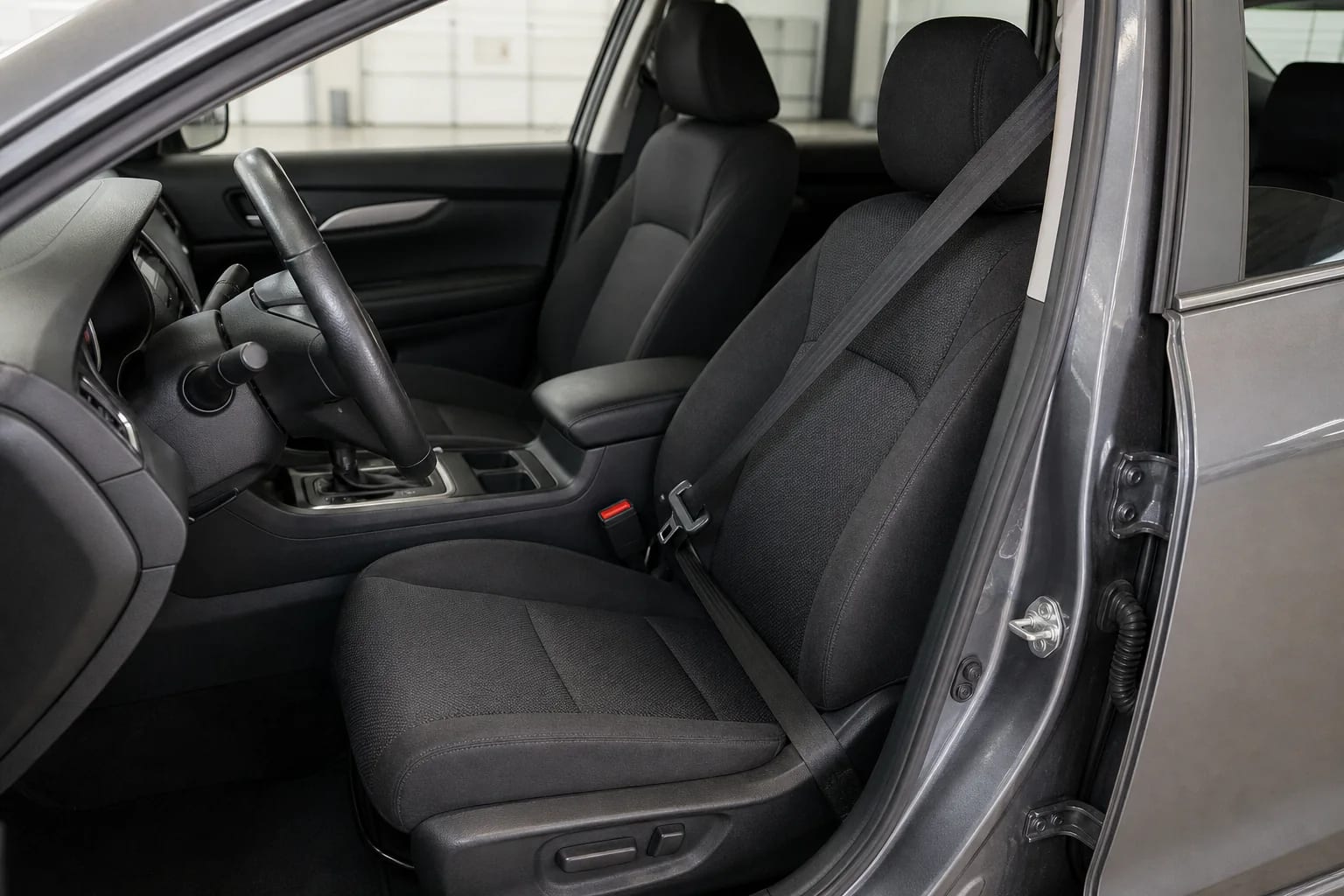

This guide is for a California vehicle owner, injured occupant, family member, or authorized representative trying to preserve seat-belt and crash-event evidence after a collision. It gives a practical workflow for identifying the vehicle, documenting the physical restraint system, separating diagnostic records from event data, confirming lawful access, and preserving the acquisition record.
It does not decide whether a belt was worn, whether a pretensioner should have fired, whether a restraint failed, how fast a vehicle was traveling, who caused the crash, whether an injury was caused by a particular mechanism, or what a claim is worth. Those questions may require vehicle-specific engineering, medical evidence, qualified analysis, and other sources. The seat-belt failure service guide explains the possible legal issue; this article is the narrower evidence-preservation task.
Address medical care and immediate safety first. Do not enter an unsafe vehicle, reconnect damaged electrical systems, drive a vehicle that should not be driven, test a restraint on a person, cut webbing, pull trim, dismantle a retractor, energize a pretensioner, or attempt a module download without appropriate training and authority. If a tow yard, repair shop, insurer, or salvage operator has the vehicle, send a narrow written preservation request promptly and keep delivery proof.