
Legal ExplainerCar AccidentsChecklist / Process

Tire Condition, Tread, and Repair Records After a California Crash

After a California crash involving a tire concern, address safety and medical needs first. When lawful and safe, identify every tire by vehicle corner and sidewall, preserve original tread, pressure, damage, service, recovery, and recall records, and document each removal, inspection, repair, test, transfer, and disposal without deciding defect or crash cause from one later condition.

Published

July 31, 2026

Updated

July 31, 2026

Reading time

10 min read

Jurisdiction

California

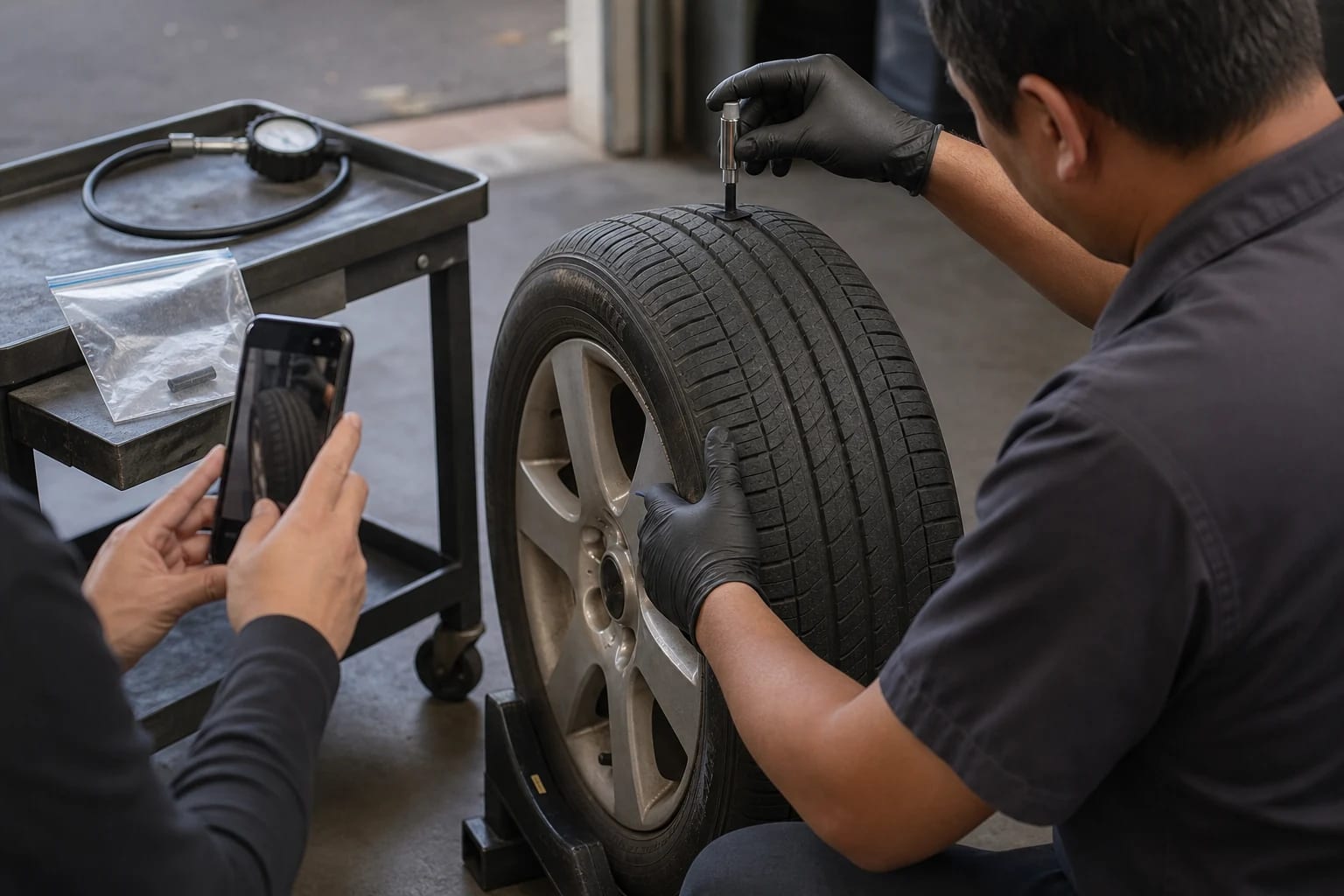
Tire technician measures a central tread groove on a removed sedan wheel while another adult photographs the inspection
Tire identity, vehicle corner, measurements, service history, recovery condition, and later changes should remain separate evidence fields.

Quick answer

After a California crash involving a tire concern, address safety and medical needs first. When lawful and safe, identify every tire by vehicle corner and sidewall, preserve original tread, pressure, damage, service, recovery, and recall records, and document each removal, inspection, repair, test, transfer, and disposal without deciding defect or crash cause from one later condition.

Key takeaways

  • Safety, emergency directions, and medical needs come first; do not drive, inflate, deflate, rotate, remount, repair, cut, or test a tire merely to create evidence.
  • Identify each tire by vehicle corner and photograph the wheel, tread, both sidewalls, valve area, visible markings, and nearby vehicle context before voluntary changes when safely possible.
  • Keep prior service records, firsthand crash observations, recovery condition, later measurements, and expert or shop opinions in separate lanes.
  • Record exactly where and how tread depth or pressure was measured; one value without a groove, location, tool, time, and measurer is incomplete.
Hurt Advice Editorial Team

Prepared by

Hurt Advice Editorial Team

Editorial Research and Publishing Team

Source-checked editorial publishing

Why trust this article

Prepared by the Hurt Advice Editorial Team from current National Highway Traffic Safety Administration and California Legislature sources. No attorney reviewed this displayed version.

Recent update: Original publication with a vehicle-corner identity sheet, five-state source matrix, tread and pressure measurement log, exterior and interior condition workflow, service and recall map, custody ledger, neutral scripts, checklist, mistakes, and FAQs.

At a glance

What this guide helps you decide

Start with the question that brought you here, identify the records that can verify the facts, and use the related guidance only where it helps. This article addresses car accidents questions in California.

Main question

Decide how this topic may apply to your situation

Use "Tire Condition, Tread, and Repair Records After a California Crash" to sort the facts you know, the questions still open, and whether a car accidents resource or consultation may be useful in California.

Guide map

Start with the sections most relevant to you: Who this guide is for—and the exact task it solves, Quick takeaways, Contents: seven tire-evidence lanes

Move through the article by issue, not by guesswork, so liability, medical proof, insurance pressure, deadlines, and next steps stay connected.

Records to gather

Connect these subjects to your records: California Tire Evidence, Tire Tread Records, Tire Pressure Records, Tire Repair History

Compare the topic with records, photos, medical visits, police reports, insurer letters, and local claim details before relying on a general answer.

Trust check

Use the source trail before acting

This page includes 5 source references plus internal next-step paths so readers can verify where the guidance comes from.

Before you rely on this guide

This article is written for people dealing with injury-law questions in California. It is meant to help you understand the issue, not replace legal advice about your specific case.

What to do after this article

Start with the quick answer, skim the table of contents, and then use the links below to move into the practice area, author archive, or resource page that turns general guidance into a clearer next step for your situation.

Who this guide is for—and the exact task it solves

This guide is for a California driver, passenger, vehicle owner, family member, or records organizer after a crash in which tire condition, pressure, tread, repair history, or failure has become a question. It also helps when a tow yard, insurer, repair facility, retailer, manufacturer, employer, rental company, or agency holds part of the record.

The task is not to decide that a tire was defective or caused the crash. It is to identify the exact tire and vehicle corner; separate pre-service, pre-crash, firsthand, recovery, and later-inspection states; and preserve sources in sequence. The broader tire-blowout service page discusses the service topic. This checklist owns the narrower tire-condition, tread, repair, and custody record job.

Hurt Advice is a lawyer referral and legal information service, not a law firm. This is general information, not legal, medical, mechanical, engineering, or tire-service advice. It does not establish a defect, violation, causation, damages, admissibility, or responsibility. No attorney reviewed this displayed version.

Quick takeaways

  • Safety, emergency directions, and medical needs come first; do not drive, inflate, deflate, rotate, remount, repair, cut, or test a tire merely to create evidence.
  • Identify each tire by vehicle corner and photograph the wheel, tread, both sidewalls, valve area, visible markings, and nearby vehicle context before voluntary changes when safely possible.
  • Keep prior service records, firsthand crash observations, recovery condition, later measurements, and expert or shop opinions in separate lanes.
  • Record exactly where and how tread depth or pressure was measured; one value without a groove, location, tool, time, and measurer is incomplete.
  • Track every removal, wheel-tire separation, interior inspection, repair, test, retained fragment, transfer, storage location, and disposal decision.

Contents: seven tire-evidence lanes

Use seven lanes: (1) immediate safety and scene control, (2) vehicle-corner and tire identity, (3) exterior and tread condition, (4) pressure and service history, (5) event, recovery, and change timeline, (6) removal, interior inspection, repair, and custody, and (7) owner, shop, tow, insurer, manufacturer, fleet, rental, and agency records.

Create one vehicle-corner map, one before-service-before-crash-observed-recovered-later matrix, one measurement log, one condition-and-custody ledger, and one file manifest. The general accident evidence checklist can hold scene, witness, medical, and communication material that should remain outside the tire file.

Put safety before tire preservation

Follow emergency, traffic-control, fire, tow, and medical directions. Do not stand in an active roadway, work under an unsupported vehicle, reach near moving traffic, handle a hot or burning tire, or ask anyone to drive on a damaged or deflated tire. If responders, law enforcement, a tow operator, or a qualified service provider must move the vehicle or wheel, document the reason, person, time, destination, and observable change rather than interfering.

When it is safe and lawful, make wide images first: the entire vehicle, its resting position, roadway or shoulder, debris field, each wheel location, visible scrape or impact areas, and objects moved during response. Then make closer images of the questioned tire, neighboring tire, wheel well, rim, tread, both sidewalls when accessible, valve area, and any separated material. Do not roll the vehicle merely to expose a preferred angle.

Preservation does not require leaving a vehicle in a dangerous location. It requires a reliable record of what changed, why, who directed it, and where the vehicle, wheel, tire, or fragment went.

Build a vehicle-corner and tire identity sheet

Start with the vehicle: record VIN from an existing reliable record, year, make, model, trim if known, mileage source, drivetrain if relevant, owner or fleet unit, and the corner where each tire was located—left front, right front, left rear, right rear, or spare. Do not rely on a loose tire’s later position without a source showing where it came from.

For each tire, photograph the full tread and both sidewalls when safely accessible. Record brand and line, size, service description, load and pressure markings, DOT Tire Identification Number (TIN), date code, other sidewall markings, wheel description, valve and cap, visible repair indicators, and distinguishing scuffs, cuts, bulges, punctures, exposed material, irregular wear, or debris. Transcribe only what is legible and keep the photograph beside the transcription.

NHTSA’s current TireWise guidance explains that the last four digits of the TIN identify the week and year of manufacture and advises looking on both sides because the complete TIN may not appear on both. The page also discusses tire pressure, tread, physical damage, irregular wear, age, tire ratings, and TPMS. Those subjects supply identity and condition fields; they do not determine what happened in a particular crash.

Use a five-state source matrix

Create one row for each important tire fact and five columns:

  1. Before service: purchase, installation, registration, prior repair, rotation, balance, alignment, pressure check, TPMS complaint, or inspection record.
  2. Before the crash: last reliable photo, pressure record, dashboard observation, noise or vibration report, mileage, loading record, route, weather, or recent service.
  3. Observed during the event: direct perceptions of sound, vibration, handling, warning light, air loss, debris, wheel movement, impact, or vehicle response—without adding what the source did not perceive.
  4. Recovered: vehicle corner, inflation state, tread and sidewall condition, rim position, separated material, responder actions, tow method, first photographs, and first storage location.
  5. Later: movement, pressure release, tire removal, wheel-tire separation, measurement, cleaning, marking, interior inspection, repair, testing, shipping, storage, or disposal.

Example: “Invoice: right-front tire installed at recorded mileage; invoice does not identify a tread measurement. Driver: heard a repeating sound shortly before impact but did not identify its source. Recovery photo at 6:18 p.m.: right-front tire remained on the rim; pressure was not measured. Shop intake at 10:42 a.m. next day: tire removed after exterior photographs; interior condition first recorded then.” The matrix preserves limits instead of converting sequence into cause.

Log tread and pressure measurements so another reader can understand them

For every tread entry, record tire identity and vehicle corner; exact groove and circumferential location; whether the point was a major groove, shoulder, tie bar, treadwear indicator, damaged area, or another feature; tool and units; measurer; date and time; tire mounting state; inflation state if known; photograph or video; and any cleaning, rotation, or movement before measurement. Use multiple labeled locations rather than one unexplained number.

California Vehicle Code section 27465 sets tread-depth rules that vary for identified vehicle and tire uses and says measurements are not made where tie bars, humps, or fillets are located. NHTSA’s consumer guidance separately says tires should be replaced when tread is worn to 2/32 inch. These sources serve different purposes. Preserve the measured facts, vehicle class, tire position, method, and source rather than turning a single value into a legal or causal conclusion.

For pressure, record the exact tire, gauge, units, ambient conditions when known, whether the tire was hot or cold, valve condition, measurement sequence, and any air added or released. Preserve TPMS warnings, scans, relearn or sensor service, and dashboard photos separately from handheld gauge readings. A warning, stored code, or later pressure value does not by itself identify when air loss began or why.

Preserve exterior, interior, wheel, and repair condition separately

Exterior photographs should cover the tread crown and shoulders around the full circumference; both sidewalls; bead, valve, sensor, and rim areas; impact marks; cuts, punctures, cracks, bulges, separations, exposed cords, abrasion, irregular wear, embedded objects, and loose fragments. Include orientation and scale without blocking the condition.

Before removal or interior inspection, record the mounted exterior and wheel position. Document authorization; equipment and lubricant; bead condition before and after; interior liner; repair material; puncture path; removed objects; marks; retained samples; testing; cleaning; and storage. “No interior condition recorded” differs from “no interior damage observed.”

Do not repair, inflate, cut, clean, mount, dismount, or road-test the tire merely to see what happens. Identify any inspection’s scope, recording, manipulation, destructive steps, retained material, storage, access, and disposition. The defective auto-parts service page provides broader context; this article reaches no causal conclusion.

Keep service history and recall research source-controlled

Collect purchase and installation invoices; registration; wheel assignment; mileage; rotations; balance and alignment; pressure checks; TPMS diagnosis; puncture repair; complaints; warranty; replacement; and disposal records. Ask whether attachments, technician notes, measurements, photos, part numbers, or revision history exist outside the printed invoice.

NHTSA’s recall and safety-issue search covers vehicle, tire, and equipment recalls, investigations, complaints, and manufacturer communications. Record identifiers, query date, result, and displayed limitations. A current no-result screen does not prove that no prior campaign, completed remedy, later update, or differently identified tire exists.

The product-liability resource and glossary provide broad background. Keep recall, service, condition, observation, and opinion sources separate.

Preserve original digital records and the crash-recovery clock

Build the timeline from reliable clocks: last service, last known pressure check, last pre-crash photo, route start, warning or observation, crash, emergency call, first scene image, vehicle movement, tow hookup, yard intake, insurer inspection, tire removal, measurement, repair proposal, transfer, and disposal decision. Label whether each time comes from memory, device metadata, dispatch, receipt, work order, access log, camera, or another source.

California Evidence Code section 250 defines “writing” broadly to include photographs, sounds, and information stored in any manner. Section 1401 states an authentication requirement for writings and secondary evidence of content. These statutes do not guarantee admissibility. Preserve originals, source, capture method, metadata, exports, attachments, and ordinary handling rather than relying only on screenshots, crops, forwarded clips, or retyped shop notes.

The tow, storage, and release records guide covers dispatch, custody, fees, access, and release. Use it for the vehicle-level handoff while this checklist tracks every tire, wheel, fragment, and later change.

Use a condition-and-custody ledger

Create one entry per event with date and time; vehicle and tire identifier; vehicle corner or loose-item label; location; person and organization; as-found condition; action; safety or business reason; original photo, video, receipt, signature, tracking, or report; and limitation or missing interval. Track the tire, wheel, valve, sensor, embedded object, repair material, separated tread, debris, and packaging as distinct items when relevant.

Example: “6:18 p.m., scene: responder photograph shows right-front wheel still mounted; no pressure or full inner-sidewall image. 7:03 p.m., tow intake: operator photographed four vehicle corners; tire remained mounted. 10:42 a.m. next day, service bay: technician photographed exterior, recorded three labeled tread locations, then removed tire from wheel. 10:58 a.m.: interior photographed before an embedded object was removed; object placed in a sealed plain container and separately logged.”

Do not write “unchanged” when the record only shows that no change was observed. If a tire is rolled, inflated, deflated, washed, marked, removed, repaired, cut, tested, shipped, returned, or discarded, record the actor, reason, authority, before-and-after documentation, and destination.

Map records by custodian

Driver or owner: purchase and registration, original media, app exports, receipts, pressure and TPMS records, complaints, loading, route, and firsthand observations. Preserve only relevant personal material.

Retailer, repair shop, dealer, or mobile service: appointment, work order, notes, installation corner, recorded pressure or tread, repair method, alignment or balance results, photos, warranty, recall check, removed-item handling, and disposition. Do not assume a software field was completed.

Tow, insurer, rental, employer, or fleet: scene and intake photos, dispatch, condition report, wheel movement, storage, access, inspections, estimates, maintenance entries, tire assignments, loading, and transfer.

Manufacturer, seller, or agency: registration, product identity, recall material, complaint, warranty, examination proposal, shipment, received condition, retained sample, and disposition. Preserve original responses and log omissions.

Neutral preservation and inspection scripts

Records request: “Please preserve the existing records associated with [vehicle, wheel, tire, TIN, order, work order, tow, claim, or incident identifier] for [focused date range], including tire identity and vehicle corner, purchase or installation, registration, pressure and TPMS entries, tread measurements, rotation, balance, alignment, inspection, repair, complaints, photographs, video, recovery, removal, testing, storage, transfer, and disposition. Please preserve original timestamps, attachments, versions, and identifier fields and identify the custodian for records you do not maintain. This request does not ask you to create a new cause analysis.”

Inspection or transfer: “Before a voluntary transfer when circumstances allow, please identify the recipient, facility, scope, people involved, recording method, inflation or leak testing, mounting or removal, cleaning, marking, destructive steps, removed-object and sample handling, storage, access, and return or disposition plan. Please keep the tire, wheel, valve or sensor, repair material, and retained fragments separately identified.”

Use verified contact channels and share only what is reasonably needed. Save the request, delivery proof, acknowledgment, response, objection, appointment, transfer receipt, tracking, and follow-up. These scripts are organization aids, not subpoenas, commands, guarantees of retention, or substitutes for individual advice.

Timing and process checkpoints

Immediately: address danger and care, follow responder directions, photograph the overall scene and wheel positions when safe, and identify who moves the vehicle or any loose tire material.

First organized pass: build the vehicle-corner identity sheet, five-state matrix, measurement log, file manifest, and custody ledger. Preserve original media, service receipts, and separated material without cleaning or testing.

Before tire removal, repair, testing, transfer, or disposal: verify authority and recipient; document mounted condition and inventory; identify manipulation, destructive steps, retained objects, and storage; and create a transfer record.

When records arrive: keep productions unchanged, log source and date, compare tire identifiers and vehicle corners, preserve conflicts, and update the ledger without overwriting earlier entries. The California deadline resource is general background only; if a claim, notice, inspection, or disposal deadline may matter, seek individual advice promptly.

Tire condition and records checklist

  • Vehicle VIN from a reliable record, year, make, model, mileage source, owner or unit, and a map of left-front, right-front, left-rear, right-rear, and spare positions.
  • For every tire: full tread, both sidewalls, TIN and date code, size and service markings, wheel, valve, sensor area, scuffs, cuts, bulges, punctures, separations, exposed material, wear, debris, and repairs.
  • Labeled tread and pressure measurements with exact location, tool, units, measurer, time, tire state, conditions, photos, and changes before measurement.
  • Purchase, registration, installation, rotation, balance, alignment, pressure, TPMS, inspection, puncture repair, complaint, warranty, recall, replacement, and disposal records.
  • Five-state matrix separating before-service, before-crash, firsthand event observation, recovered condition, and later inspection or alteration.
  • Original scene, intake, inspection, and interior media with metadata, exports, attachments, and source history preserved separately from crops or annotations.
  • Condition-and-custody entries for movement, inflation, deflation, removal, wheel-tire separation, cleaning, marking, object removal, repair, testing, transfer, storage, and disposal.
  • Scene, witness, medical, wage, and insurer material kept in separate lanes, with unnecessary private information excluded from tire files.

Mistakes and red flags

  • Driving, inflating, deflating, rotating, remounting, repairing, cleaning, cutting, or staging the tire to demonstrate what happened.
  • Losing the original vehicle corner when a wheel or loose tire is moved, stacked, replaced, or sent to a shop.
  • Recording one tread or pressure number without the groove, circumferential point, tool, units, time, measurer, tire state, and photo.
  • Treating later air pressure, visible damage, a warning light, a recall result, or a shop opinion as automatic proof of when a condition arose or what caused the crash.
  • Combining driver memory, tow intake, invoice, inspection, test, and later opinion into one unqualified timeline.
  • Using only screenshots when original media, app exports, work-order attachments, scan records, and service-system history are available.
  • Allowing an embedded object, valve, sensor, repair material, tire, wheel, or separated tread to be discarded without a source-specific inventory and disposition record.
  • Obstructing emergency, roadway-safety, lawful agency, employer, or vehicle-recovery directions in the name of preservation.

Careful next steps

Complete the vehicle-corner sheet, five-state matrix, measurement log, manifest, and custody ledger. Keep “reported,” “observed,” “photographed,” “measured,” “recovered,” “moved later,” “inspected,” “tested,” and “unknown” as different labels.

If another person or organization requests the vehicle, tire, wheel, valve, sensor, or fragment, clarify authority, safety, scope, manipulation, destructive steps, retained items, documentation, storage, access, and disposition before a voluntary transfer when circumstances allow. If responders, a public agency, employer process, insurer, or tow facility already controls the item, document the custodian and follow the lawful process.

Hurt Advice can connect people with independent California lawyers through the contact page, but it does not promise representation or an outcome. This article was prepared by the Hurt Advice Editorial Team from the official sources listed below. No attorney reviewed this displayed version. See the editorial standards for sourcing, corrections, and autonomous-article disclosure.

Frequently Asked Questions

What tire evidence should I preserve after a California crash?
When it is safe and lawful, preserve the tire in its vehicle-corner context; photograph the tread, both sidewalls, wheel, valve area, markings, visible damage, and nearby vehicle condition; and save purchase, installation, rotation, alignment, pressure, TPMS, repair, recall, tow, inspection, and custody records. Do not drive or manipulate the tire merely to create evidence.
Should I let a shop remove the tire from the wheel?
Removal may reveal interior condition but also changes the evidence. Before a voluntary removal when circumstances allow, document the mounted exterior and vehicle corner, identify who authorized the work, and clarify recording, equipment, lubrication, bead condition, interior photographs, object removal, testing, retained material, storage, and disposition. Do not interfere with emergency or lawful safety directions.
Does low tread or low pressure prove the tire caused the crash?
No. A later tread or pressure measurement may be relevant, but it does not by itself establish when the condition arose, whether the method was reliable, what rule applied, or what caused the crash or injury. Preserve location-specific measurements, tool and conditions, prior service, firsthand observations, recovery records, later changes, and other possible sources.
How should tread-depth measurements be recorded?
Identify the exact tire and vehicle corner, groove and circumferential location, tool, units, measurer, date and time, mounting and inflation state, photo or video, and any cleaning, rolling, or movement before measurement. Record multiple labeled points and distinguish major grooves, shoulders, treadwear indicators, tie bars, damaged areas, and unmeasured locations.
Which tire service records may matter?
Depending on the facts, useful records may include purchase, registration, installation corner, mileage, rotation, balance, alignment, pressure checks, TPMS diagnosis, puncture inspection and repair, complaints about air loss or vibration, warranty, recall research, replacement, removed-item handling, tow intake, insurer inspection, and disposal. Keep each custodian and source separate.
What should happen to a removed object, valve, sensor, or tire fragment?
When lawful and safe, identify the item, photograph it in context before removal, record who removed it and why, use a separate plain container or item label, document transfer and storage, and avoid cleaning or testing without an agreed process. Keep the tire, wheel, valve or sensor, repair material, embedded object, and separated fragments as distinct ledger entries.

Sources and references

National Highway Traffic Safety AdministrationTire Safety Ratings and Awareness — TireWise

Current federal consumer guidance on TIN and manufacture date, pressure, TPMS, tread, physical damage, irregular wear, tire age, ratings, and replacement considerations.

National Highway Traffic Safety AdministrationCheck for Recalls: Vehicle, Tire, and Equipment

Current official search and explanatory material for vehicle, tire, and equipment recalls, investigations, complaints, and manufacturer communications.

Current California statutory tread-depth provisions, including vehicle- and use-specific measurements and excluded measurement features.

Need help after an accident?

Hurt Advice intake team can review your situation, explain your options, and help you move forward with a plan that fits your case.