
Legal ExplainerPremises LiabilityChecklist / Process

California Daycare Injury Records: Licensing and Incident Files

After a California daycare injury, identify the licensed facility and event location, preserve the child’s parent-facing and medical records, and request facility and Community Care Licensing sources through the correct channels. A source-controlled ledger can reconcile incident, notice, care, reporting, inspection, and later-change timelines without exposing unrelated children or turning one record into a liability conclusion.

Published

July 27, 2026

Updated

July 27, 2026

Reading time

11 min read

Jurisdiction

California

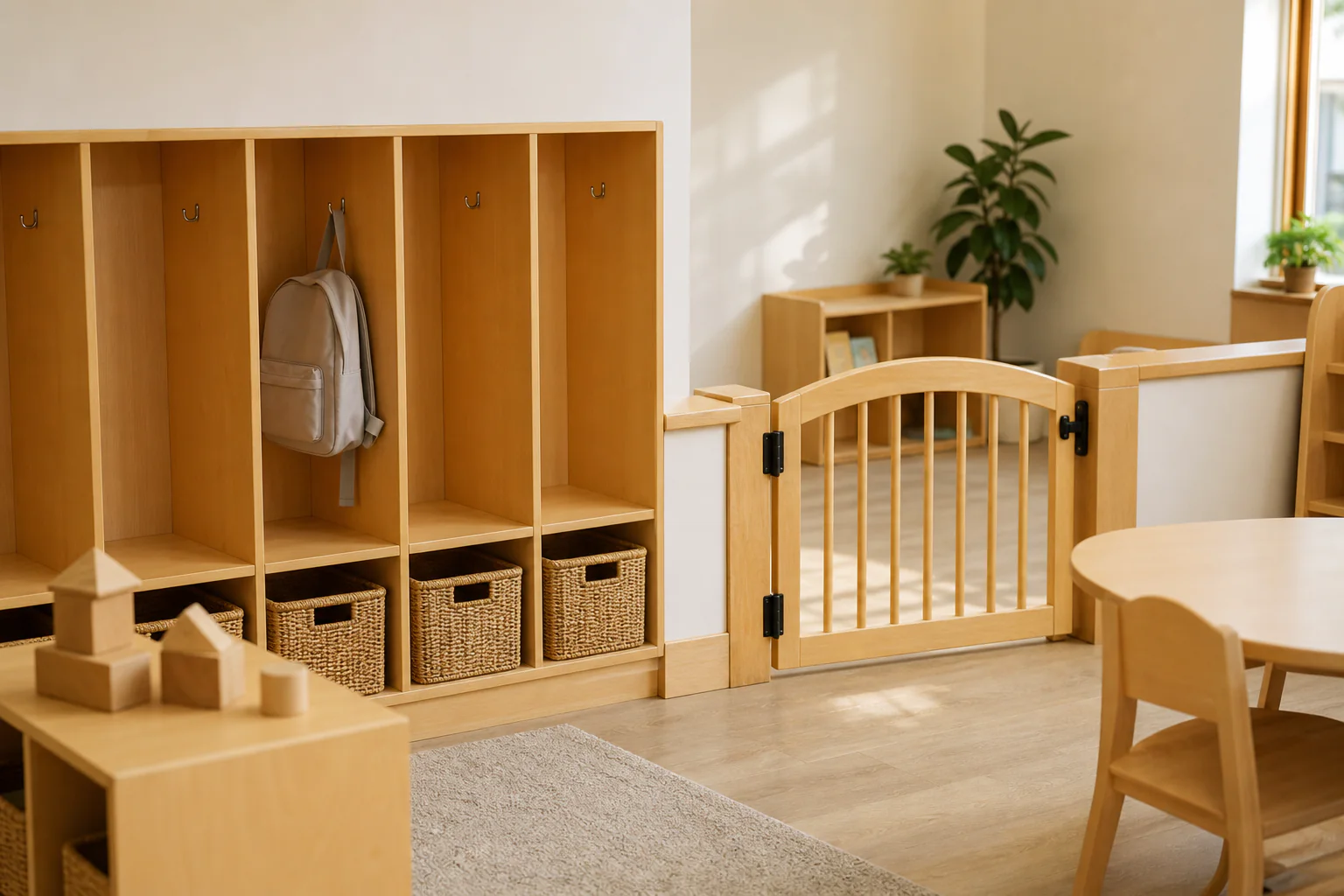
Empty childcare classroom with low wood cubbies, a plain backpack, wooden blocks, and a child-safe gate
A useful daycare injury record begins with the licensed facility type and keeps parent, facility, medical, and licensing sources in separate privacy-controlled lanes.

Quick answer

After a California daycare injury, first confirm whether the setting is a licensed child care center or family day care home. Then preserve four separate source lanes: parent communications, facility records, medical records, and Community Care Licensing files. Track each event, notice, request, production, redaction, and unresolved conflict without exposing unrelated children.

Key takeaways

  • First identify whether the setting is a licensed child care center or a family day care home. California uses different reporting authorities and forms for those facility types.
  • Keep four source lanes separate: what the parent or guardian received, what the facility maintains, what medical providers created, and what California Community Care Licensing publishes or may hold.
  • A licensing report, private incident report, medical record, photograph, witness account, or later repair can answer one part of the timeline without deciding negligence, causation, damages, or who is legally responsible.
  • Protect children’s privacy. Request records about the affected child and event, preserve originals, redact unrelated children from working copies, and do not post names, images, diagnoses, or allegations publicly.
Hurt Advice Editorial Team

Prepared by

Hurt Advice Editorial Team

Editorial Research and Publishing Team

Source-checked editorial publishing

Why trust this article

Prepared by the Hurt Advice Editorial Team from current official California Legislature and California Department of Social Services statutes, regulations, forms, and licensing resources. No attorney reviewed this displayed version.

Recent update: Original publication with center-versus-family-home reporting lanes, public-versus-private source map, child-privacy incident ledger, facility and CDSS request scripts, timing process, evidence checklist, mistakes, FAQs, and next steps.

At a glance

What this guide helps you decide

Start with the question that brought you here, identify the records that can verify the facts, and use the related guidance only where it helps. This article addresses premises liability questions in California.

Main question

Decide how this topic may apply to your situation

Use "California Daycare Injury Records: Licensing and Incident Files" to sort the facts you know, the questions still open, and whether a premises liability resource or consultation may be useful in California.

Guide map

Start with the sections most relevant to you: Quick takeaways, Who this guide is for—and what it does, Step 1: identify the facility type, license, and exact location

Move through the article by issue, not by guesswork, so liability, medical proof, insurance pressure, deadlines, and next steps stay connected.

Records to gather

Connect these subjects to your records: California Daycare Injury Records, Child Care Licensing, Daycare Incident Reports, Child Care Center Reports

Compare the topic with records, photos, medical visits, police reports, insurer letters, and local claim details before relying on a general answer.

Trust check

Use the source trail before acting

This page includes 5 source references plus internal next-step paths so readers can verify where the guidance comes from.

Before you rely on this guide

This article is written for people dealing with injury-law questions in California. It is meant to help you understand the issue, not replace legal advice about your specific case.

What to do after this article

Start with the quick answer, skim the table of contents, and then use the links below to move into the practice area, author archive, or resource page that turns general guidance into a clearer next step for your situation.

Quick takeaways

  • First identify whether the setting is a licensed child care center or a family day care home. California uses different reporting authorities and forms for those facility types.
  • Keep four source lanes separate: what the parent or guardian received, what the facility maintains, what medical providers created, and what California Community Care Licensing publishes or may hold.
  • A licensing report, private incident report, medical record, photograph, witness account, or later repair can answer one part of the timeline without deciding negligence, causation, damages, or who is legally responsible.
  • Protect children’s privacy. Request records about the affected child and event, preserve originals, redact unrelated children from working copies, and do not post names, images, diagnoses, or allegations publicly.

Who this guide is for—and what it does

This guide is for a California parent, guardian, or authorized representative organizing records after a child is injured at a licensed child care center or family day care home. It focuses on a narrow reader task: identify the facility and license, build a source-controlled event timeline, request existing records from the correct custodian, and distinguish public licensing information from a child’s private facility and medical records.

It does not decide whether the facility violated a rule, whether an injury was preventable, whether a person was negligent, whether a condition caused the injury, or what a claim may be worth. The broader daycare injury service guide helps readers identify the legal lane. This article is the records workflow that comes before those conclusions.

Start with the child’s safety and appropriate care. Do not delay urgent care, re-create the event, question a child repeatedly, contact unrelated children directly, enter restricted systems, or publish accusations to create evidence. If abuse or neglect may be involved, emergency, mandated-reporting, law-enforcement, child-protection, and licensing processes can overlap; this guide is not a substitute for those channels.

Step 1: identify the facility type, license, and exact location

Write down the facility’s exact name, street address, program name, date and time of the event, the child’s room or group, and the location within the property. Preserve the enrollment agreement, handbook, emergency contacts, pickup authorizations, parent-app screenshots, messages, and every version of information the facility sent. Do not assume the marketing name matches the licensed name.

California’s Child Care Licensing Program oversees licensed child care centers and family child care homes. The official Community Care Licensing facility search can help confirm a facility name, license number, license status, regional office, inspections, citations, and complaint investigation reports made available online. CDSS says the online site contains five years of facility information and instructs users to contact the local regional office for more detail. Save the result page and access date because online records can change as a matter progresses.

A child care center generally provides group care outside a family home. A family day care home provides licensed care in the licensee’s residence. The distinction matters because the reporting authority and form can differ. If the program is license-exempt, school-operated, recreation-based, or otherwise outside the ordinary CCLD lane, record that uncertainty and identify the actual regulator before sending a request.

Map the physical location without drawing conclusions: room, play area, walkway, gate, furniture, equipment, surface, bathroom, kitchen, vehicle, field-trip location, or pickup zone. Record identifying details that can be observed safely—equipment type, color, manufacturer plate if visible, surface material, gate or latch, and nearby camera placement—without moving, testing, or altering anything.

Step 2: understand the two California reporting lanes

For a licensed child care center, CDSS’s official Child Care Center General Licensing Requirements include section 101212. That section calls for a telephone or fax report to the Department within its next working day when specified events occur during center operations, including a child’s death, an injury requiring medical treatment, and other listed unusual incidents. It also calls for a written report within seven days. Those are licensing duties; they do not establish that every playground bump, first-aid response, or parent concern meets the same reporting threshold.

For a licensed family day care home, California Health and Safety Code section 1597.467 says a licensee with reasonable cause to believe a child in care suffered an injury or act of violence must report it to the child’s parent or guardian as soon as possible. The statute separately requires a report to the Department before the close of the next working day for a death, an injury requiring medical treatment, or an unusual incident or child absence threatening physical or emotional health or safety, followed by a written report within seven days.

CDSS’s official LIC 624B family child care home report provides a useful field map: facility and license information; the child and admission information; event date and time; the type and description of event; medical findings and treatment; prevention steps; persons who observed the event; parent notification; agencies notified; and Department review and disposition fields. The form instructions say the affected parent or authorized representative is notified no later than the same business day for listed events, the Department is notified within the next business day, a written report follows within seven calendar days, and a copy is kept in the affected child’s record.

Do not merge the center rule, family-home statute, and form into one universal deadline. Record the facility type, event category, who was notified, method, time, and source. If the facility says an event was not reportable, preserve that statement and ask which rule, facility type, and facts support it rather than arguing from a form intended for a different program.

Step 3: separate public licensing records from private child records

Create four folders or labels. Keep original files unchanged and use copies for annotations.

  • Parent lane: messages, calls, app notifications, incident summaries, photographs received, pickup notes, handbook provisions, enrollment documents, and the parent’s contemporaneous account.
  • Facility lane: the affected child’s incident or injury report, witness or staff statements if produced, attendance and staffing records, room assignment, supervision schedule, inspection and maintenance records, vendor records, video-preservation response, policies, and later corrective-action documents. Access may depend on relationship, authorization, privacy, contract, voluntary production, subpoena, or another legal process.
  • Medical lane: EMS, urgent-care, emergency-department, clinic, imaging, specialist, pharmacy, discharge, and follow-up records. The triage and discharge record guide explains how to keep chart components and versions separate.
  • Licensing lane: facility profile, license status, inspection reports, citations, complaint investigation reports, substantiated or unsubstantiated findings, notices, and regional-office correspondence that CDSS publishes or lawfully provides.

The California Child Day Care Act’s current administration provisions include section 1596.819, which directs CDSS to post specified facility and five-year inspection information online, subject to legal limits. Section 1596.853 permits any person to request a licensing inspection by reporting an alleged violation and protects identifying information in complaint materials unless the complainant requests otherwise. A licensing complaint is a regulatory request, not a civil verdict, and confidentiality rules can limit what is released.

Ask the facility for records about the affected child and event. Do not assume a general public-records request reaches a private daycare’s internal files, and do not assume every item in a CDSS file is public or unredacted. Ask the regional office what public facility records are available, what is already online, what requires a separate request, what is withheld or redacted, and why.

Use a child-privacy incident source ledger

A wide spreadsheet can expose private information and fail on a phone. Use one compact entry per source or event with these fields:

  • Event time and clock source: the stated time, who supplied it, and whether it came from a message, sign-in system, camera, medical record, call log, or later memory.
  • Location and activity: room, zone, equipment, surface, transition, meal, nap, transport, pickup, or field trip. Use neutral descriptions.
  • Child status before and after: directly observed facts, the child’s words recorded once and accurately, visible condition, activity change, and care sought. Do not diagnose.
  • Supervision source: staff assignment, attendance, sign-in/out, schedule, room list, ratio record, witness account, or unknown. Do not identify unrelated children in a shared copy.
  • Response: first aid described by the source, emergency contact, parent notice, medical referral, transport, isolation of equipment, or other action.
  • Notice and report: who notified whom, method, exact time, event category, facility type, form or message version, and whether CDSS or another agency was contacted.
  • Condition evidence: original photographs or video, equipment identifier, inspection, cleaning, repair, maintenance, purchase, manufacturer, or vendor source.
  • Later change: repaired, removed, retrained, relocated, policy revised, citation issued, complaint closed, or no change observed. A later change does not by itself prove prior fault.
  • Status: requested, acknowledged, preserved, produced, redacted, unavailable, denied with reason, or follow-up due.

Example: “July 27, parent app message received 2:18 p.m.; message states event occurred about 1:45 p.m. in the outdoor play area. Pickup at 2:42 p.m.; parent observed swelling and the child avoided using the right arm. Facility summary received at 5:06 p.m. lists ‘play structure’ but no equipment identifier or witness. Emergency-department registration shows 3:31 p.m. Request sent for the affected child’s incident report, exact zone, staff assignment, original notification record, and preservation of any existing video. No conclusion about supervision or cause.”

Keep the child’s full name, date of birth, medical information, photographs, and identifiers out of the general ledger whenever a coded identifier will work. Store the identity key separately and share only the minimum necessary set.

Two narrow request scripts

To the facility:

I am the parent, guardian, or authorized representative of [child]. Please preserve and provide the records you are authorized to release concerning the event on [date] at [time or range] in [location], including the affected child’s incident or injury report and all versions; parent notifications; attendance, room assignment, and relevant staff assignment records; existing photographs or video; equipment or area identification; inspection, maintenance, repair, and vendor records for the relevant item or zone; and policies or corrective-action records specifically applied to this event. Please preserve original timestamps and metadata, identify withheld or unavailable categories, and avoid including unrelated children’s private information. This is a request for existing records, not a request to create a conclusion.

To the CDSS regional office:

Please identify the public licensing records available for facility [licensed name, address, and license number] for [date range], including facility evaluation reports, citations, complaint investigation reports, corrective-action or compliance documents, and the final status of any licensing matter connected to the event date. Please identify what is already available through Facility Search, what requires a separate file review or request, and what is withheld or redacted under applicable confidentiality rules. I am not requesting private information about unrelated children.

Send requests through an appropriate, traceable channel and retain proof of delivery. A preservation request is not a subpoena, does not guarantee access, and does not suspend automatic deletion unless the recipient acts on it or another legal duty applies. If video, public-entity involvement, suspected abuse, or a fast-changing condition matters, qualified legal advice may be needed promptly.

Timing and process

  1. Address safety first. Obtain appropriate care and follow discharge or provider instructions.
  2. Preserve what already exists. Export parent-app messages, save original photographs, take screenshots with date and source, preserve call logs, and retain every incident-report version.
  3. Identify the license. Save the Facility Search profile, license number, facility type, regional office, and current public licensing documents.
  4. Build the four source lanes. Parent, facility, medical, and licensing records should not be silently merged.
  5. Send narrow requests. Identify the child, date range, location, record categories, privacy limit, and preservation need.
  6. Track responses. Log acknowledgment, production, redaction, denial reason, unavailable item, custodian referral, and follow-up date.
  7. Reconcile clocks and versions. Compare event time, parent notice, pickup, care, CDSS notice, written report, and later inspection without overwriting conflicts.
  8. Handle deadlines separately. Records work does not extend a claim, government-claim, insurance, court, complaint, preservation, or other deadline. The California deadline resource is only a starting point.

Evidence checklist

  • Licensed facility name, address, license number, facility type, regional office, and saved Facility Search profile.
  • Affected child’s incident or injury report, every version, and parent notification record.
  • Enrollment agreement, handbook, emergency permissions, authorized pickup list, and parent-app messages.
  • Attendance, sign-in/out, room or group assignment, staff assignment, schedule, and supervision records lawfully obtained.
  • Original photographs, video, metadata, camera map, and written preservation response.
  • Equipment or area identity, inspection, maintenance, cleaning, repair, purchase, manufacturer, vendor, and corrective-action sources.
  • EMS and medical records, discharge instructions, bills, and follow-up sources kept in their own lane.
  • Public CDSS evaluation, inspection, citation, complaint, compliance, and closure records.
  • A source-conflict list covering time, location, witness, event description, treatment, notification, report category, and later change.
  • Secure originals, a working copy, a separate identity key, and minimum-necessary redacted sharing copies.

The broader accident evidence checklist connects these records to scene, witness, communication, insurance, and loss proof. The California injury proof guide explains why no single report or image proves every disputed element.

Mistakes and red flags

  • Using “daycare” as the facility type: verify whether it is a center, family home, exempt program, school, recreation program, or another setting.
  • Assuming every incident triggers the same report: the event category and facility type matter. Record the authority used.
  • Treating a form as a completed report: a blank LIC 624B shows fields and instructions; it does not prove a particular facility filed one.
  • Treating no online record as no agency record: CDSS says the public site is limited and directs users to the regional office for more detail.
  • Treating a complaint as a finding: preserve intake, inspection, determination, and closure separately.
  • Requesting every child’s information: narrow the request and protect unrelated children’s identities and records.
  • Repeatedly interviewing the child: preserve the child’s spontaneous words accurately and use appropriate professionals for specialized interviewing.
  • Editing screenshots or photographs: retain originals and metadata; annotate a copy.
  • Equating later repair with admission: record what changed, who documented it, and when without declaring its legal meaning.
  • Waiting for records before addressing deadlines: pursue preservation, care, regulatory, insurance, government-claim, and legal advice tracks on their own clocks.

Next steps

  1. Confirm the licensed name, facility type, license number, and regional office.
  2. Save the public profile and every parent-facing source already received.
  3. Create parent, facility, medical, and licensing folders with original and working-copy subfolders.
  4. Build the child-privacy ledger and mark every statement by source and clock.
  5. Send narrow facility and CDSS requests, then track production, redaction, unavailable records, and referrals.
  6. Reconcile event, notice, care, reporting, inspection, and change timelines without erasing conflicts.
  7. Use the child injury settlement guide only if a proposed settlement later exists; it does not determine the current event or claim.
  8. If urgent safety, abuse, public-entity, evidence-loss, deadline, or serious-injury issues may apply, contact the appropriate agency or qualified professional promptly.

Hurt Advice is a lawyer-referral and legal-information service, not a law firm. You may use the contact page to request an intake review. Any attorney-client relationship requires a separate written agreement with a participating attorney, and no result is promised.

Frequently Asked Questions

What records should I ask for after a daycare injury in California?
Ask for the affected child’s incident or injury report and versions, parent notifications, attendance and relevant staff assignment records, existing photos or video, exact equipment or area identity, and event-specific inspection, maintenance, repair, policy, or corrective-action records. Ask CDSS separately for available public licensing records, and protect unrelated children’s privacy.
Does a California daycare have to report every injury to licensing?
Not every event has one universal reporting rule. The facility type and event category matter. Child care center section 101212 and family day care home section 1597.467 identify reportable categories and timelines, including injuries requiring medical treatment and specified unusual incidents. Preserve what occurred and ask which authority the facility applied.
What is the difference between a child care center and a family day care home report?
Centers and family day care homes operate under related but distinct California licensing provisions. Centers use Title 22 section 101212 reporting requirements, while family homes also have Health and Safety Code section 1597.467 and the LIC 624B form. Identify the licensed facility type before applying a form or deadline.
Can I find daycare inspection and complaint records online?
California Community Care Licensing Facility Search publishes facility and recent licensing information, including available inspection, citation, and complaint investigation reports. CDSS says the online site contains five years of information and advises contacting the regional office for more detail. Some material may be redacted, confidential, unavailable online, or held elsewhere.
Is a licensing complaint proof that the daycare was negligent?
No. A complaint is a request for regulatory review, not a civil finding. Keep the complaint, inspection, evidence, determination, citation, corrective action, and closure as separate sources. A substantiated licensing issue may be relevant, but it does not by itself resolve causation, damages, legal responsibility, or every issue in a claim.
How should I protect my child’s privacy while collecting records?
Keep original records secure, use a coded identifier in working ledgers, store the identity key separately, request only event-relevant material, and redact unrelated children from sharing copies. Do not post names, medical details, photographs, app messages, or allegations publicly. Share the minimum necessary set through appropriate channels.

Sources and references

California Department of Social ServicesCommunity Care Licensing Facility Search

Official facility lookup, five-year information scope, complaint investigation report availability, and regional-office follow-up instructions.

California Department of Social Services formLIC 624B Unusual Incident/Injury Report

Official family child care home event, notice, treatment, prevention, agency, timing, and retention fields and instructions.

Need help after an accident?

Hurt Advice intake team can review your situation, explain your options, and help you move forward with a plan that fits your case.