
Legal ExplainerPersonal InjuryChecklist / Process

Emergency Department Triage and Discharge Records After a California Injury

After a California emergency-department visit, request the encounter by record family and preserve each paper, portal, and released version. Keep triage, nursing, orders, results, medications, reassessments, and discharge events tied to their own source and timestamp; use gaps to frame questions, not to diagnose a condition or declare negligence.

Published

July 26, 2026

Updated

July 26, 2026

Reading time

10 min read

Jurisdiction

California

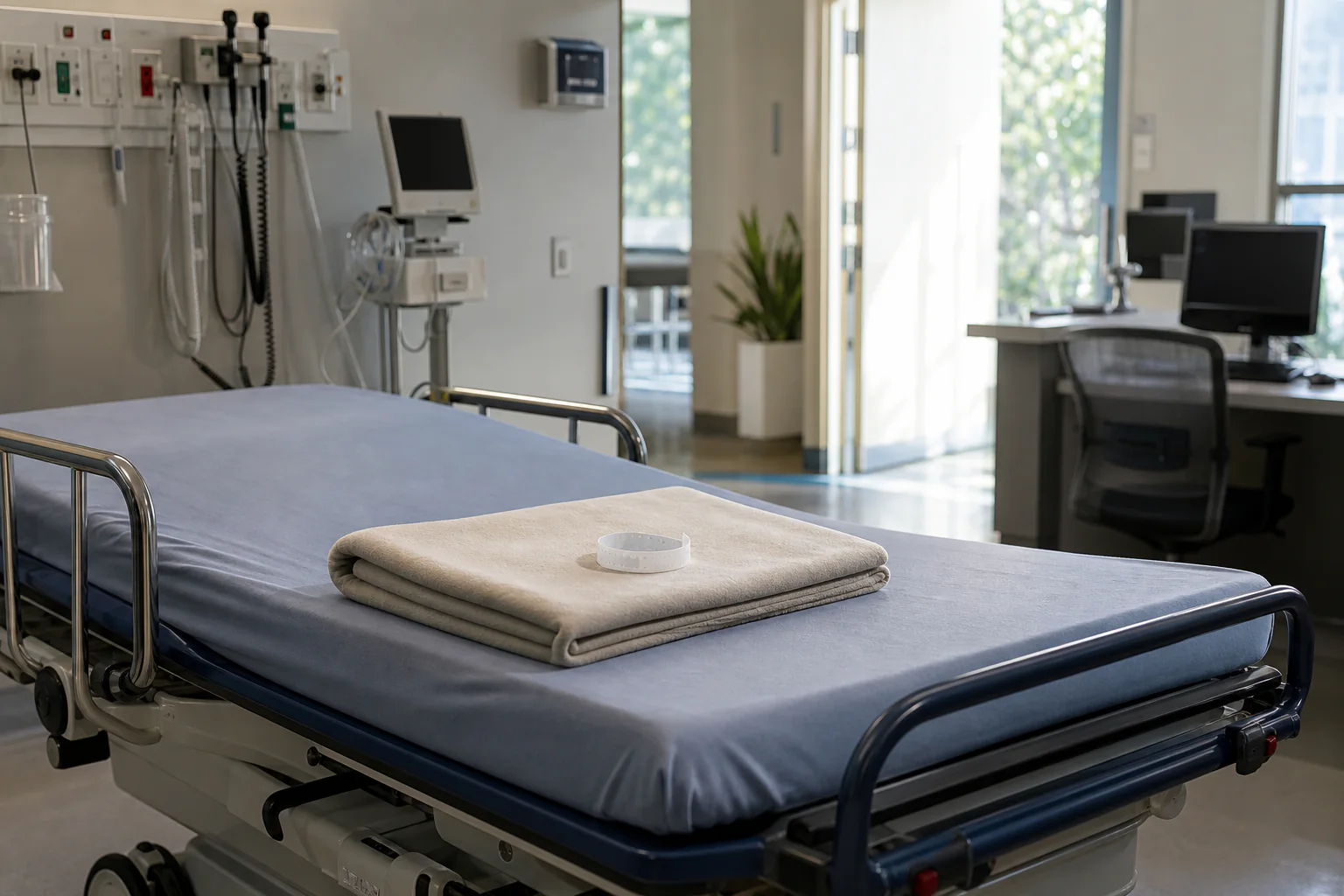
Empty emergency-department treatment bay with a folded blanket and unreadable wristband after a calm discharge handoff
A reliable emergency-department packet keeps every chart component, event time, version, and release source tied to the exact encounter.

Quick answer

After a California emergency-department visit, request the encounter by record family—not just the portal summary. Preserve triage, nursing, clinician, order, result, medication, procedure, reassessment, and discharge versions separately. Then build a source ledger that keeps ordered, collected, resulted, administered, signed, printed, and released times distinct without treating a gap as proof of improper care.

Key takeaways

  • Request the emergency-department visit by record family: registration, triage, nursing, clinician notes, orders, results, medication administration, procedures, consultations, reassessments, and discharge materials may live in different chart views.
  • Preserve every version and source label. A portal summary, released medical-record set, bill, imaging report, and discharge printout are related, but none is automatically a complete substitute for another.
  • Keep event clocks separate. “Ordered,” “collected,” “resulted,” “acknowledged,” “administered,” “authored,” “signed,” “printed,” and “released” describe different events and should not be silently collapsed into one timeline.
  • Use records to ask better questions, not to self-diagnose or declare negligence. New or worsening symptoms call for medical attention under the discharge plan or an appropriate urgent or emergency channel—not more document work.
Hurt Advice Editorial Team

Prepared by

Hurt Advice Editorial Team

Editorial Research and Publishing Team

Source-checked editorial publishing

Why trust this article

Prepared by the Hurt Advice Editorial Team from current official California patient-record statutes and current Centers for Medicare & Medicaid Services EMTALA guidance. No attorney reviewed this displayed version.

Recent update: Original publication with an emergency-department component map, California patient-access rules, precise request script, retention limits, multi-clock ledger, discharge-version reconciliation tool, EMTALA boundaries, evidence checklist, mistakes, FAQs, and next steps.

At a glance

What this guide helps you decide

Start with the question that brought you here, identify the records that can verify the facts, and use the related guidance only where it helps. This article addresses personal injury questions in California.

Main question

Decide how this topic may apply to your situation

Use "Emergency Department Triage and Discharge Records After a California Injury" to sort the facts you know, the questions still open, and whether a personal injury resource or consultation may be useful in California.

Guide map

Start with the sections most relevant to you: Quick takeaways, Who this guide is for—and what it does, Map the emergency-department record before requesting it

Move through the article by issue, not by guesswork, so liability, medical proof, insurance pressure, deadlines, and next steps stay connected.

Records to gather

Connect these subjects to your records: California Emergency Department Records, ER Triage Notes, Discharge Instructions, Medication Administration Record

Compare the topic with records, photos, medical visits, police reports, insurer letters, and local claim details before relying on a general answer.

Trust check

Use the source trail before acting

This page includes 6 source references plus internal next-step paths so readers can verify where the guidance comes from.

Before you rely on this guide

This article is written for people dealing with injury-law questions in California. It is meant to help you understand the issue, not replace legal advice about your specific case.

What to do after this article

Start with the quick answer, skim the table of contents, and then use the links below to move into the practice area, author archive, or resource page that turns general guidance into a clearer next step for your situation.

Quick takeaways

  • Request the emergency-department visit by record family: registration, triage, nursing, clinician notes, orders, results, medication administration, procedures, consultations, reassessments, and discharge materials may live in different chart views.
  • Preserve every version and source label. A portal summary, released medical-record set, bill, imaging report, and discharge printout are related, but none is automatically a complete substitute for another.
  • Keep event clocks separate. “Ordered,” “collected,” “resulted,” “acknowledged,” “administered,” “authored,” “signed,” “printed,” and “released” describe different events and should not be silently collapsed into one timeline.
  • Use records to ask better questions, not to self-diagnose or declare negligence. New or worsening symptoms call for medical attention under the discharge plan or an appropriate urgent or emergency channel—not more document work.

Who this guide is for—and what it does

This guide is for a person treated in a California hospital emergency department after an injury, or an authorized representative, who wants to obtain and organize the visit record. It is especially useful when a portal shows only a short after-visit summary, an imaging result arrives later, or the discharge packet does not appear to match every order or referral discussed during the visit.

The task here is not to grade the care. It is to build a source-controlled packet: identify chart components, request records through the provider’s verified process, preserve each version, reconcile timestamps, and list unresolved gaps without supplying a medical or legal conclusion. The broader accident evidence checklist connects this packet to nonmedical sources. The California injury-claim proof guide explains why one chart entry rarely proves causation, damages, or fault by itself.

If the person has new, severe, or worsening symptoms, confusion about medication or return precautions, or a concern identified in the discharge instructions, follow the instructions and contact an appropriate clinician or emergency service. A record request is not treatment and should never delay care.

Map the emergency-department record before requesting it

Start with the facility’s exact legal name, visit date, medical-record number if available, arrival method, approximate arrival and discharge times, and the name used at registration. Then map the likely record families. The hospital’s health-information management or medical-records department may release a chart, but component data can originate in several systems.

  • Registration and encounter data: arrival, encounter number, demographics, consent or acknowledgment forms, payer information, and disposition coding.
  • Triage and nursing: presenting complaint, acuity assignment, vital signs, pain or symptom entries, nursing assessments, flowsheets, reassessments, mobility or fall-risk entries, and discharge teaching documentation.
  • Emergency clinician: history, examination, medical decision-making, diagnoses or clinical impressions, orders, procedures, consultations, reassessments, and disposition note.
  • Laboratory: orders, collection times, specimen information, preliminary or final results, reference ranges, corrections, and result-status fields.
  • Radiology or imaging: order, study information, radiologist report, finalization or addendum, and any separate image-access process. A report is not the same asset as the image files.
  • Medication and procedure: medication orders, medication-administration record entries, route and time fields, procedure notes, and documented response or reassessment when present.
  • Consultation and follow-up: specialist notes, transfer-center communications, referral orders, work or activity restrictions, and follow-up instructions.
  • Discharge and billing: after-visit summary, return precautions, medication reconciliation, prescriptions, diagnosis list, discharge disposition, itemized bill, and insurer explanation of benefits.

Do not assume every component exists or must be stored in one export. Ask what the facility calls each record and which department handles imaging, billing, and amendments. The California medical-care directory can help identify the facility before a request, while the ground-ambulance bill guide keeps prehospital transport and billing sources separate from the hospital chart.

Use California patient-record access rules accurately

California Health and Safety Code section 123100 states the Legislature’s intent to establish procedures for patients and responsible decision-makers to access information about condition and care. Section 123105 defines “patient records” for this chapter as records in any form or medium maintained by, or in the custody or control of, a covered health care provider that relate to the patient’s health history, diagnosis, condition, or treatment provided or proposed. The definition has limits, including certain confidential information supplied by someone other than another provider or the patient, and aggregate information.

Section 123110, subject to the exceptions it references, gives an adult patient, a qualifying minor patient, or a personal representative a route to inspect records after presenting a request. It states that inspection is to be permitted during business hours within five working days after receipt. It also provides a right to request a paper or electronic copy of records the requester may inspect and says copies are to be transmitted within 15 days after the provider receives the request.

The same section says a requested electronic copy should be provided in the requested electronic form and format when readily producible, or in another readable electronic form agreed on by the provider and requester. It permits reasonable identity verification, addresses cost-based fees, and says records may not be withheld because of an unpaid health-care bill. Those rules do not mean every portal view is complete, every third party is authorized, or every special record is released without an applicable exception.

Request the record narrowly and preserve the receipt

Use the provider’s current verified portal, form, email, fax, or mailing instructions. Ask for the entire emergency-department encounter for a defined date and encounter number, then name the components that matter. “All records” alone can obscure whether the request included nursing flowsheets, medication-administration entries, image files, an imaging report, lab corrections, discharge versions, or billing records.

A practical request can say:

“I request a readable electronic copy of the patient records for the emergency-department encounter at [facility] on [date], encounter or medical-record number [number, if known]. Please include registration and triage records; nursing assessments, vital signs, flowsheets, and reassessments; emergency clinician notes; orders and order-status history; laboratory and imaging reports, including corrections or addenda; medication orders and administration entries; procedure and consultation notes; diagnosis and disposition fields; discharge instructions, medication reconciliation, return precautions, referrals, and work or activity restrictions. Please identify any separate process for the diagnostic image files and itemized billing record. If a listed component is not included, please state whether it is held separately, unavailable, or outside this request process.”

Save the submitted request exactly as sent, identity-verification instructions, confirmation number, delivery estimate, fee notice, portal message, download email, and any partial-production explanation. Share sensitive medical information only through an appropriate secure channel and only with people authorized to receive it.

Do not turn retention language into a universal promise

Request promptly even when a statute mentions a retention period. California Health and Safety Code section 123145 addresses specified licensed providers that cease operation. It requires preservation for at least seven years after discharge, with a separate minimum for records of unemancipated minors. That is a closed-provider rule for the licensees identified in the section—not a universal statement that every emergency-department system, image, audit field, portal message, or billing detail remains available for the same period.

Clinical chart retention, diagnostic-image retention, billing, portal display, backups, vendor systems, and litigation holds may follow different rules or policies. A patient-access request also does not pause an insurance notice, government-claim requirement, filing deadline, or evidence loss. Use the California deadline resource as a starting point and obtain qualified advice about a specific deadline.

Build a multi-clock source ledger

Emergency records can contain many legitimate clocks. Instead of forcing them into one “visit time,” create one responsive entry per event with these fields:

  1. Source: triage note, flowsheet, clinician note, order, lab result, radiology report, medication record, procedure note, discharge instruction, portal, bill, or patient recollection.
  2. Event label: arrived, registered, triaged, assessed, ordered, collected, started, administered, resulted, acknowledged, reassessed, signed, printed, discharged, posted, or released.
  3. Displayed time: copy the date and time exactly, including the time zone if stated.
  4. Author or system: clinician role, department, device, lab, radiology system, portal, or unknown.
  5. Identifier and version: encounter, order, accession, specimen, medication, document, or revision number.
  6. Status: preliminary, final, corrected, addended, canceled, discontinued, acknowledged, released, or unknown.
  7. File integrity: filename, format, byte size, received date, sender, and storage location.
  8. Open question: a missing component, unexplained difference, later addendum, or instruction that needs clinical clarification.

Example: “Radiology report; CT result; order displayed 18:42, study 19:08, preliminary status not shown, final report signed 20:11, portal release 20:18; accession number recorded; PDF downloaded unchanged; discharge instructions printed 19:56 mention ‘results reviewed’ but do not name the report; question for the treating or follow-up clinician: which result version informed the discharge plan?”

This format preserves the difference without declaring that anyone missed a result or acted improperly. The imaging-record comparison guide offers another source-controlled method for separating image findings, clinical interpretation, and later change.

Reconcile the discharge version you actually received

Keep the paper packet, portal version, and released medical-record copy as separate artifacts. Record the print or release time and any document version. Then compare:

  • diagnosis or clinical-impression wording;
  • medications administered in the department versus prescriptions or medication changes at discharge;
  • pending, preliminary, final, corrected, or addended results;
  • referrals, follow-up specialties, appointment instructions, and responsible contact;
  • activity, work, driving, lifting, wound, device, or other restrictions actually documented;
  • return precautions and the symptoms or timeframes stated in the instructions;
  • language or accessibility support documented and the language of the material received;
  • the name of the clinician or service shown on each version.

If versions differ, do not edit one into a combined document. Preserve each unchanged and create a separate comparison note. Ask the provider or follow-up clinician which version is current and what to do if the difference affects medication, follow-up, restrictions, or return precautions. For day-to-day observations after the visit, the symptom-journal guide keeps personal observations separate from the medical chart.

What EMTALA records can—and cannot—show

The Centers for Medicare & Medicaid Services explains that EMTALA imposes obligations on Medicare-participating hospitals offering emergency services to provide a medical screening examination when someone requests examination or treatment for an emergency medical condition, regardless of ability to pay. CMS also states that hospitals must provide stabilizing treatment for an identified emergency medical condition or an appropriate transfer when the hospital cannot stabilize within its capability. See the current CMS EMTALA overview and CMS emergency-room rights page.

A triage timestamp, diagnosis code, discharge label, insurance question, or isolated note does not by itself prove an EMTALA violation—or prove compliance. The complete circumstances, hospital capabilities, screening, clinical findings, treatment, transfer, and other facts matter. Keep EMTALA questions separate from ordinary negligence, informed-consent, insurance, privacy, and billing issues, and do not diagnose an emergency medical condition from the chart without qualified clinical review.

Evidence checklist

  • Exact facility, visit date, encounter or medical-record number, arrival method, and approximate encounter window.
  • Original patient-access request, identity process, receipt, delivery estimate, fee notice, and production explanation.
  • Registration, triage, nursing, clinician, order, lab, radiology, medication, procedure, consultation, reassessment, and disposition records.
  • Paper discharge packet, portal after-visit summary, released record copy, and every correction or addendum kept separately.
  • Diagnostic reports and a separately requested image-file set when relevant.
  • Medication orders, medication-administration entries, prescriptions, and later reconciliation kept as distinct sources.
  • A multi-clock ledger preserving displayed, authored, resulted, acknowledged, signed, printed, and released times.
  • Ambulance, follow-up provider, pharmacy, insurer, billing, employment, and personal-observation records stored in their own lanes.
  • A minimum-necessary sharing copy, with sensitive unrelated information protected.

The medical-treatment-after-a-crash resource helps connect an emergency visit to later care without assuming that a treatment gap or one diagnosis resolves the claim.

Common mistakes and red flags

  • Using only the portal summary: request the defined encounter and component records through the provider’s official records process.
  • Calling an imaging report the images: preserve the report and ask about a separate image-file process.
  • Combining every timestamp: keep order, collection, result, acknowledgment, administration, signature, print, and release events distinct.
  • Treating a diagnosis code as the entire assessment: compare it with the clinician note, orders, results, reassessments, and discharge material.
  • Assuming “15 days” means every possible system export: section 123110 governs copies of records the requester may inspect; scope, exceptions, identity, and separate systems still matter.
  • Overstating retention: section 123145 is not a universal promise for every current hospital data source.
  • Editing the only copy: preserve each original download or paper version and work from a labeled copy.
  • Posting medical records publicly: use secure, minimum-necessary sharing with authorized recipients.
  • Using records work instead of care: seek appropriate medical help for new or worsening symptoms or a discharge concern.
  • Declaring malpractice from a gap: document the question and obtain qualified medical and legal review.

Next steps

  1. Identify the exact facility, encounter, date, and component record families.
  2. Send one precise request through the verified patient-record process and save the receipt.
  3. Preserve every paper, portal, and released version unchanged.
  4. Build the multi-clock ledger and discharge-version comparison.
  5. Ask the provider or follow-up clinician about differences that affect current care.
  6. Keep billing, ambulance, insurer, employment, and personal-observation sources separate.
  7. Check legal and insurance clocks independently instead of waiting for the record packet.
  8. Ask a qualified California lawyer to assess disputed access, preservation, or legal significance when needed.

Hurt Advice is a lawyer-referral and legal-information service, not a law firm. This article provides general educational information, not legal or medical advice, and does not decide whether care was appropriate, a record is complete, or anyone is liable. No attorney reviewed this displayed version. You may use the Hurt Advice contact page to request a referral.

Frequently Asked Questions

How do I request an emergency-room record in California?
Use the hospital or provider’s verified medical-records process. Identify the facility, visit date, encounter or medical-record number, and the components requested, such as triage, nursing, clinician notes, orders, results, medication administration, procedures, consultations, reassessments, and discharge materials. Save the request, identity instructions, receipt, and production response.
How quickly must a California provider send requested patient-record copies?
California Health and Safety Code section 123110 states that copies of records a patient or representative has a right to inspect are to be transmitted within 15 days after the provider receives the request. Exceptions, identity verification, scope, format, and separate record systems can affect the process, so preserve the exact request and response.
Is an emergency-department portal summary the complete medical record?
Not necessarily. A portal may display selected notes, results, medication lists, or after-visit information. The released encounter can include additional registration, triage, nursing, clinician, order, lab, radiology, medication, procedure, consultation, reassessment, and disposition components. Ask the provider what its portal displays and what requires a records request.
Are an imaging report and the actual scan the same record?
No. The radiologist’s report is a written interpretation, while the diagnostic images are separate files, often handled through a different access process. Preserve both when relevant, along with the order, accession number, study date, finalization or addendum status, and delivery information.
Why do emergency-room records show different times?
Different fields can mark arrival, registration, triage, assessment, order, collection, administration, result, acknowledgment, reassessment, signature, printing, discharge, portal posting, or release. Preserve each event label, source, displayed time, identifier, and version. A time difference alone does not establish delay, fault, or causation.
Does a missing note or different discharge version prove negligence?
No. Preserve the gap or difference, confirm the request scope, ask whether the component is stored separately or later corrected, and obtain qualified clinical and legal review. One missing field, portal omission, or document difference does not by itself establish the care provided, the reason for a decision, causation, or liability.

Sources and references

Need help after an accident?

Hurt Advice intake team can review your situation, explain your options, and help you move forward with a plan that fits your case.