Legal ExplainerPersonal InjuryChecklist / Process

Medical Appointment Reschedule and Cancellation Records After a California Injury

After a California injury, preserve appointment confirmations, portal messages, call or email records, referral or authorization notices, transportation records, and the provider’s appointment history as separate sources. Reconcile when a visit was scheduled, changed, cancelled, checked in, and completed. A reminder or portal entry does not by itself prove attendance, treatment, causation, or why a visit changed.

Published

July 30, 2026

Updated

July 30, 2026

Reading time

11 min read

Jurisdiction

California

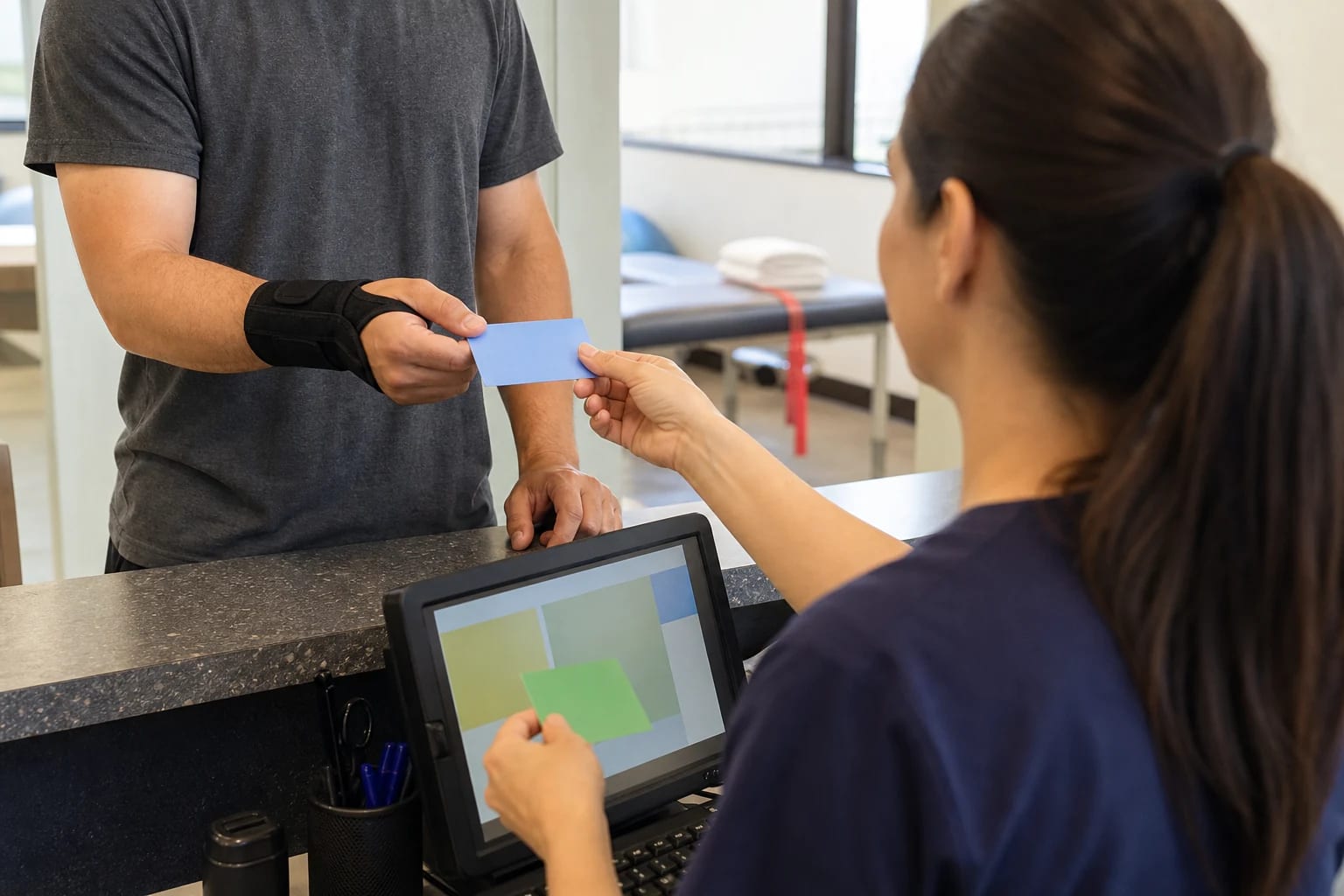
Wrist-braced patient exchanges blank color-coded appointment cards with a scheduling coordinator at an outpatient therapy clinic
A reliable appointment timeline separates scheduling, communication, referral, authorization, transportation, check-in, and clinical sources.

Quick answer

After a California injury, preserve appointment confirmations, portal messages, call or email records, referral or authorization notices, transportation records, and the provider’s appointment history as separate sources. Reconcile when a visit was scheduled, changed, cancelled, checked in, and completed. A reminder or portal entry does not by itself prove attendance, treatment, causation, or why a visit changed.

Key takeaways

  • Preserve the provider’s appointment history, your portal and communications, payer or referral material, transportation records, and clinical chart as separate sources.
  • A confirmation or reminder can show that a message was generated; it does not alone prove receipt, attendance, treatment, or the reason for a later change.
  • Use precise status labels and both the displayed time and time zone. Do not collapse scheduled, arrived, checked in, seen, and completed into one event.
  • Ask for existing records in a focused date range. Federal access rules do not require a provider to create an explanation or analysis that does not already exist.
Hurt Advice Editorial Team

Prepared by

Hurt Advice Editorial Team

Editorial Research and Publishing Team

Source-checked editorial publishing

Why trust this article

Prepared by the Hurt Advice Editorial Team from current California Legislature and U.S. Department of Health and Human Services sources. No attorney reviewed this displayed version.

Recent update: Original publication with an appointment identity sheet, source map, status-and-clock ledger, request scripts, timing workflow, evidence checklist, mistakes, and FAQs.

At a glance

What this guide helps you decide

Start with the question that brought you here, identify the records that can verify the facts, and use the related guidance only where it helps. This article addresses personal injury questions in California.

Main question

Decide how this topic may apply to your situation

Use "Medical Appointment Reschedule and Cancellation Records After a California Injury" to sort the facts you know, the questions still open, and whether a personal injury resource or consultation may be useful in California.

Guide map

Start with the sections most relevant to you: Who this guide is for—and the narrow task it solves, Quick takeaways, Contents and source map

Move through the article by issue, not by guesswork, so liability, medical proof, insurance pressure, deadlines, and next steps stay connected.

Records to gather

Connect these subjects to your records: California Medical Appointment Records, Appointment Reschedule Records, Appointment Cancellation Records, Patient Portal History

Compare the topic with records, photos, medical visits, police reports, insurer letters, and local claim details before relying on a general answer.

Trust check

Use the source trail before acting

This page includes 6 source references plus internal next-step paths so readers can verify where the guidance comes from.

Before you rely on this guide

This article is written for people dealing with injury-law questions in California. It is meant to help you understand the issue, not replace legal advice about your specific case.

What to do after this article

Start with the quick answer, skim the table of contents, and then use the links below to move into the practice area, author archive, or resource page that turns general guidance into a clearer next step for your situation.

Who this guide is for—and the narrow task it solves

This guide is for a person organizing a treatment timeline after a California injury when an appointment was booked, moved, cancelled, missed, delayed, or disputed. It is useful when the provider schedule, patient portal, phone or email history, referral, prior authorization, transportation record, and clinical chart do not tell exactly the same story.

The reader task is source reconciliation, not blame. Build a dated appointment-status ledger; identify which custodian created each entry; preserve original messages and exports; and keep scheduled, confirmed, changed, cancelled, arrived, checked in, seen, and completed as separate states. The medical-records glossary explains the broader record category. This article focuses on scheduling and attendance provenance.

Hurt Advice is a lawyer referral and legal information service, not a law firm. This is general information, not legal or medical advice. It does not decide causation, damages, credibility, record access, admissibility, or whether anyone acted reasonably. No attorney reviewed this displayed version.

Quick takeaways

  • Preserve the provider’s appointment history, your portal and communications, payer or referral material, transportation records, and clinical chart as separate sources.
  • A confirmation or reminder can show that a message was generated; it does not alone prove receipt, attendance, treatment, or the reason for a later change.
  • Use precise status labels and both the displayed time and time zone. Do not collapse scheduled, arrived, checked in, seen, and completed into one event.
  • Ask for existing records in a focused date range. Federal access rules do not require a provider to create an explanation or analysis that does not already exist.
  • Preserve corrections and later portal changes, but never delay care or stage an appointment problem to create evidence.

Contents and source map

The workflow below has six parts: (1) map the sources, (2) lock appointment identity, (3) preserve patient-held evidence, (4) request existing provider or plan records, (5) reconcile statuses and clocks, and (6) document limits and next steps. Start with the event, provider, location, specialty, and date range. Then use a separate row for every status change instead of writing one narrative from memory.

Common custodians include the provider’s scheduling office, health-information management department, patient portal vendor, referring provider, health plan or utilization reviewer, transportation provider, and the patient. Each may possess a different slice. The recent medical transportation records guide explains why a ride reservation and a destination attendance record should not be treated as the same source.

What California and federal access rules actually support

California’s Health and Safety Code section 123100 states the Legislature’s intent to establish procedures for patient access to information about condition and care. Section 123105 defines terms used in that chapter, including patient records. Those definitions matter because a scheduling system may contain both patient-related information and operational material.

Subject to the statute’s exceptions and procedures, section 123110 provides inspection and copy rights for patient records. It states five working days for permitted inspection and 15 days for copies after a qualifying request, while also addressing identity verification, formats, fees, and exceptions. Do not assume every backend audit log, staffing note, quality file, or vendor record is a patient record covered by that section.

Federal HHS guidance says the HIPAA right of access reaches protected health information in a provider’s or health plan’s designated record set, including medical, billing, payment, claims, case-management, and other records used to make decisions about a person. The same HHS designated-record-set FAQ explains that a covered entity is not required to create a new explanation or analysis and that some quality, management, or performance material may fall outside the accessible set. Request the existing appointment history and related patient-specific records; do not promise access to every system event.

Build an appointment identity sheet before comparing records

Use one identity sheet per intended visit. Record the provider organization, clinician or department when known, specialty, location, telehealth or in-person format, reason category in minimal necessary terms, original requested date, first scheduled date and time, patient time zone, referring provider, referral or authorization identifier when appropriate, transportation need, and every known confirmation channel.

Give the intended visit a neutral working ID such as “orthopedic follow-up, July window.” Do not use a portal event ID until you know what it identifies; it may refer to a message, slot, encounter, order, referral, or claim. Preserve the visible identifier but label its meaning “unknown” until the custodian or export defines it.

Keep appointment identity separate from treatment identity. A scheduled visit may be cancelled before an encounter is opened. A check-in event may exist even when the clinician does not complete treatment. A clinical note may carry a service date different from the message timestamp. Compare these records with the symptom-journal guide only after preserving their separate origins.

Preserve the patient-held scheduling trail

Save original portal messages, appointment-list exports, confirmation and cancellation emails, voicemail files when available, call-history screenshots, text messages, mailed cards, referral notices, authorization notices, calendar entries created at the time, transportation bookings, and notes of in-person conversations. Capture the full message header or details view when it safely shows sender, recipient, timestamp, and subject without exposing unrelated private information.

Do not edit the original. Export or download when the platform allows it, then make a working copy for highlights or redactions. Record capture date, device, account, file name, and whether the item was downloaded, screenshotted, forwarded, printed, or photographed. A screenshot can preserve what was displayed but may omit hidden metadata, corrections, delivery status, or the platform’s current interpretation.

HHS says appointment reminders are considered part of treatment and may be made without a separate authorization. That appointment-reminder FAQ describes why reminders exist, not what a particular reminder proves. Another HHS communications FAQ explains that providers may communicate about care while using reasonable privacy safeguards. Preserve the actual item and its limits rather than inferring that a call, message, or reminder was seen.

Request provider, referral, and payer records separately

Scheduling office: ask for the existing patient-specific appointment history for the focused date range, including original slot, later changes, status labels, cancellation or reschedule entries, check-in status, message or outreach history, and any existing reason code or note that is part of the patient record. Ask for a legend defining status and reason codes if one already exists.

Health-information management: request the designated patient record for the same period, including encounter notes, orders, referrals, authorizations maintained by the provider, and communications used in care decisions. This office may apply the formal access process even when scheduling staff can answer a simple status question.

Referring provider and health plan: request the existing referral order, transmission history, receipt or acceptance status, authorization request, decision, effective dates, modification, and notice. Keep the provider’s order, plan’s decision, and appointment slot separate. The hospital billing and coding guide applies the same rule to clinical and payment sources.

Ask each custodian who maintains categories it does not hold. Do not request unrelated diagnoses, another patient’s information, workforce discipline, peer review, or broad internal operations merely because they might mention the event.

Use a scheduled-to-completed status-and-clock ledger

A mobile-friendly ledger should use one entry per source event:

  1. Appointment identity: working visit ID, provider, specialty, location, and intended service.
  2. Source and custodian: portal, scheduling export, email, phone, referral, authorization, transportation, encounter note, claim, or patient note.
  3. Displayed time: timestamp exactly as shown, time zone if known, capture time, and any later conversion.
  4. Status: requested, offered, scheduled, confirmed, changed, cancelled by patient, cancelled by provider, no-show label, arrived, checked in, roomed, seen, completed, or unknown.
  5. Reason and actor: exact recorded reason or code, who entered it if identified, and whether the actor is verified or inferred.
  6. Limit: no delivery proof, unknown code, missing interval, overwritten portal view, unsynchronized clock, secondhand statement, or later correction.

Example: “Portal snapshot captured July 8 shows cancelled at 10:14 PT; patient call log shows outgoing call at 10:06 with duration 4:32; scheduling export later lists provider reschedule code at 10:11; emailed replacement confirmation sent 10:16; no delivery or read receipt; replacement encounter note dated July 10. Reason-code definition not yet produced.” This keeps the facts testable without turning sequence into causation.

Neutral request scripts

Scheduling or records office: “Please provide the existing patient-specific appointment and communication records maintained for [provider or department] from [date] through [date], including the original appointment entry, status changes, cancellation or reschedule entries, check-in status, patient-facing messages, and any existing status or reason-code legend. Please include original and corrected versions when maintained and identify the office that holds categories you do not maintain. This request does not ask you to create a new explanation.”

Referring provider or health plan: “Please provide the existing referral or authorization record for [service and focused date range], including the request, transmission or receipt status, decision, effective dates, modification, notices, and any patient-specific communication used to make or communicate the decision. Please identify the relevant record custodian and preserve original timestamps and versions.”

Use the custodian’s current identity-verification and request process. Send only the minimum information needed to identify the patient and records. Keep the request, attachments, delivery proof, acknowledgment, estimated completion date, production manifest, objections, redactions, and follow-up.

Timing and process checkpoints

Immediately: address medical needs first. Save current portal views and messages, but do not cancel, delay, or recreate care for documentation. Write down the appointment identity and which office communicated the change. If transportation was involved, preserve its booking separately.

Within the first organized pass: export patient-held messages, map custodians, send a focused existing-record request, and record every displayed time and time zone. Preserve the referral or authorization trail when it affected scheduling. The pharmacy records guide explains the parallel need to distinguish an order, fulfillment event, payer claim, and payment.

When records arrive: keep the production unchanged. Create a file list, read the code legend, mark missing dates, and compare entries by source. Ask whether portal history displays corrections or only current state. If a reason is disputed, record both the label and the firsthand account without rewriting either.

Before relying on the ledger: verify identity, time zone, status definitions, and whether the source records scheduling, communication, attendance, clinical care, payment, or transportation. For a contested claim or deadline, obtain case-specific legal advice. The California deadline resource is general education and does not replace that advice.

Evidence checklist

  • Provider, department, specialty, location, telehealth or in-person format, date range, and neutral visit ID.
  • Original appointment offer or request, confirmation, reschedule, cancellation, reminder, check-in, and completion entries.
  • Portal export or screenshots with capture date, full timestamp, sender or source, and original file preserved.
  • Email headers, text or voicemail files, phone history, mailed reminder, and contemporaneous patient notes.
  • Referral order, transmission and receipt history, authorization request, decision, effective dates, changes, and notices.
  • Transportation reservation, dispatch, pickup, drop-off, no-show or cancellation label, and destination attendance source when relevant.
  • Encounter, intake, triage, order, clinical note, billing, claim, or EOB records kept in their own evidence lanes.
  • Status and reason-code legend, original and corrected versions, production manifest, request, delivery proof, objections, and follow-up.
  • Ledger fields for source, custodian, displayed time, time zone, status, actor, reason, confidence, limitation, and unresolved conflict.
  • Privacy-protected working copies while untouched originals remain available.

Mistakes and red flags

  • Treating a reminder as proof the patient received, read, understood, or accepted the appointment.
  • Treating a portal cancellation label as proof of who cancelled, why, or whether a replacement was offered.
  • Treating check-in, rooming, encounter creation, clinical treatment, billing, and claim submission as one event.
  • Requesting every internal log without asking whether it is patient-specific, part of the designated record set, retained, or accessible.
  • Ignoring time zones, delayed message delivery, batch-generated reminders, later corrections, or a portal that shows only current status.
  • Editing screenshots, renaming originals, forwarding private content broadly, or exposing another patient or staff member unnecessarily.
  • Assuming a missing record proves an event did not occur, or assuming a produced record is complete, authentic, or legally conclusive.
  • Delaying care, missing a replacement visit, or staging a cancellation or communication problem to create evidence.

Careful next steps

Finish the appointment identity sheet, custodian map, preservation log, and status-and-clock ledger. Ask for existing patient-specific records and existing code definitions rather than a newly created narrative. Keep appointment status, communication, transportation, referral, authorization, clinical treatment, and payment as linked but separate evidence lanes.

If access is denied or narrowed, preserve the written response and identify whether the issue is identity verification, scope, retention, form, exception, designated-record-set status, or the wrong custodian. HHS’s current right-of-access guidance explains the federal framework; California law may provide a separate route for qualifying patient records. Do not convert a process disagreement into a legal conclusion without advice.

Hurt Advice can connect people with independent California lawyers through the contact page, but it does not promise representation or an outcome. This article was prepared by the Hurt Advice Editorial Team from the official sources listed below. No attorney reviewed this displayed version. See the editorial standards for sourcing, corrections, and autonomous-article disclosure.

Frequently Asked Questions

What appointment records should I preserve after a California injury?
Preserve the provider appointment history, portal messages, confirmation and cancellation emails or texts, call history, referral and authorization notices, transportation records, encounter notes, and your contemporaneous notes as separate sources. Keep originals, capture timestamps and time zones, and record what each source can and cannot establish.
Does an appointment reminder prove that I received or attended the visit?
No. A reminder may show that a communication was generated or sent. It may not prove delivery, receipt, reading, acceptance, check-in, treatment, or why the appointment later changed. Look for delivery metadata, provider status history, patient communications, attendance records, and the clinical encounter separately.
Can I request a provider’s appointment history under California law or HIPAA?
You can request existing patient-specific records, but access depends on what the provider maintains and whether the information is a California patient record or protected health information in a HIPAA designated record set. Do not assume every backend audit log, staffing note, quality file, or vendor record is included.
What is the difference between scheduled, checked in, seen, and completed?
Scheduled means a slot was recorded. Checked in may mean an arrival workflow started. Seen can reflect contact with a clinician, while completed may be a system or billing status. Definitions vary by system, so preserve the code legend and compare the appointment history with the actual clinical note.
How should I document a disputed cancellation or no-show label?
Preserve the exact label, timestamp, source, and code; save your call, portal, email, and transportation evidence; request the provider’s existing appointment and communication history; and record both accounts without rewriting either. A label alone does not automatically prove who acted or why.
Does a scheduling conflict prove that delayed care caused an injury outcome?
No. Scheduling, communication, medical causation, damages, and legal responsibility are separate questions. The appointment ledger can organize what each source records, but medical and legal conclusions require the full evidence and, when appropriate, qualified professional review.

Sources and references

Need help after an accident?

Hurt Advice intake team can review your situation, explain your options, and help you move forward with a plan that fits your case.