Legal ExplainerPersonal InjuryChecklist / Process

Non-Emergency Medical Transportation Records After a California Injury

Keep the transportation authorization, reservation confirmation, dispatch log, pickup and drop-off times, vehicle or driver identifier, destination attendance record, return-trip history, claim detail, and receipts as separate sources. Reconcile them by trip leg, but do not assume a booking, GPS point, bill, or missed-ride label proves what happened.

Published

July 30, 2026

Updated

July 30, 2026

Reading time

11 min read

Jurisdiction

California

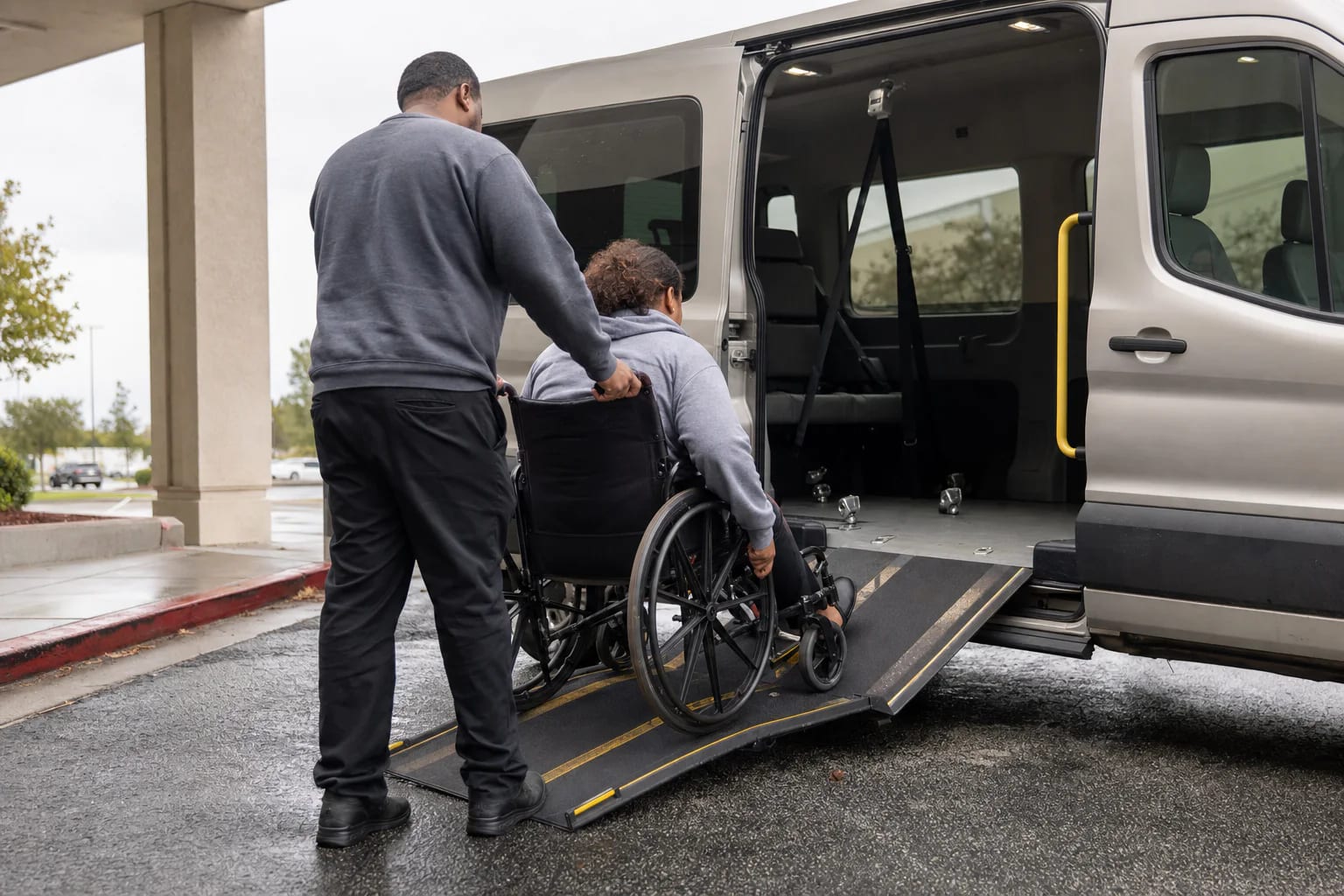
Driver secures a passenger wheelchair inside an unbranded accessible medical transport van at an outpatient clinic curb
A reliable transportation file separates authorization, dispatch, each trip leg, destination attendance, billing, and patient-held proof.

Quick answer

Keep the transportation authorization, reservation confirmation, dispatch log, pickup and drop-off times, vehicle or driver identifier, destination attendance record, return-trip history, claim detail, and receipts as separate sources. Reconcile them by trip leg, but do not assume a booking, GPS point, bill, or missed-ride label proves what happened.

Key takeaways

  • Separate authorization, reservation, dispatch, trip, destination, payment, and patient-held sources. Each answers a different question.
  • Use one ledger entry per outbound or return leg and preserve planned, dispatched, arrived, boarded, dropped-off, and billed times without silently choosing one.
  • A booking, GPS point, facility appointment, claim, invoice, or no-show code does not by itself prove the full trip or why an event occurred.
  • Identify the program before applying rules: Medi-Cal NEMT, Medi-Cal NMT, emergency ambulance, private transport, paratransit, rideshare, mileage reimbursement, and workers’ compensation are not interchangeable.
Hurt Advice Editorial Team

Prepared by

Hurt Advice Editorial Team

Editorial Research and Publishing Team

Source-checked editorial publishing

Why trust this article

Prepared by the Hurt Advice Editorial Team from current DHCS, California Legislature, CMS, Medicaid.gov, and HHS sources. No attorney reviewed this displayed version.

Recent update: Original publication with a four-custodian source map, six-clock trip ledger, neutral request scripts, NEMT-versus-NMT boundary, timing workflow, evidence checklist, mistakes, and FAQs.

At a glance

What this guide helps you decide

Start with the question that brought you here, identify the records that can verify the facts, and use the related guidance only where it helps. This article addresses personal injury questions in California.

Main question

Decide how this topic may apply to your situation

Use "Non-Emergency Medical Transportation Records After a California Injury" to sort the facts you know, the questions still open, and whether a personal injury resource or consultation may be useful in California.

Guide map

Start with the sections most relevant to you: Quick takeaways, Who this guide is for—and the narrow task it solves, Name the transportation program before collecting records

Move through the article by issue, not by guesswork, so liability, medical proof, insurance pressure, deadlines, and next steps stay connected.

Records to gather

Connect these subjects to your records: California Medical Transportation Records, Medi-Cal NEMT, Medi-Cal NMT, Dispatch Logs

Compare the topic with records, photos, medical visits, police reports, insurer letters, and local claim details before relying on a general answer.

Trust check

Use the source trail before acting

This page includes 6 source references plus internal next-step paths so readers can verify where the guidance comes from.

Before you rely on this guide

This article is written for people dealing with injury-law questions in California. It is meant to help you understand the issue, not replace legal advice about your specific case.

What to do after this article

Start with the quick answer, skim the table of contents, and then use the links below to move into the practice area, author archive, or resource page that turns general guidance into a clearer next step for your situation.

Quick takeaways

  • Separate authorization, reservation, dispatch, trip, destination, payment, and patient-held sources. Each answers a different question.
  • Use one ledger entry per outbound or return leg and preserve planned, dispatched, arrived, boarded, dropped-off, and billed times without silently choosing one.
  • A booking, GPS point, facility appointment, claim, invoice, or no-show code does not by itself prove the full trip or why an event occurred.
  • Identify the program before applying rules: Medi-Cal NEMT, Medi-Cal NMT, emergency ambulance, private transport, paratransit, rideshare, mileage reimbursement, and workers’ compensation are not interchangeable.

Who this guide is for—and the narrow task it solves

This guide is for a person organizing non-emergency transportation records after a California injury, and for an authorized helper preparing a source-controlled packet. It focuses on rides to covered care, therapy, testing, pharmacies, or medical-equipment pickup when the records can be obtained lawfully. It does not decide medical need, benefit eligibility, fault, coverage, damages, admissibility, or whether a particular trip should have been approved.

The narrow task is trip reconstruction. A plan or broker may hold authorization and reservation data; a transportation provider may hold dispatch, vehicle, driver, pickup, waiting, drop-off, and return-leg data; a clinic may hold appointment and check-in information; a payer or patient may hold claims, invoices, receipts, and messages. The ground-ambulance billing guide addresses emergency and ground-ambulance bills. The rideshare app guide addresses platform trip data after a crash. This article does not merge those lanes.

Hurt Advice is a lawyer referral and legal information service, not a law firm. This is general information, not legal, medical, transportation, insurance, benefits, billing, tax, or privacy advice. It does not promise that a custodian must create or release a requested record, that a charge is payable, or that a reconstructed timeline proves a claim.

Name the transportation program before collecting records

California Welfare and Institutions Code section 14132, subdivision (ad) describes Medi-Cal non-medical transportation, or NMT, as round-trip passenger car, taxi, public, or other private conveyance and separates it from transportation of an incapacitated beneficiary by ambulance, litter van, or wheelchair van. That statutory distinction helps label the source lane; it does not decide eligibility for a particular trip.

California’s current state-plan limits for transportation services describe NEMT as litter-van, wheelchair-van, or ambulance transportation when ordinary means are medically contraindicated and state that NEMT requires prior authorization and a written prescription. They describe NMT as round-trip public or private conveyance to obtain covered Medi-Cal services, subject to utilization controls. Current operational rules can vary by managed-care or fee-for-service path, so confirm the plan and current instructions rather than relying on an old screenshot or another rider’s experience.

A trip may instead be private-pay wheelchair-van service, local paratransit, workers’ compensation transportation, a family or friend’s vehicle, ordinary rideshare, facility-arranged transfer, or mileage reimbursement. Write the program, authorizer, payer, provider, trip purpose, and requested mode at the top of the file. Do not call every non-911 ride “NEMT,” and do not apply Medi-Cal requirements to unrelated transportation.

Build four source lanes before making a timeline

Lane one: plan, broker, or authorizer. Preserve the benefit inquiry, prescription or certification when one exists, authorization request, decision, approved mode, date range, number of trips, reservation, confirmation number, pickup window, destination, attendant approval, modification, cancellation, grievance, and appeal record. Distinguish a request from an approval and an approval from an assigned ride.

Lane two: transportation provider. Request or preserve the dispatch record, assigned vehicle and driver identifier, dispatch time, arrival event, contact attempts, boarded time, origin departure, destination arrival, drop-off, waiting or will-call status, return assignment, trip completion or cancellation code, mileage, route data when maintained, incident report, invoice, and correction history. Ask for definitions of codes instead of guessing.

Lane three: destination and care source. Preserve the scheduled appointment, check-in or registration event, visit status, service date, discharge or completion time when appropriate, pharmacy or equipment pickup confirmation, and rescheduling record. A clinic’s appointment status may help test a timeline; it does not establish every vehicle event or why a person arrived late.

Lane four: patient-held source. Keep confirmation texts, app screenshots, call logs, voicemail, receipts, payment records, photos that do not expose bystanders or private information, and dated first-hand observations. Label observations as observations. Keep originals privately and create redacted working copies before sharing.

Use a six-clock ledger for every trip leg

Create a separate entry for the outbound leg and the return leg. A responsive field ledger works better than a wide table on a phone:

  1. Planned: appointment time, requested pickup, promised window, origin, destination, authorized mode, and confirmation number.
  2. Assigned: broker assignment, transportation company, driver or vehicle identifier, dispatch time, and any reassignment.
  3. Arrived: provider-reported arrival, patient-observed arrival, contact attempt, waiting location, and source for each time.
  4. Boarded and moved: boarding, securement, origin departure, route event, assistance provided, and any interruption actually recorded.
  5. Dropped off: destination arrival, drop-off, clinic check-in, appointment result, return request, and pickup from the destination.
  6. Billed and resolved: claim or invoice number, service date, mileage or units, amount billed, payer action, patient payment, correction, refund, complaint, or open question.

Example: “Outbound leg, confirmation 781; pickup window 8:10–8:40; dispatch message 8:24; patient observed no vehicle at 8:45; provider log says arrived 8:52 at side entrance; call at 8:55; boarded time not produced; clinic marked late arrival 9:18; invoice lists one completed trip; arrival-location difference disputed.” This preserves sources and conflict without declaring fraud, abandonment, medical harm, or legal responsibility.

Reconcile late rides, no-shows, substitutions, and return legs

“No-show” can describe different events: no rider found, no vehicle observed, wrong entrance, early departure, unreachable phone, incorrect address, canceled appointment, duplicate assignment, or a code added after billing. Preserve the exact label and who used it. Do not convert a code into a conclusion.

For a late or missed ride, record when the rider was ready, the agreed waiting location, accessibility needs communicated, calls and messages, vehicle description actually observed, alternate transportation, clinic response, appointment outcome, and return-trip effect. If a different company or vehicle appeared, preserve both the original assignment and the substitution.

Return legs often produce a second timeline. Record whether the return was scheduled, will-call, requested by the clinic, or arranged after discharge; when the provider acknowledged the request; vehicle events; assistance; destination; and charges. Do not copy outbound times into the return row. The injury-claim proof guide explains why source labels and gaps matter more than a polished but unsupported narrative.

Compare trip evidence with claims, invoices, and receipts

A reservation confirms a request. An authorization records an approval or limitation. A dispatch entry records an operational event. A GPS point may show a device or vehicle location. A facility record may show an appointment event. A claim or invoice records a billed or reported service. None automatically proves boarding, assistance, the entire route, medical necessity, timely arrival, or the reason for a discrepancy.

The federal Medicaid Assurance of Transportation page explains the transportation assurance and links program-integrity resources addressing correct billing, documentation, and data requirements. The current CMS NEMT resource page separately provides beneficiary and provider materials. Use those sources to identify record categories, not to accuse a provider based on one mismatch.

Match the claim or invoice to one identified leg using the service date, origin and destination when shown, mode, provider, mileage or units, attendant or wait-time line, and correction status. Record billed, allowed, paid, denied, adjusted, refunded, patient responsibility, and disputed amounts separately. The hospital billing guide addresses facility coding; do not mix hospital charges into the transportation ledger.

Use focused requests and respect each custodian boundary

The official HHS HIPAA Privacy Rule regulation text at 45 CFR 164.524 gives an individual a right of access to protected health information in a designated record set maintained by a covered entity, subject to the rule’s scope, exceptions, form, timing, fee, denial, and review provisions. That does not mean every broker, vehicle company, software platform, or payment processor must provide every internal record under HIPAA.

Plan or broker request: “Please provide the authorization, reservation, assignment, modification, cancellation, complaint, grievance, claim, and payment records your organization maintains for transportation on [date] between [origin type] and [destination type], including timestamps, confirmation numbers, provider assignments, approved mode, trip-leg status, correction history, and definitions of status codes. Please identify any category maintained by another custodian and the applicable request process.”

Transportation-provider request: “Please preserve and provide the dispatch, vehicle and driver assignment, arrival and contact attempts, boarding, departure, destination arrival, drop-off, waiting or return-trip, mileage, incident, invoice, and correction records maintained for confirmation [number] on [date]. Please preserve original and corrected versions and explain any operational codes.”

Use the plan’s privacy, records, member-services, billing, complaint, or appeal route as appropriate. Minimize personal data in the request. Never send full medical charts, insurance identifiers, payment credentials, or another person’s information when a focused identifier and date range will do.

Timing and process checkpoints

When the ride is arranged: save the prescription or authorization if applicable, reservation, confirmation number, pickup window, accessibility or attendant instruction, origin and destination, contact method, and cancellation rules. The current DHCS FAQ says it is helpful to request Medi-Cal transportation at least five business days before an appointment; that is planning guidance, not a universal legal deadline for every program or urgent circumstance.

On the trip date: address health and safety first. Preserve messages and call logs, note when and where the rider was ready, record vehicle events without interfering with care, and keep the outbound and return legs separate. Do not secretly record conversations without obtaining advice about applicable law.

After the appointment: preserve check-in, visit, rescheduling, pharmacy, or equipment-pickup evidence that already exists. The medical-care resource discusses treatment documentation more broadly. It does not turn an appointment entry into proof of the transportation route.

When a claim or bill appears: add it to the leg, compare identifiers and status, and request a written explanation for any difference. Under California’s current Medi-Cal benefits statutes, nonmedical transportation and medical transportation occupy defined program lanes; the same statutory page includes provisions on nonemergency medical transportation. Read the applicable current text and plan instructions rather than extracting one sentence for a private-plan trip.

Evidence checklist

  • Program, plan, broker, authorizer, payer, transportation provider, covered destination, requested mode, and trip purpose.
  • Prescription, certification, appointment verification, prior authorization, approval, denial, approved date range, attendant, and mode.
  • Reservation, confirmation number, promised pickup window, origin and destination, contact method, modification, and cancellation.
  • Provider assignment, driver or vehicle identifier, dispatch, arrival, contact attempts, boarding, securement, departure, and drop-off.
  • Separate outbound and return legs, waiting or will-call request, reassignment, substitution, no-show or cancellation code, and code definitions.
  • Appointment schedule, check-in, visit status, discharge or completion, reschedule, pharmacy pickup, or medical-equipment pickup evidence.
  • Claim detail, invoice, mileage or units, wait or attendant line, amount billed, allowed, paid, denied, adjusted, refunded, and patient receipt.
  • Complaint, grievance, appeal, incident report, correction history, communications, and written resolution.
  • Source map naming custodian, date obtained, original file, version, proposition, limitation, conflict, and open question.
  • Protected originals and redacted working copies without member, payment, address, driver, vehicle, or third-party identifiers.

Mistakes and red flags

  • Treating Medi-Cal NEMT, Medi-Cal NMT, emergency ambulance, paratransit, rideshare, private transport, and mileage reimbursement as one program.
  • Treating authorization, reservation, dispatch, GPS, appointment, invoice, and payment records as interchangeable.
  • Using one timeline row for both outbound and return trips or silently replacing conflicting timestamps.
  • Assuming a no-show code proves the rider was absent, or assuming a rider’s observation proves no vehicle entered another pickup area.
  • Assuming a claim or invoice proves the trip occurred exactly as billed, or calling every mismatch fraud before requesting source records.
  • Ignoring a substituted provider, vehicle, driver, entrance, destination, attendant, accessibility instruction, or corrected record.
  • Posting screenshots that expose health information, confirmation numbers, addresses, payment data, vehicle plates, or third parties.
  • Sending broad releases or unrelated medical records when a narrow trip, billing, privacy, complaint, or appeal request is available.

Why provenance matters—and careful next steps

California Evidence Code section 1271 identifies conditions for the business-record hearsay exception, including regular-course creation, timing, custodian or qualified-witness testimony, and trustworthiness. Possessing a dispatch screenshot, trip sheet, invoice, or portal export does not automatically establish admissibility. Preserve who produced it, when, how, and in what original form.

Finish the program label, four-source map, and six-clock ledger. Send focused requests to missing custodians. Ask for code definitions and correction history. Keep transportation records separate from medical opinions, symptom observations, and equipment or facility bills. The medical-equipment records guide shows how to separate supplier and payer sources when a trip involved equipment pickup.

If a medical need, urgent ride, benefits denial, billing dispute, privacy request, grievance, appeal, preservation duty, missed-care concern, limitations deadline, or injury claim requires individual advice, consult the appropriate qualified professional promptly. Hurt Advice can connect people with independent California lawyers through the contact page, but it does not promise representation or an outcome.

This article was prepared by the Hurt Advice Editorial Team from the official sources listed above. No attorney reviewed this displayed version. Review the editorial standards for the site’s sourcing and correction process.

Frequently Asked Questions

Which medical transportation records should I keep after a California injury?
Keep the prescription or authorization when one exists, reservation and confirmation, broker or plan messages, dispatch and trip-leg records, vehicle or driver identifier, pickup and drop-off events, destination attendance evidence, return-trip history, claim or invoice detail, receipts, complaints, corrections, and refund or appeal records. Preserve original versions and identify each source.
What is the difference between Medi-Cal NEMT and NMT?
California’s Medi-Cal sources describe non-emergency medical transportation as ambulance, wheelchair-van, or litter-van transportation when ordinary travel is medically contraindicated, and non-medical transportation as public or private conveyance to covered services. Current plan, fee-for-service, authorization, and program rules still control each trip.
Does a medical transportation bill prove the ride happened?
No. A bill or claim shows that a charge or encounter was submitted or recorded. Compare it with authorization, dispatch, vehicle-arrival, boarding, destination, facility-attendance, return-leg, payment, and patient-observation sources. A record can be incomplete or corrected, and one timestamp does not prove the entire trip.
What should I record when a medical ride is late or does not arrive?
Record the scheduled pickup window, confirmation number, when and how you were ready, calls or messages, actual vehicle events, destination response, appointment result, return-trip effect, and any complaint number. Preserve screenshots and call logs privately. Use neutral terms such as delayed, canceled, no vehicle observed, rider not located, or disputed until sources are reconciled.
Can I request medical transportation records under HIPAA?
The federal access rule in 45 CFR 164.524 applies to protected health information in a designated record set maintained by a covered entity, subject to its scope and exceptions. A plan or medical provider may hold covered records, while a broker, transportation company, dispatch platform, or payment processor may hold other records under a different relationship. Ask each custodian for its applicable process.
Are Medi-Cal transportation rules the same for private insurance, workers’ compensation, paratransit, or rideshare trips?
No. Medi-Cal sources explain Medi-Cal NEMT and NMT; they should not be treated as universal rules for private plans, workers’ compensation, local paratransit, cash transportation, rideshare, emergency ambulance, or mileage reimbursement. Label the program, payer, authorizer, provider, and trip purpose before applying any rule or deadline.

Sources and references

California Department of Health Care ServicesCalifornia State Plan, Limits to Attachment 3.1-A

Official California state-plan description of emergency transportation, NEMT, NMT, prescriptions, authorization, appointment verification, and travel modes.

Centers for Medicare & Medicaid ServicesAssurance of Transportation

Current federal Medicaid overview of transportation assurance, program-integrity requirements, documentation, data, and correct-billing resources.

U.S. Department of Health and Human ServicesHIPAA Privacy Rule regulation text, section 164.524

Official HHS regulation text for access to protected health information in a designated record set, subject to the rule’s scope, limits, timing, and procedures.

Current official California business-record hearsay exception elements, included to explain why source, timing, preparation method, custodian, and trustworthiness matter.

Need help after an accident?

Hurt Advice intake team can review your situation, explain your options, and help you move forward with a plan that fits your case.