Legal ExplainerPersonal InjuryChecklist / Process

Medical Equipment Rental and Receipt Records After a California Injury

After a California injury, keep the equipment order, supplier delivery record, month-by-month rental ledger, payer notice, patient receipts, service history, and return confirmation as separate sources. Reconcile item identity and dates across them, but do not assume a charge proves delivery, use, medical necessity, causation, or the value of a claim.

Published

July 29, 2026

Updated

July 29, 2026

Reading time

11 min read

Jurisdiction

California

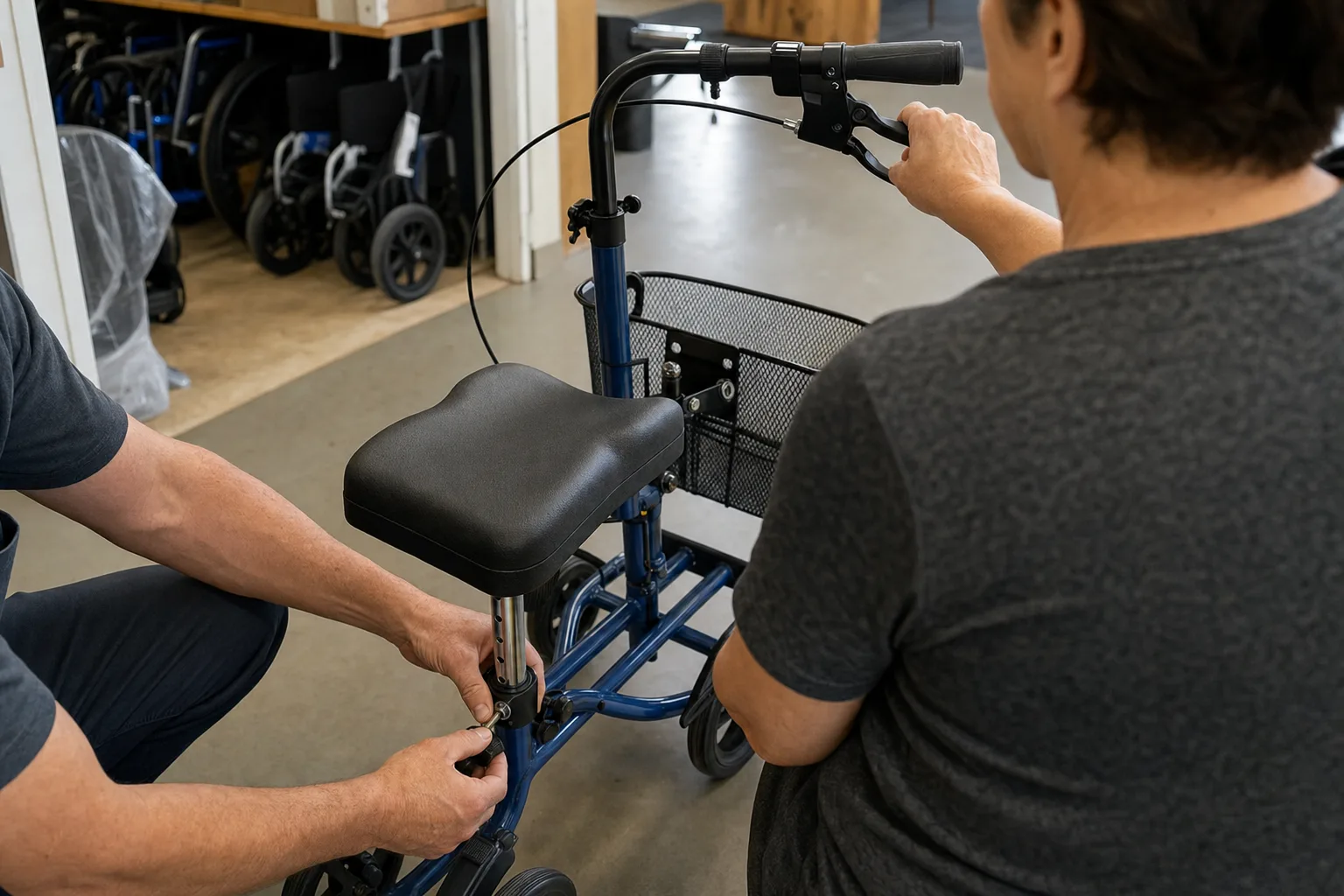
Equipment technician adjusts a rented knee walker while an injured adult tests its hand brake in a medical equipment fitting bay
A reliable equipment file separates the order, item identity, delivery, rental months, payer action, patient payment, service, and return.

Quick answer

After a California injury, keep the equipment order, supplier delivery record, month-by-month rental ledger, payer notice, patient receipts, service history, and return confirmation as separate sources. Reconcile item identity and dates across them, but do not assume a charge proves delivery, use, medical necessity, causation, or the value of a claim.

Key takeaways

  • Separate the practitioner order, supplier file, payer record, and patient-held receipt or observation. They answer different questions.
  • Track each rental month, purchase charge, repair, replacement, and return against one identified item; never silently merge similar devices.
  • A claim, invoice, delivery record, or recall entry does not by itself prove actual use, medical necessity, defect, causation, damages, or admissibility.
  • Preserve device labels and identifiers without altering the equipment, and use neutral status terms such as received, billed, paid, denied, serviced, returned, disputed, or unknown.
Hurt Advice Editorial Team

Prepared by

Hurt Advice Editorial Team

Editorial Research and Publishing Team

Source-checked editorial publishing

Why trust this article

Prepared by the Hurt Advice Editorial Team from current CMS, Medicare, eCFR, FDA, and California Legislature sources. No attorney reviewed this displayed version.

Recent update: Original publication with a four-custodian source map, rental reconciliation ledger, device-identity check, neutral request scripts, timing workflow, evidence checklist, mistakes, and FAQs.

At a glance

What this guide helps you decide

Start with the question that brought you here, identify the records that can verify the facts, and use the related guidance only where it helps. This article addresses personal injury questions in California.

Main question

Decide how this topic may apply to your situation

Use "Medical Equipment Rental and Receipt Records After a California Injury" to sort the facts you know, the questions still open, and whether a personal injury resource or consultation may be useful in California.

Guide map

Start with the sections most relevant to you: Quick takeaways, Who this guide is for—and the narrow task it solves, Build four source lanes before making a timeline

Move through the article by issue, not by guesswork, so liability, medical proof, insurance pressure, deadlines, and next steps stay connected.

Records to gather

Connect these subjects to your records: California Medical Equipment Records, Durable Medical Equipment, Rental Receipts, Proof of Delivery

Compare the topic with records, photos, medical visits, police reports, insurer letters, and local claim details before relying on a general answer.

Trust check

Use the source trail before acting

This page includes 6 source references plus internal next-step paths so readers can verify where the guidance comes from.

Before you rely on this guide

This article is written for people dealing with injury-law questions in California. It is meant to help you understand the issue, not replace legal advice about your specific case.

What to do after this article

Start with the quick answer, skim the table of contents, and then use the links below to move into the practice area, author archive, or resource page that turns general guidance into a clearer next step for your situation.

Quick takeaways

  • Separate the practitioner order, supplier file, payer record, and patient-held receipt or observation. They answer different questions.
  • Track each rental month, purchase charge, repair, replacement, and return against one identified item; never silently merge similar devices.
  • A claim, invoice, delivery record, or recall entry does not by itself prove actual use, medical necessity, defect, causation, damages, or admissibility.
  • Preserve device labels and identifiers without altering the equipment, and use neutral status terms such as received, billed, paid, denied, serviced, returned, disputed, or unknown.

Who this guide is for—and the narrow task it solves

This guide is for a person organizing rented or purchased medical-equipment records after a California injury, and for an authorized helper preparing a source-controlled packet. It covers items such as crutches, braces, walkers, knee walkers, wheelchairs, scooters, hospital beds, and other equipment when the sources can be preserved safely and lawfully. It does not decide whether an item qualifies as durable medical equipment under a particular plan.

The narrow task is reconciliation. The practitioner may hold the order and clinical reason; the supplier may hold intake, item, delivery, rental, service, and return data; a health plan may hold claims and explanation records; the patient may hold receipts, photos, messages, and first-hand observations. The hospital billing guide addresses facility bills and coding, while the pharmacy guide addresses medication dispensing and payment. This article does not merge those lanes.

Hurt Advice is a lawyer referral and legal information service, not a law firm. This is general information, not legal, medical, billing, insurance, tax, product-safety, or benefits advice. It does not determine fault, coverage, necessity, causation, damages, admissibility, or whether a supplier must create or disclose a particular record.

Build four source lanes before making a timeline

Lane one: practitioner and clinical source. Preserve the order or prescription, visit note, diagnosis or functional description actually documented, item description, quantity, date, practitioner identity, and later change or discontinuation. An order can support why equipment was requested; it does not prove delivery, use, benefit, or payment.

Lane two: supplier source. Request or preserve the intake record, rental or purchase agreement, item description, model and serial number when maintained, delivery ticket, shipping trail, setup or fitting note, invoices, payment history, service tickets, replacement record, pickup request, and return confirmation. Keep prior and corrected versions.

Lane three: payer source. Preserve the claim detail, explanation of benefits, Medicare Summary Notice when applicable, authorization decision, allowed amount, denial reason, appeal material, and adjustment history. A payer record shows how a submitted item was processed; it may not reproduce the supplier’s full item history.

Lane four: patient-held source. Keep receipts, card or bank confirmation with unrelated data redacted in working copies, photos of the equipment and label, delivery messages, service calls, return communications, and dated observations about possession or problems. Personal observations should be labeled as observations, not supplier or clinical records.

Identify the item before reconciling money or dates

Start with the most specific safe identifiers available: item description, manufacturer, model, serial number, lot or batch if applicable, device identifier, accessory list, supplier item number, and payer code. Photograph the label and the complete item without exposing a patient name, address, barcode, insurance number, or other private data in a shared copy. Keep the untouched original privately.

Two similar walkers or braces are not automatically the same item. A replacement can have a new serial number while an invoice keeps the same general description. An accessory may be billed separately. A temporary loaner may appear in service notes but not in the original agreement. Record identity conflicts explicitly: “invoice says knee walker; delivery ticket lists model X; photo label shows model Y; supplier clarification requested.”

If a product problem is suspected, the FDA Medical Device Recalls database can be searched using reliable product details. The database explains that FDA classification may occur after a firm has started a correction or removal and that posting dates do not necessarily mark the start of the event. A database match is a research lead, not a conclusion that the exact device was affected or caused harm.

Understand what Medicare equipment sources can—and cannot—show

Medicare’s DME coverage page describes covered durable medical equipment as durable, used for a medical reason, generally useful to someone who is sick or injured, used in the home, and expected to last at least three years. It also explains that coverage may involve rental, purchase, a choice between the two, or ownership after a specified rental sequence, depending on the item. These are Medicare descriptions; do not apply them automatically to a private plan, workers’ compensation arrangement, hospital discharge loan, or cash transaction.

Current CMS DMEPOS documentation guidance lists a standard written order, medical-record information, correct coding, and proof of delivery among the documentation used for applicable Medicare claims. It says the written order includes the beneficiary, item description, quantity if applicable, treating practitioner, order date, and signature. Some items have additional face-to-face or written-order-before-delivery conditions. Do not describe those payment rules as a universal California disclosure right.

Supplier proof of delivery can help link an identified item, quantity, recipient or address, and date. It still does not prove that the patient used the item every billed day, that it fit correctly, that it improved function, that a later problem was caused by the item, or that every charge is correct. Those are separate questions for separate sources.

Create a month-by-month rental and payment ledger

Use one entry per item and billed period. A responsive ledger can use stacked fields instead of a wide table:

  1. Item identity: description, manufacturer, model, serial or device identifier, and accessories.
  2. Possession event: ordered, delivered, picked up, exchanged, serviced, replaced, returned, or unknown, with the source date.
  3. Billed period: service date or rental month, invoice or claim number, billing code when shown, and supplier.
  4. Money path: amount billed, allowed, paid by payer, paid by patient, adjusted, denied, refunded, or disputed.
  5. Source links: order, delivery ticket, invoice, payer notice, receipt, bank confirmation, service ticket, and return proof.
  6. Open question: missing month, duplicate charge, identity mismatch, unexplained accessory, delivery conflict, continued charge after return, or ownership status.

Example: “Knee walker, model and serial photographed; delivered May 3; May rental invoice 1042; payer allowed amount shown on June notice; patient receipt May 6; brake serviced May 20; exchanged May 21; original unit return confirmation missing.” This wording preserves facts and gaps without claiming fraud, coverage, necessity, or causation.

Compare payer notices with receipts instead of choosing one

A supplier invoice can show what was charged. A receipt can show a payment recorded by the supplier or a transaction confirmation. A payer notice can show what was submitted, allowed, denied, adjusted, or assigned to the patient. None should silently replace another.

The official Medicare Summary Notice page says an MSN is not a bill and shows services or supplies billed to Medicare, what Medicare paid, and the maximum amount the beneficiary may owe. It specifically advises keeping receipts and bills and comparing them with the notice to confirm the listed services, supplies, or equipment and the amount paid. A private plan may use an explanation of benefits with different terms and procedures.

When amounts differ, record the exact source, date, and label: charge, allowed amount, plan payment, coinsurance, deductible, patient payment, adjustment, refund, or balance. Do not call every difference an overcharge. Timing, claim correction, coordination of benefits, a replacement item, an accessory, noncovered service, or a posting delay may explain it. Ask the supplier or payer for a written itemized explanation.

Use a focused access request and respect the source boundary

45 CFR 164.524 gives an individual a right of access to protected health information in a designated record set maintained by a covered entity, subject to the rule’s scope, exceptions, form, timing, fee, denial, and review provisions. The rule should not be summarized as a right to every document held by every equipment business.

A supplier may be a covered entity for some records, while a manufacturer, delivery company, cash retailer, repair shop, or payment processor may hold other records under a different relationship. A plan may hold claim and authorization material but not the supplier’s service bench notes. Ask each custodian what it maintains and the authorized method for requesting it.

Supplier request script: “Please provide the records your organization maintains for the equipment supplied to [patient] during [date range], including the order received, item and accessory description, model or serial identifier if maintained, agreement, delivery or pickup confirmation, itemized rental or purchase ledger, payments and adjustments, fitting or setup note, service and replacement tickets, communications, and return or ownership-status confirmation. Please identify any category maintained by another custodian and the applicable request process.”

Payer request script: “Please provide the claim detail, authorization decision, explanation of benefits or equivalent notice, adjustments, appeal material, and member-responsibility calculation for equipment from [supplier] during [date range]. Please preserve the original claim and corrected versions and identify the process for disputing a factual or payment error.”

Timing and process checkpoints

At the first safe opportunity: address medical needs first. Preserve the order, agreement, delivery messages, receipt, and clear private photos of the complete item and label. Do not alter a device needed for care.

During each rental month: add the new invoice, payer notice, and patient payment to the ledger. Note possession, use only as actually observed, service problems, communications, and any accessory change. The standing and walking records guide explains how to keep functional observations separate from an equipment invoice.

After service or replacement: preserve the complaint, service ticket, technician note provided to you, replaced part, exchange date, old and new identifiers, and transport or pickup record. Do not discard an item, part, packaging, or electronic data when a product-safety issue may require qualified preservation advice.

At return or ownership transition: obtain a dated receipt that identifies the item and accessories, the return condition if recorded, the person or carrier receiving it, and the final account status. If equipment becomes owned after a rental sequence, obtain a written ownership or zero-balance statement rather than inferring ownership from a missing invoice.

Before a legal or insurance summary: compare the equipment ledger with clinical, billing, and personal-observation lanes. The damages evidence guide describes broader categories but does not make every equipment charge recoverable or prove its cause.

Evidence checklist

  • Practitioner order or prescription, item description, quantity, order date, clinical note, and any change or discontinuation.
  • Supplier intake, rental or purchase agreement, terms, assignment or authorization forms, and itemized invoices.
  • Manufacturer, model, serial number, device identifier, lot or batch when applicable, accessories, and privacy-safe label photos.
  • Delivery ticket, shipping trail, pickup note, setup or fitting record, and the recipient or address confirmation actually maintained.
  • Monthly rental ledger, payer claims or notices, patient receipts, payment confirmations, adjustments, refunds, and balance statements.
  • Service calls, repair tickets, replacement or loaner records, old and new item identifiers, warranty material, and safety communications.
  • Return request, pickup tracking, return receipt, accessory checklist, condition note, final invoice, and ownership or zero-balance confirmation.
  • A source map naming the custodian, date obtained, file name, version, proposition, limits, and unresolved question for every record.
  • Protected originals plus redacted working copies; never publish patient, insurance, payment, barcode, address, or device-account identifiers.

Mistakes and red flags

  • Treating the order, supplier invoice, delivery ticket, payer notice, and patient receipt as interchangeable.
  • Assuming a recurring rental charge proves continuous possession, daily use, benefit, medical necessity, or causation.
  • Merging a replacement, loaner, accessory, or second device into the original item without checking identifiers.
  • Discarding packaging, labels, removed parts, service messages, corrected bills, or prior versions after a replacement or return.
  • Calling a denied claim proof that equipment was unnecessary, or calling payment proof that every charge was accurate.
  • Searching a recall database with a generic product name and reporting a match without model, lot, serial, date, and affected-range proof.
  • Altering, testing, repairing, returning, or publicly posting a potentially relevant device before obtaining safety and preservation guidance.
  • Sending a broad release, another person’s health information, full payment credentials, or unrelated medical records when a focused request will do.

Why provenance matters—and careful next steps

California Evidence Code section 1271 identifies conditions for the business-record hearsay exception, including regular-course creation, timing, custodian or qualified-witness testimony, and trustworthiness. Possessing an invoice or service ticket does not automatically establish admissibility. Preserve who produced it, when, how, and in what original form.

Finish the item identity sheet and monthly ledger. Send focused requests to the practitioner, supplier, and payer only as needed. List missing dates or records without guessing. Keep equipment sources separate from symptom observations and clinical opinions. The hand and wrist function guide offers another example of separating observed tasks from medical conclusions.

If a deadline, denied access request, billing dispute, coverage issue, device-safety concern, preservation duty, return demand, benefits question, or injury claim requires individual advice, consult the appropriate qualified professional. Hurt Advice can connect people with independent California lawyers through the contact page, but it does not promise representation or an outcome.

This article was prepared by the Hurt Advice Editorial Team from the official sources listed above. No attorney reviewed this displayed version. Review the editorial standards for the site’s sourcing and correction process.

Frequently Asked Questions

Which medical equipment records should I keep after a California injury?
Keep the practitioner order, supplier intake and delivery record, item description and identifiers, rental or purchase agreement, every invoice and receipt, payer explanation, service and replacement history, communications, and return confirmation. Preserve original files and record who produced each item, when, and for what period.
Does a medical equipment bill prove that I received or used the item?
No. A bill records a charge or claim. Delivery evidence may show that an item reached an address or recipient, while possession, actual use, medical need, benefit, and causation are separate questions. Compare the bill with the order, delivery record, device identity, patient notes, payer notice, and return or service records.
What is the difference between renting and buying durable medical equipment?
The payment path depends on the item, supplier, payer, and coverage terms. Medicare explains that some covered equipment is rented, some is purchased, some may offer a choice, and some becomes the beneficiary’s property after a specified rental sequence. Do not assume the Medicare path controls a private plan or cash rental.
Can I request equipment records under HIPAA?
The federal access rule in 45 CFR 164.524 applies to protected health information in a designated record set maintained by a covered entity, subject to stated limits and procedures. A particular supplier may or may not be a covered entity, and a commercial invoice or manufacturer file may not be part of the designated record set. Ask the supplier or plan to identify its process and the records it maintains.
How should I track monthly equipment rental charges?
Use one row per item and billed period. Record the supplier, item description, model or serial number when available, delivery date, rental month, claim or invoice number, amount billed, payer action, patient payment, possession status, service event, and return date. Keep source links and label unresolved differences instead of overwriting them.
Does an FDA recall prove that medical equipment caused an injury?
No. The FDA recall database can help confirm whether a described model or device falls within a recall entry, but matching identity, affected lots or serial ranges, dates, condition, use, causation, notice, and legal responsibility require separate evidence. Preserve the device and obtain qualified advice before altering, returning, or discarding it when a safety issue is suspected.

Sources and references

Centers for Medicare & Medicaid ServicesDMEPOS general documentation requirements

Current official CMS summary of written-order, medical-record, coding, proof-of-delivery, and continued-need documentation for applicable Medicare claims.

Current official explanation of the MSN and guidance to compare listed services, supplies, or equipment with bills and receipts.

Current official California business-record hearsay exception elements; included to explain why source, timing, custodian, preparation method, and trustworthiness matter.

Need help after an accident?

Hurt Advice intake team can review your situation, explain your options, and help you move forward with a plan that fits your case.