
Referral intake reviewES
Legal ExplainerBicycle AccidentsChecklist / Process

Rental E-Scooter Records After a California Crash

This guide is for a California rental e-scooter rider, pedestrian, witness, or family member trying to identify records after a crash or malfunction. Its purpose is practical: preserve what is already under your control, identify the trip and physical scooter, separate operator files from local-agency records, and make focused requests without assuming that data exists, is public, or proves fault. Hurt Advice is a lawyer-referral and legal-information service, not a law firm, and this is general information rather than legal advice or representation.

Published

August 12, 2026

Updated

August 12, 2026

Reading time

11 min read

Jurisdiction

California

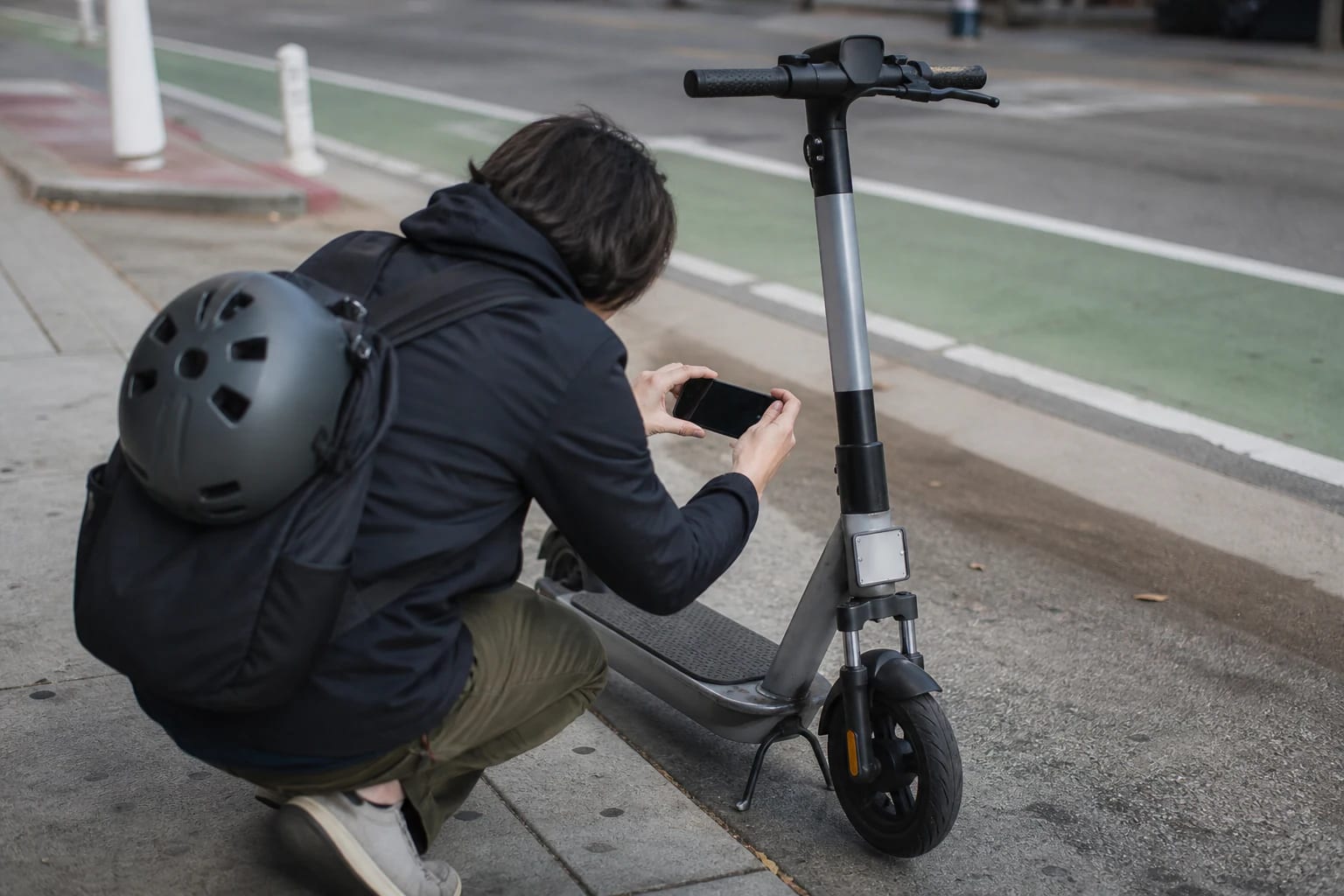
Person photographing an identification plate on a shared e-scooter beside a bike lane
A rider documents a shared e-scooter's unit plate, illustrating the trip-and-device identity step in this records guide.

Quick answer

After a rental e-scooter crash in California, save the in-app receipt, trip ID, scooter ID, times, route display, photos, report numbers, and messages you control. Then separate operator-held trip and maintenance files from city permit or complaint records. A privacy request, preservation request, and public-record request are different tools and do not guarantee the same material.

Key takeaways

  • Capture the trip before the app view changes. Save the receipt, trip ID, scooter ID, start and end times, route display, charges, and any incident confirmation you can see.
  • Tie digital records to the physical scooter. Photograph the whole device, its unit plate, wheels, brakes, deck, handlebars, parking place, and surrounding surface without moving or testing damaged equipment.
  • Separate four custodians. Your account, the rental operator, a local mobility agency, and independent responders may hold different records with different identifiers.
  • Use the right request lane. An ordinary support request, a preservation request, a California privacy request, and a public-record request are not interchangeable.
Hurt Advice Editorial Team

Prepared by

Hurt Advice Editorial Team

Editorial Research and Publishing Team

Source-checked editorial publishing

Why trust this article

Prepared by the Hurt Advice Editorial Team from current California statutes and official state and municipal sources, with originality, disclosure, accessibility, image, and live-page checks. No attorney reviewed this displayed version.

Recent update: Original publication explaining California rental e-scooter trip, unit, maintenance, complaint, and local-program record workflows.

At a glance

What this guide helps you decide

Start with the question that brought you here, identify the records that can verify the facts, and use the related guidance only where it helps. This article addresses bicycle accidents questions in California.

Main question

Decide how this topic may apply to your situation

Use "Rental E-Scooter Records After a California Crash" to sort the facts you know, the questions still open, and whether a bicycle accidents resource or consultation may be useful in California.

Guide map

Start with the sections most relevant to you: Start with a trip-and-scooter identity card, Build a four-custodian record map, Know what California rules can and cannot answer

Move through the article by issue, not by guesswork, so liability, medical proof, insurance pressure, deadlines, and next steps stay connected.

Records to gather

Connect these subjects to your records: Rental e-scooter crashes, Trip records, Device identification, Maintenance records

Compare the topic with records, photos, medical visits, police reports, insurer letters, and local claim details before relying on a general answer.

Trust check

Use the source trail before acting

This page includes 6 source references plus internal next-step paths so readers can verify where the guidance comes from.

Before you rely on this guide

This article is written for people dealing with injury-law questions in California. It is meant to help you understand the issue, not replace legal advice about your specific case.

What to do after this article

Start with the quick answer, skim the table of contents, and then use the links below to move into the practice area, author archive, or resource page that turns general guidance into a clearer next step for your situation.

Start with a trip-and-scooter identity card

Write one factual identity note while details are fresh. Include the rental company, account, trip and device IDs, date, start and end times and locations, displayed route, charge, incident number, and phone used for the rental. For the physical device, note the unit plate, wheel and tire condition, brake lever position, deck, handlebars, lights, visible damage, and where the scooter was left or collected. Mark unknown fields as unknown.

California Vehicle Code section 407.5 defines a motorized scooter as a two-wheeled device with handlebars, a floorboard or specified seat and footrests, and electric or other power; it distinguishes scooters from motorcycles, mopeds, and motorized bicycles. That classification can matter when a device is marketed casually as an e-bike or scooter. Use the device's actual features, not only the app label. See the official section 407.5 text.

Do not take the scooter apart, test a suspected brake problem in traffic, or overwrite original photos. Make working copies after preserving the originals. Hurt Advice's digital-evidence preservation guide explains original-file handling.

Build a four-custodian record map

1. Records already under the rider's control

Save the trip receipt, ride-history screen, payment entry, account messages, support chat, incident form, photographs, video, witness contacts, medical discharge papers, and any police, fire, or EMS number. Export or screenshot each visible screen and note when you captured it. Do not rely on one scrolling screenshot if separate screens show the device ID, route, charge, and time.

2. Records the rental operator may hold

Depending on the system and event, an operator may have account data, trip start and end events, device status, location or geofence events, customer-support contacts, incident submissions, prior safety reports, inspections, charging or deployment events, maintenance work, and collection records. Ask whether the exact unit and trip identifiers appear in the response. Do not claim that every operator records speed, every GPS point, a mechanical fault, or a fixed retention period unless the operator or another reliable source confirms it.

3. Local-program or public-agency records

Shared-scooter programs are local. A city agency may regulate permits, collect operator reports, receive 311 complaints, or hold program data, but the fields and access rules vary. The current SFMTA Powered Scooter Share Permit Program identifies permitted operators through June 30, 2026 and describes complaint and enforcement channels. It does not mean SFMTA holds every rider's identifiable trip file or must disclose every record.

4. Independent event and medical records

Police, fire, 911, EMS, a property owner, a nearby camera custodian, and health-care providers create separate timelines. Save agency and report numbers. The 911 and dispatch records guide shows how call, dispatch, arrival, and report times can differ from an app's trip clock.

Know what California rules can and cannot answer

California Vehicle Code section 21235 lists operating rules for motorized scooters. Among other points, it addresses brakes, a statewide 15 mph maximum on highways, licensing, passengers, sidewalk operation, and obstructive sidewalk parking. Read the current section 21235 text. These rules can help identify relevant facts, such as the roadway, brake condition, or whether there was a passenger, but a rule does not by itself establish what caused a particular crash.

Vehicle Code section 24010 states that a person engaged in rentals of any vehicle for 30 days or less may not allow operation unless required equipment is provided, applicable federal standards are met, and the vehicle is mechanically sound and safe within section 24002. It also addresses inspections and rental-agreement information. The official Division 12 text supplies the exact language. Whether and how it applies to a specific rental and event is a case-specific legal question; this guide does not decide it.

Choose the right access lane

Use app history for records visible to you

Start with account tools, receipts, downloads, and support confirmations. This is the fastest way to preserve what the platform already displays, but it may not include backend device or maintenance fields.

Use a focused operator request for the trip and unit

Ask support to confirm the trip ID, device ID, incident reference, and which trip, inspection, maintenance, complaint, collection, or status records can be preserved. A request is not proof that the files exist or that the operator must voluntarily provide every internal record.

Consider a California privacy request for your personal information

California Civil Code section 1798.110 gives a consumer the right to request categories and specific pieces of personal information collected by a covered business through a verifiable consumer request. Coverage, identity verification, exceptions, and response procedures matter. The official statute does not convert another rider's data, trade secrets, or every device-maintenance record into the requester's personal information.

Use a public-record request only for an identifiable public-agency record

Name the city program or agency, operator, device if known, location, date range, and record category. Ask for nonexempt records in their existing electronic form. Do not send an operator-only request to a city or assume city-held trip data identifies a rider. The official LADOT Dockless Mobility documents page illustrates that a local program may maintain permit, data-protection, and mobility-data materials; it is a Los Angeles example, not a statewide access promise.

Seven practical steps after the immediate response

  • Get appropriate medical attention. This article cannot assess injury. Use emergency services for urgent symptoms and follow clinician instructions.
  • Save the live app view. Capture the receipt, trip details, route display, device ID, charge, support messages, and incident reference before signing out or reinstalling anything.
  • Document the scooter and setting. Photograph the complete scooter, unit plate, wheels, deck, handlebars, brake controls, lights, visible condition, surface, lane markings, and final location without creating a new hazard.
  • Preserve independent identifiers. Save witness contacts, camera locations, police or fire report numbers, ambulance details, and the property or intersection name.
  • Make the four-custodian map. List rider, operator, local agency, and independent sources separately, with one requested item per line.
  • Send narrow requests. Use the trip and device IDs, a reasonable time window, and named record categories. Keep confirmations and exact responses.
  • Maintain a request log. Record the date sent, recipient, scope, confirmation number, response date, produced items, unavailable items, and next question.

Use a neutral operator request script

Adapt this wording to the operator's support or privacy channel. Do not include medical details that are unnecessary to identify the trip.

I am trying to preserve and identify records for rental trip [trip ID] on [date] between approximately [time range], involving scooter or device [unit ID] near [location]. Please preserve the trip receipt and event history, device assignment and status records, incident or customer-support submission, safety complaints tied to this unit, and inspection, maintenance, repair, deployment, collection, or removal records that identify this device and relevant time period. Please confirm which items can be provided through account support, a privacy request, or another process, and tell me if a narrower description is needed.

For a public agency, replace the preservation language with a request for reasonably identifiable, nonexempt records the agency maintains. Keep operator and agency requests separate. A city may have anonymized mobility data or complaint records while the operator has the account-to-trip link.

Use a source-status ledger instead of a raw table

Create one responsive six-field entry for each important fact: question, rider source, operator source, agency or independent source, status, and next step. Example: Question — which scooter was used? Rider source — app screenshot shows unit 123 at 4:08 p.m. Operator source — support confirms trip A but has not answered the unit question. Agency source — complaint file names a device collected at 4:31 p.m. Status — possible match, not confirmed. Next step — ask the operator whether trip A was assigned to unit 123 and preserve the unedited screenshot.

For time conflicts, record the clock source and time zone. A trip ending at 4:14, a 911 call at 4:17, and a collection event at 4:31 can describe one sequence without proving a clock false. Separate rider observations from later inspection or repair entries, and do not diagnose a brake, battery, software, or steering failure from an app screen.

The California injury proof guide can place this ledger beside medical, wage, insurance, and witness material.

Timing and process without fake urgency

Preserve records you control promptly because app views, devices, street conditions, and camera systems can change. Prompt does not mean panicked. Obtain care, capture the trip and unit identity, preserve originals, list custodians, and send a narrow request. Do not state a deletion deadline unless the actual operator policy or custodian confirms it.

Claim, privacy, public-record, and lawsuit timelines are different. The responsible parties and facts can change which deadline applies, especially when a public entity may be involved. This article does not calculate a filing date. Seek case-specific advice from a licensed California attorney if a legal deadline, preservation dispute, or access denial may affect rights.

Mistakes and red flags to avoid

  • Saving only the route map. Capture the trip ID, device ID, times, receipt, charge, and incident reference on separate screens when available.
  • Assuming the brand owns every record. The platform, fleet operator, maintenance contractor, city program, property owner, and responder may be different custodians.
  • Calling every scooter an e-bike. Record the actual device features and source label; California classifications differ.
  • Claiming GPS precision or speed data exists. Ask which fields were recorded and at what interval before relying on them.
  • Using a privacy request as a discovery demand. Request your personal information within the statute's process without claiming a right to unrelated internal or third-party data.
  • Moving, repairing, charging, or testing a damaged scooter. Document observable condition and avoid changing evidence or creating danger.
  • Posting another rider's face or private data. Preserve useful material privately and redact working copies when appropriate.
  • Equating a mismatch with wrongdoing. Preserve the sources, identify the clocks and fields, and ask a focused follow-up.

Careful next steps

Place the identity card, original app captures, scooter photographs, independent report numbers, four-custodian map, request copies, responses, and source-status entries in one folder. Keep an unchanged original set and a separate working set. If a fact changes, add a dated correction rather than silently replacing the earlier note.

For product-defect questions, compare the defective e-bike evidence guide. For a motor-vehicle platform trip, use the rideshare app and trip records guide.

Review Hurt Advice's editorial standards, source policy, and referral and legal-information disclosure. Hurt Advice is not a law firm, does not provide legal advice or representation, and cannot promise an attorney, acceptance, availability, or result. If you want to share the organized record map for possible review by an independent participating attorney, you may use the contact and referral form. Only a separate written agreement with an attorney or law firm can create an attorney-client relationship.

Frequently Asked Questions

What rental e-scooter records should I save after a California crash?
Save the trip receipt, trip and scooter IDs, start and end times, route display, charge, account messages, incident confirmation, original photos and video, witness contacts, and police, fire, EMS, or medical identifiers. Keep the operator request and any city-program request separate, because they may produce different records.
Can I request my e-scooter trip data under California privacy law?
California Civil Code section 1798.110 allows a consumer to request categories and specific pieces of personal information from a covered business through a verifiable consumer request. Coverage, verification, exceptions, and process matter. The statute does not automatically provide another person's data or every internal device-maintenance record.
Does a city have the rental operator's maintenance and trip records?
It depends on the local program, date, operator, and requested field. Some cities require permit reporting, mobility data, or complaint responses, but a city may hold anonymized or limited program data rather than the account-to-trip link. Ask the agency what identifiable records it maintains without assuming statewide uniformity.
What should I photograph on a rental e-scooter?
Photograph the complete scooter, unit-identification plate, wheels and tires, deck, handlebars, brake controls, lights, visible condition, surrounding surface, lane or curb markings, and final location. Preserve original files and metadata. Do not move, repair, charge, dismantle, or test a damaged scooter if doing so could change evidence or create danger.
Do e-scooter companies always record GPS speed and every movement?
Do not assume that. A platform or local program may record start and end events, location, status, telemetry, or geofence data, but fields, precision, intervals, and retention vary. Ask which fields were recorded for the exact trip and scooter and preserve the operator's response.
Does a maintenance record prove what caused an e-scooter crash?
Not by itself. Check the record's device ID, date, author, work performed, inspection scope, and relationship to the event. Compare it with rider observations, photographs, trip records, later collection or repair entries, and independent timestamps. A record is evidence to evaluate, not an automatic legal or mechanical conclusion.

Sources and references

Official municipal programLADOT Dockless Mobility documents

Provides Los Angeles permit, data-protection, mobility-data, and program documents illustrating local operator reporting systems.

Need help after an accident?

Hurt Advice intake team can review your situation, explain your options, and help you move forward with a plan that fits your case.